

strong influence of the cation size [52]. Also, they also found that divalent cation
exchange is more suitable for CO 2 adsorption applications, which can be rationalized by considering an increase in isosteric heat of adsorption and hence in capacity
[53, 54]. It should be noted that Sr-SAPO-34 shows very sharp isotherm slopes over
the low pressure range 0.0–1.0 bar at 273–348 K, indicative of strong adsorbateadsorbent interactions [53]. Synchrotron powder XRD and Rietveld analyses demonstrated that Sr
2+ is preferentially located in 8-ring windows, where the interactions
with CO 2 molecules are quite strong, because of the high electric field-quadrupole
moment of this divalent cation. However, exchange of trivalent cations like Ce
3+ and
Ti
3+ into SAPO-34 resulted in very low adsorption capacities [53], mainly due to
pore blockage by the exchanged cations [52].
Hedin and co-workers compared the CO 2 adsorption properties of several other
cage-based small-pore SAPO molecular sieves, including SAPO-17 (ERI), SAPO35 (LEV), SAPO-56 (AFX), and SAPO-RHO (RHO) [55]. Among them, SAPO-56
was less water sensitive and exhibited a comparable CO 2 adsorption capacity (5.4 vs
5.2 mmol g
À1
) to Na-X at 273 K and 1.0 bar. Interestingly, SAPO-RHO was shown
to exhibit a CO 2 /N 2 selectivity of 26, which is considerably higher than the values
(9–11) of the other SAPO materials, as well as the value (7) of Na-X. The Liu group
subsequently reported that M-DNL-6, the SAPO-RHO version with a high framework Si content (Si/(Si + Al + P) ¼ 0.l82) and thus an increased number of Brønsted
acid sites, has a CO 2 uptake of 4.7 mmol g
À1 and CO 2 /CH 4 and CO 2 /N 2 selectivities
of 12 and 20 at 298 K and 1.0 bar, respectively [56]. Recently, our group has
synthesized the SAPO version of merlinoite without using any organic SDA
[57]. When the number of extraframework K
+ ions per unit cell of this SAPOMER was carefully minimized by controlling Si content in the synthesis gel, the
resulting K-SAPO-MER with the smallest number (9.1) of K
+ ions per 32 T-atoms,
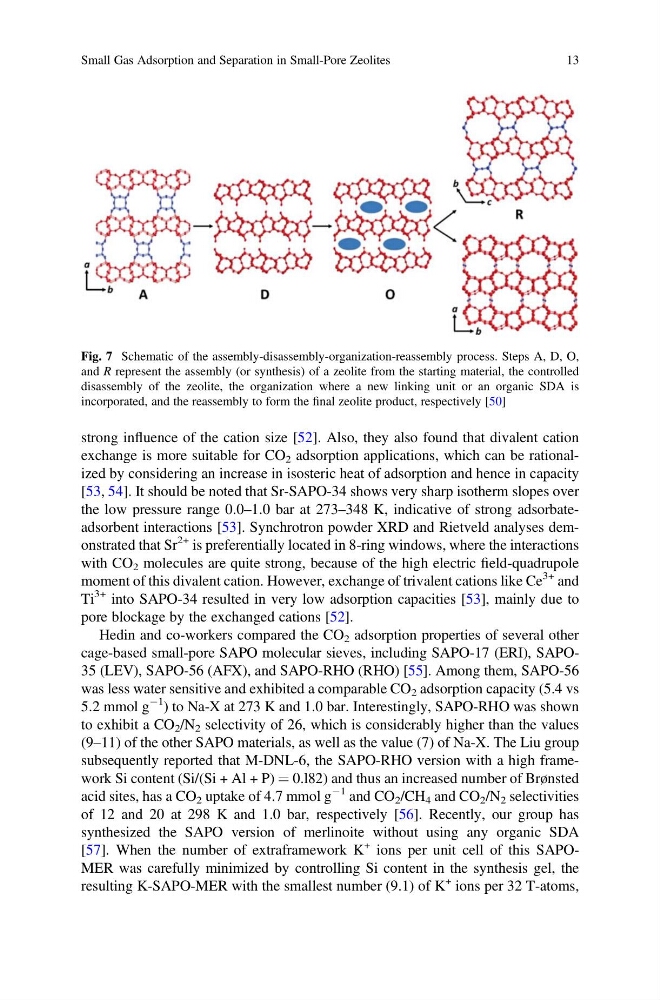
Fig. 7 Schematic of the assembly-disassembly-organization-reassembly process. Steps A, D, O,
and R represent the assembly (or synthesis) of a zeolite from the starting material, the controlled
disassembly of the zeolite, the organization where a new linking unit or an organic SDA is
incorporated, and the reassembly to form the final zeolite product, respectively [50]
Small Gas Adsorption and Separation in Small-Pore Zeolites
13
exchange is more suitable for CO 2 adsorption applications, which can be rationalized by considering an increase in isosteric heat of adsorption and hence in capacity
[53, 54]. It should be noted that Sr-SAPO-34 shows very sharp isotherm slopes over
the low pressure range 0.0–1.0 bar at 273–348 K, indicative of strong adsorbateadsorbent interactions [53]. Synchrotron powder XRD and Rietveld analyses demonstrated that Sr
2+ is preferentially located in 8-ring windows, where the interactions
with CO 2 molecules are quite strong, because of the high electric field-quadrupole
moment of this divalent cation. However, exchange of trivalent cations like Ce
3+ and
Ti
3+ into SAPO-34 resulted in very low adsorption capacities [53], mainly due to
pore blockage by the exchanged cations [52].
Hedin and co-workers compared the CO 2 adsorption properties of several other
cage-based small-pore SAPO molecular sieves, including SAPO-17 (ERI), SAPO35 (LEV), SAPO-56 (AFX), and SAPO-RHO (RHO) [55]. Among them, SAPO-56
was less water sensitive and exhibited a comparable CO 2 adsorption capacity (5.4 vs
5.2 mmol g
À1
) to Na-X at 273 K and 1.0 bar. Interestingly, SAPO-RHO was shown
to exhibit a CO 2 /N 2 selectivity of 26, which is considerably higher than the values
(9–11) of the other SAPO materials, as well as the value (7) of Na-X. The Liu group
subsequently reported that M-DNL-6, the SAPO-RHO version with a high framework Si content (Si/(Si + Al + P) ¼ 0.l82) and thus an increased number of Brønsted
acid sites, has a CO 2 uptake of 4.7 mmol g
À1 and CO 2 /CH 4 and CO 2 /N 2 selectivities
of 12 and 20 at 298 K and 1.0 bar, respectively [56]. Recently, our group has
synthesized the SAPO version of merlinoite without using any organic SDA
[57]. When the number of extraframework K
+ ions per unit cell of this SAPOMER was carefully minimized by controlling Si content in the synthesis gel, the
resulting K-SAPO-MER with the smallest number (9.1) of K
+ ions per 32 T-atoms,
Fig. 7 Schematic of the assembly-disassembly-organization-reassembly process. Steps A, D, O,
and R represent the assembly (or synthesis) of a zeolite from the starting material, the controlled
disassembly of the zeolite, the organization where a new linking unit or an organic SDA is
incorporated, and the reassembly to form the final zeolite product, respectively [50]
Small Gas Adsorption and Separation in Small-Pore Zeolites
13