

68
3 The Reactivity of Nitrile Imines
PhCO 2 H
Ph
O
HN
N
Ph
180
o C, 2h
83 %
N
N
N
N
Ph
Ph
Ph
O
N
NH
Ph
Ph
O
Ph
O
H
+
via
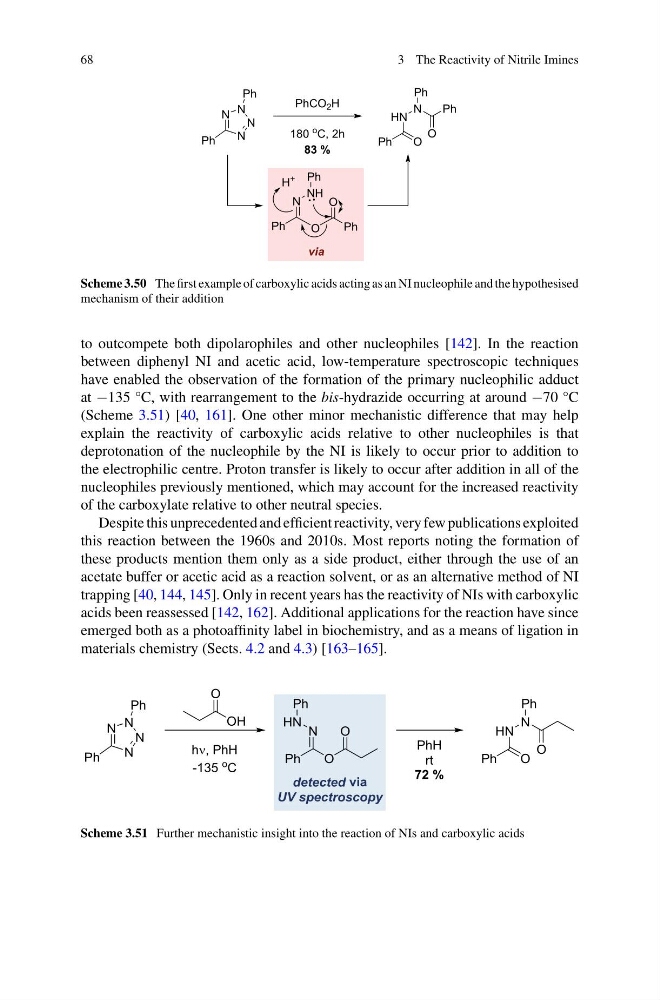
Scheme 3.50 The first example of carboxylic acids acting as an NI nucleophile and the hypothesised
mechanism of their addition
to outcompete both dipolarophiles and other nucleophiles [142]. In the reaction
between diphenyl NI and acetic acid, low-temperature spectroscopic techniques
have enabled the observation of the formation of the primary nucleophilic adduct
at −135 °C, with rearrangement to the bis-hydrazide occurring at around −70 °C
(Scheme 3.51) [40, 161]. One other minor mechanistic difference that may help
explain the reactivity of carboxylic acids relative to other nucleophiles is that
deprotonation of the nucleophile by the NI is likely to occur prior to addition to
the electrophilic centre. Proton transfer is likely to occur after addition in all of the
nucleophiles previously mentioned, which may account for the increased reactivity
of the carboxylate relative to other neutral species.
Despite this unprecedented and efficient reactivity, very few publications exploited
this reaction between the 1960s and 2010s. Most reports noting the formation of
these products mention them only as a side product, either through the use of an
acetate buffer or acetic acid as a reaction solvent, or as an alternative method of NI
trapping [40, 144, 145]. Only in recent years has the reactivity of NIs with carboxylic
acids been reassessed [142, 162]. Additional applications for the reaction have since
emerged both as a photoaffinity label in biochemistry, and as a means of ligation in
materials chemistry (Sects. 4.2 and 4.3) [163–165].
Ph
O
N
HN
Ph
h, PhH
-135
o C
N
N
N
N
Ph
Ph
O
OH
Ph
O
HN
N
Ph
O
O
detected via
UV spectroscopy
PhH
rt
72 %
Scheme 3.51 Further mechanistic insight into the reaction of NIs and carboxylic acids
3 The Reactivity of Nitrile Imines
PhCO 2 H
Ph
O
HN
N
Ph
180
o C, 2h
83 %
N
N
N
N
Ph
Ph
Ph
O
N
NH
Ph
Ph
O
Ph
O
H
+
via
Scheme 3.50 The first example of carboxylic acids acting as an NI nucleophile and the hypothesised
mechanism of their addition
to outcompete both dipolarophiles and other nucleophiles [142]. In the reaction
between diphenyl NI and acetic acid, low-temperature spectroscopic techniques
have enabled the observation of the formation of the primary nucleophilic adduct
at −135 °C, with rearrangement to the bis-hydrazide occurring at around −70 °C
(Scheme 3.51) [40, 161]. One other minor mechanistic difference that may help
explain the reactivity of carboxylic acids relative to other nucleophiles is that
deprotonation of the nucleophile by the NI is likely to occur prior to addition to
the electrophilic centre. Proton transfer is likely to occur after addition in all of the
nucleophiles previously mentioned, which may account for the increased reactivity
of the carboxylate relative to other neutral species.
Despite this unprecedented and efficient reactivity, very few publications exploited
this reaction between the 1960s and 2010s. Most reports noting the formation of
these products mention them only as a side product, either through the use of an
acetate buffer or acetic acid as a reaction solvent, or as an alternative method of NI
trapping [40, 144, 145]. Only in recent years has the reactivity of NIs with carboxylic
acids been reassessed [142, 162]. Additional applications for the reaction have since
emerged both as a photoaffinity label in biochemistry, and as a means of ligation in
materials chemistry (Sects. 4.2 and 4.3) [163–165].
Ph
O
N
HN
Ph
h, PhH
-135
o C
N
N
N
N
Ph
Ph
O
OH
Ph
O
HN
N
Ph
O
O
detected via
UV spectroscopy
PhH
rt
72 %
Scheme 3.51 Further mechanistic insight into the reaction of NIs and carboxylic acids