

3.1 1,3-Dipolar Cycloaddition
55
N
Cl
NH
MeO 2 C
Et 3 N, PhMe
110
o C, 2 h
91 %
N
N
MeO 2 C
N
N
N
MeO 2 C
N
OH
F
H
N
OH
F
F
-H 2 O
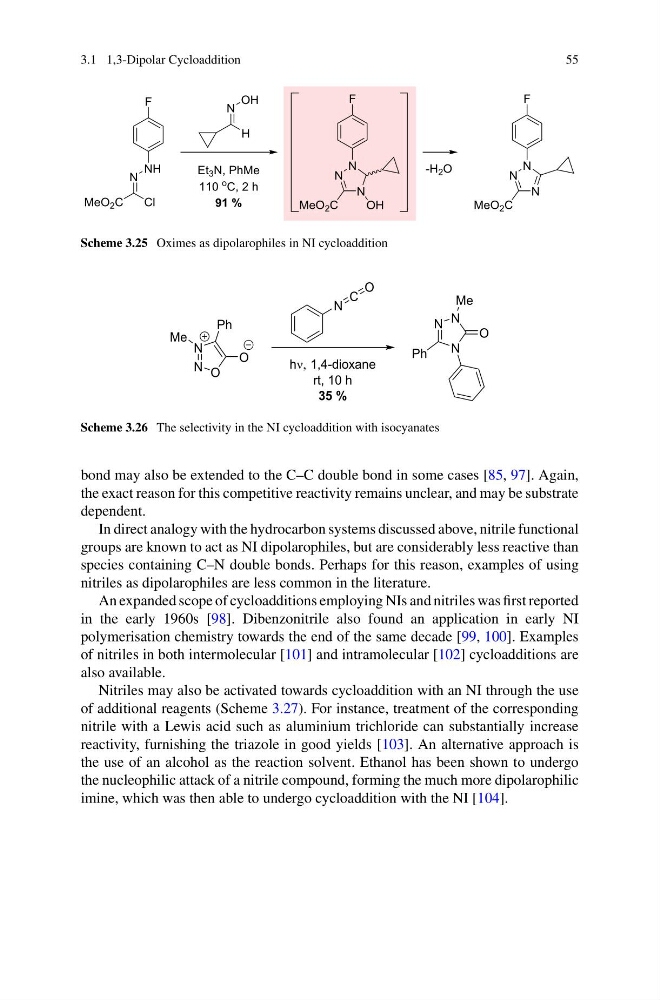
Scheme 3.25 Oximes as dipolarophiles in NI cycloaddition
N
N O
O
Me
Ph
N
N
N
Me
Ph
O
h1,4-dioxane
rt, 10 h
35 %
N
C
O
Scheme 3.26 The selectivity in the NI cycloaddition with isocyanates
bond may also be extended to the C–C double bond in some cases [85, 97]. Again,
the exact reason for this competitive reactivity remains unclear, and may be substrate
dependent.
In direct analogy with the hydrocarbon systems discussed above, nitrile functional
groups are known to act as NI dipolarophiles, but are considerably less reactive than
species containing C–N double bonds. Perhaps for this reason, examples of using
nitriles as dipolarophiles are less common in the literature.
An expanded scope of cycloadditions employing NIs and nitriles was first reported
in the early 1960s [98]. Dibenzonitrile also found an application in early NI
polymerisation chemistry towards the end of the same decade [99, 100]. Examples
of nitriles in both intermolecular [101] and intramolecular [102] cycloadditions are
also available.
Nitriles may also be activated towards cycloaddition with an NI through the use
of additional reagents (Scheme 3.27). For instance, treatment of the corresponding
nitrile with a Lewis acid such as aluminium trichloride can substantially increase
reactivity, furnishing the triazole in good yields [103]. An alternative approach is
the use of an alcohol as the reaction solvent. Ethanol has been shown to undergo
the nucleophilic attack of a nitrile compound, forming the much more dipolarophilic
imine, which was then able to undergo cycloaddition with the NI [104].
55
N
Cl
NH
MeO 2 C
Et 3 N, PhMe
110
o C, 2 h
91 %
N
N
MeO 2 C
N
N
N
MeO 2 C
N
OH
F
H
N
OH
F
F
-H 2 O
Scheme 3.25 Oximes as dipolarophiles in NI cycloaddition
N
N O
O
Me
Ph
N
N
N
Me
Ph
O
h1,4-dioxane
rt, 10 h
35 %
N
C
O
Scheme 3.26 The selectivity in the NI cycloaddition with isocyanates
bond may also be extended to the C–C double bond in some cases [85, 97]. Again,
the exact reason for this competitive reactivity remains unclear, and may be substrate
dependent.
In direct analogy with the hydrocarbon systems discussed above, nitrile functional
groups are known to act as NI dipolarophiles, but are considerably less reactive than
species containing C–N double bonds. Perhaps for this reason, examples of using
nitriles as dipolarophiles are less common in the literature.
An expanded scope of cycloadditions employing NIs and nitriles was first reported
in the early 1960s [98]. Dibenzonitrile also found an application in early NI
polymerisation chemistry towards the end of the same decade [99, 100]. Examples
of nitriles in both intermolecular [101] and intramolecular [102] cycloadditions are
also available.
Nitriles may also be activated towards cycloaddition with an NI through the use
of additional reagents (Scheme 3.27). For instance, treatment of the corresponding
nitrile with a Lewis acid such as aluminium trichloride can substantially increase
reactivity, furnishing the triazole in good yields [103]. An alternative approach is
the use of an alcohol as the reaction solvent. Ethanol has been shown to undergo
the nucleophilic attack of a nitrile compound, forming the much more dipolarophilic
imine, which was then able to undergo cycloaddition with the NI [104].