

52
3 The Reactivity of Nitrile Imines
Ph
Cl
N
NH
Et 3 N, PhH
rt, 1.5 h
55 %
58:42 A:B
Br
Br
Ph
Ph
N
N
Br
Br
Ph
N
NH
Br
Br
Ph
Ph
+
NEt 3
A
B
slow
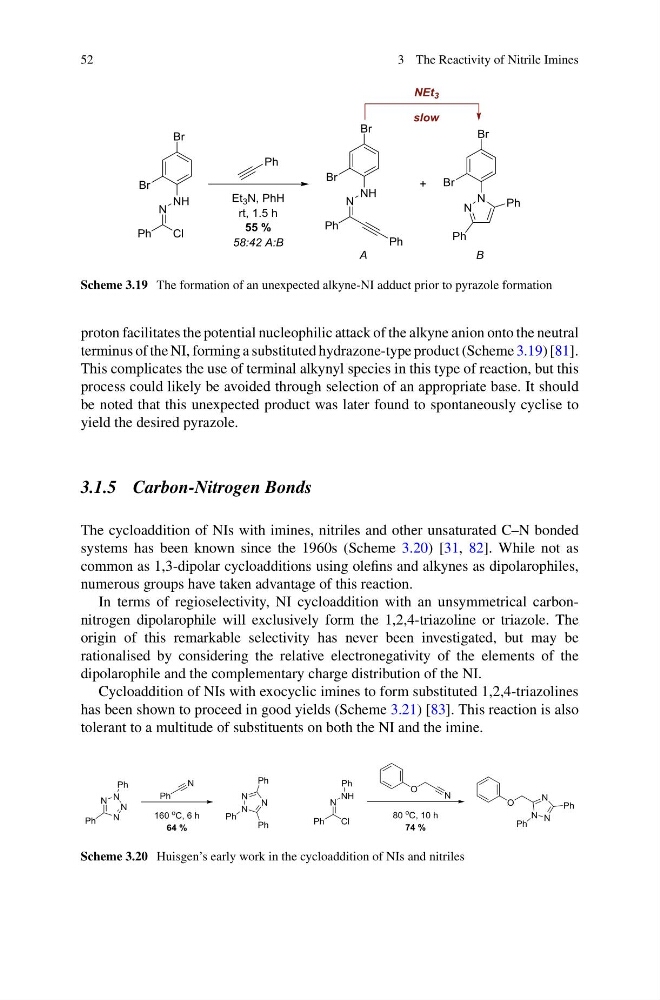
Scheme 3.19 The formation of an unexpected alkyne-NI adduct prior to pyrazole formation
proton facilitates the potential nucleophilic attack of the alkyne anion onto the neutral
terminus of the NI, forming a substituted hydrazone-type product (Scheme 3.19) [81].
This complicates the use of terminal alkynyl species in this type of reaction, but this
process could likely be avoided through selection of an appropriate base. It should
be noted that this unexpected product was later found to spontaneously cyclise to
yield the desired pyrazole.
3.1.5 Carbon-Nitrogen Bonds
The cycloaddition of NIs with imines, nitriles and other unsaturated C–N bonded
systems has been known since the 1960s (Scheme 3.20) [31, 82]. While not as
common as 1,3-dipolar cycloadditions using olefins and alkynes as dipolarophiles,
numerous groups have taken advantage of this reaction.
In terms of regioselectivity, NI cycloaddition with an unsymmetrical carbonnitrogen dipolarophile will exclusively form the 1,2,4-triazoline or triazole. The
origin of this remarkable selectivity has never been investigated, but may be
rationalised by considering the relative electronegativity of the elements of the
dipolarophile and the complementary charge distribution of the NI.
Cycloaddition of NIs with exocyclic imines to form substituted 1,2,4-triazolines
has been shown to proceed in good yields (Scheme 3.21) [83]. This reaction is also
tolerant to a multitude of substituents on both the NI and the imine.
160
o C, 6 h
64 %
N
Ph
N
N
N
N
Ph
Ph
N
N
Ph
Ph
N
Ph
N
O
N
Cl
NH
Ph
Ph
80
o C, 10 h
74 %
N
N
Ph
Ph
N
O
Scheme 3.20 Huisgen’s early work in the cycloaddition of NIs and nitriles
3 The Reactivity of Nitrile Imines
Ph
Cl
N
NH
Et 3 N, PhH
rt, 1.5 h
55 %
58:42 A:B
Br
Br
Ph
Ph
N
N
Br
Br
Ph
N
NH
Br
Br
Ph
Ph
+
NEt 3
A
B
slow
Scheme 3.19 The formation of an unexpected alkyne-NI adduct prior to pyrazole formation
proton facilitates the potential nucleophilic attack of the alkyne anion onto the neutral
terminus of the NI, forming a substituted hydrazone-type product (Scheme 3.19) [81].
This complicates the use of terminal alkynyl species in this type of reaction, but this
process could likely be avoided through selection of an appropriate base. It should
be noted that this unexpected product was later found to spontaneously cyclise to
yield the desired pyrazole.
3.1.5 Carbon-Nitrogen Bonds
The cycloaddition of NIs with imines, nitriles and other unsaturated C–N bonded
systems has been known since the 1960s (Scheme 3.20) [31, 82]. While not as
common as 1,3-dipolar cycloadditions using olefins and alkynes as dipolarophiles,
numerous groups have taken advantage of this reaction.
In terms of regioselectivity, NI cycloaddition with an unsymmetrical carbonnitrogen dipolarophile will exclusively form the 1,2,4-triazoline or triazole. The
origin of this remarkable selectivity has never been investigated, but may be
rationalised by considering the relative electronegativity of the elements of the
dipolarophile and the complementary charge distribution of the NI.
Cycloaddition of NIs with exocyclic imines to form substituted 1,2,4-triazolines
has been shown to proceed in good yields (Scheme 3.21) [83]. This reaction is also
tolerant to a multitude of substituents on both the NI and the imine.
160
o C, 6 h
64 %
N
Ph
N
N
N
N
Ph
Ph
N
N
Ph
Ph
N
Ph
N
O
N
Cl
NH
Ph
Ph
80
o C, 10 h
74 %
N
N
Ph
Ph
N
O
Scheme 3.20 Huisgen’s early work in the cycloaddition of NIs and nitriles