

42
3 The Reactivity of Nitrile Imines
N
N
Et 3 N, PhH
80
o C, 5 h
R
1 = Me, 0 %
R
1 = CO 2 Et, 90 %
Cl
N
NH
R
1
R
1
R
1
R
1
R
1
R
1
R
1
R
1
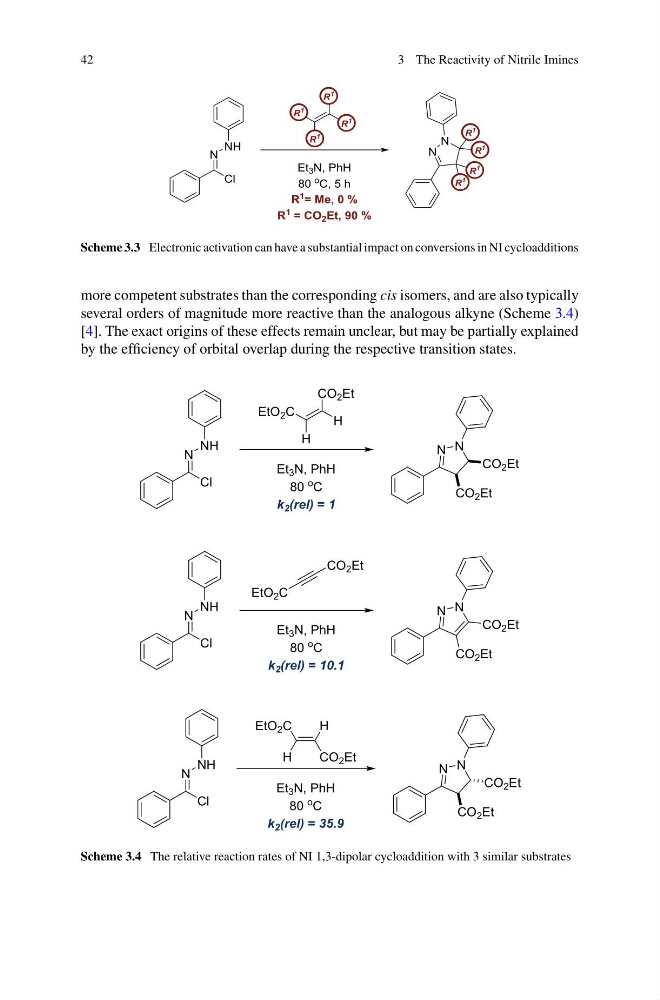
Scheme 3.3 Electronic activation can have a substantial impact on conversions in NI cycloadditions
more competent substrates than the corresponding cis isomers, and are also typically
several orders of magnitude more reactive than the analogous alkyne (Scheme 3.4)
[4]. The exact origins of these effects remain unclear, but may be partially explained
by the efficiency of orbital overlap during the respective transition states.
Et 3 N, PhH
80
o C
k 2 (rel) = 1
Cl
N
NH
CO 2 Et
EtO 2 C
N N
CO 2 Et
CO 2 Et
Et 3 N, PhH
80
o C
k 2 (rel) = 10.1
Cl
N
NH
CO 2 Et
EtO 2 C
N N
CO 2 Et
CO 2 Et
Et 3 N, PhH
80
o C
k 2 (rel) = 35.9
Cl
N
NH
CO 2 Et
EtO 2 C
N N
CO 2 Et
CO 2 Et
H
H
H
H
Scheme 3.4 The relative reaction rates of NI 1,3-dipolar cycloaddition with 3 similar substrates
3 The Reactivity of Nitrile Imines
N
N
Et 3 N, PhH
80
o C, 5 h
R
1 = Me, 0 %
R
1 = CO 2 Et, 90 %
Cl
N
NH
R
1
R
1
R
1
R
1
R
1
R
1
R
1
R
1
Scheme 3.3 Electronic activation can have a substantial impact on conversions in NI cycloadditions
more competent substrates than the corresponding cis isomers, and are also typically
several orders of magnitude more reactive than the analogous alkyne (Scheme 3.4)
[4]. The exact origins of these effects remain unclear, but may be partially explained
by the efficiency of orbital overlap during the respective transition states.
Et 3 N, PhH
80
o C
k 2 (rel) = 1
Cl
N
NH
CO 2 Et
EtO 2 C
N N
CO 2 Et
CO 2 Et
Et 3 N, PhH
80
o C
k 2 (rel) = 10.1
Cl
N
NH
CO 2 Et
EtO 2 C
N N
CO 2 Et
CO 2 Et
Et 3 N, PhH
80
o C
k 2 (rel) = 35.9
Cl
N
NH
CO 2 Et
EtO 2 C
N N
CO 2 Et
CO 2 Et
H
H
H
H
Scheme 3.4 The relative reaction rates of NI 1,3-dipolar cycloaddition with 3 similar substrates