

40
3 The Reactivity of Nitrile Imines
MeO 2 C
Cl
N
NH
Ag 2 CO 3 , 1,4-dioxane
80
o C, 18 h
84 %
47:53 A:B
OMe
OBn
O
MeO 2 C
N
N
OMe
BnO
O
MeO 2 C
N
N
OMe
OBn
O
+
MeO 2 C
Cl
N
NH
Ag 2 CO 3 , 1,4-dioxane
Sc(OTf) 3 , 80
o C, 18 h
92 %
91:9 A:B
OMe
OBn
O
MeO 2 C
N
N
OMe
BnO
O
MeO 2 C
N
N
OMe
OBn
O
+
A
A
B
B
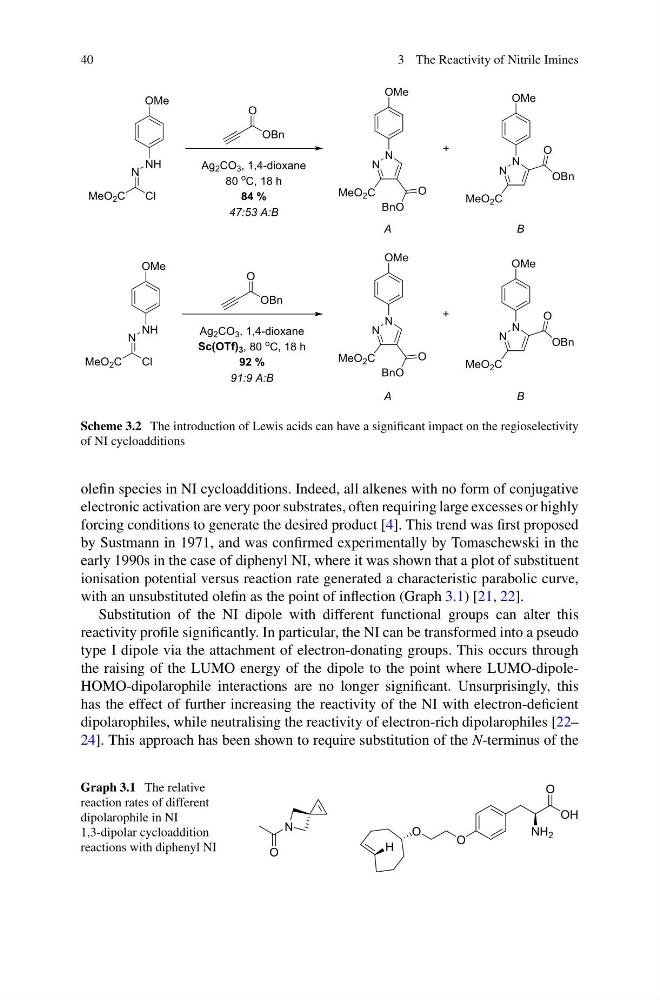
Scheme 3.2 The introduction of Lewis acids can have a significant impact on the regioselectivity
of NI cycloadditions
olefin species in NI cycloadditions. Indeed, all alkenes with no form of conjugative
electronic activation are very poor substrates, often requiring large excesses or highly
forcing conditions to generate the desired product [4]. This trend was first proposed
by Sustmann in 1971, and was confirmed experimentally by Tomaschewski in the
early 1990s in the case of diphenyl NI, where it was shown that a plot of substituent
ionisation potential versus reaction rate generated a characteristic parabolic curve,
with an unsubstituted olefin as the point of inflection (Graph 3.1) [21, 22].
Substitution of the NI dipole with different functional groups can alter this
reactivity profile significantly. In particular, the NI can be transformed into a pseudo
type I dipole via the attachment of electron-donating groups. This occurs through
the raising of the LUMO energy of the dipole to the point where LUMO-dipoleHOMO-dipolarophile interactions are no longer significant. Unsurprisingly, this
has the effect of further increasing the reactivity of the NI with electron-deficient
dipolarophiles, while neutralising the reactivity of electron-rich dipolarophiles [22–
24]. This approach has been shown to require substitution of the N-terminus of the
Graph 3.1 The relative
reaction rates of different
dipolarophile in NI
1,3-dipolar cycloaddition
reactions with diphenyl NI
N
NH 2
O
O
OH
O
H
O
3 The Reactivity of Nitrile Imines
MeO 2 C
Cl
N
NH
Ag 2 CO 3 , 1,4-dioxane
80
o C, 18 h
84 %
47:53 A:B
OMe
OBn
O
MeO 2 C
N
N
OMe
BnO
O
MeO 2 C
N
N
OMe
OBn
O
+
MeO 2 C
Cl
N
NH
Ag 2 CO 3 , 1,4-dioxane
Sc(OTf) 3 , 80
o C, 18 h
92 %
91:9 A:B
OMe
OBn
O
MeO 2 C
N
N
OMe
BnO
O
MeO 2 C
N
N
OMe
OBn
O
+
A
A
B
B
Scheme 3.2 The introduction of Lewis acids can have a significant impact on the regioselectivity
of NI cycloadditions
olefin species in NI cycloadditions. Indeed, all alkenes with no form of conjugative
electronic activation are very poor substrates, often requiring large excesses or highly
forcing conditions to generate the desired product [4]. This trend was first proposed
by Sustmann in 1971, and was confirmed experimentally by Tomaschewski in the
early 1990s in the case of diphenyl NI, where it was shown that a plot of substituent
ionisation potential versus reaction rate generated a characteristic parabolic curve,
with an unsubstituted olefin as the point of inflection (Graph 3.1) [21, 22].
Substitution of the NI dipole with different functional groups can alter this
reactivity profile significantly. In particular, the NI can be transformed into a pseudo
type I dipole via the attachment of electron-donating groups. This occurs through
the raising of the LUMO energy of the dipole to the point where LUMO-dipoleHOMO-dipolarophile interactions are no longer significant. Unsurprisingly, this
has the effect of further increasing the reactivity of the NI with electron-deficient
dipolarophiles, while neutralising the reactivity of electron-rich dipolarophiles [22–
24]. This approach has been shown to require substitution of the N-terminus of the
Graph 3.1 The relative
reaction rates of different
dipolarophile in NI
1,3-dipolar cycloaddition
reactions with diphenyl NI
N
NH 2
O
O
OH
O
H
O