

6
1 Nitrile Imines and Their Properties
N
C
N
UV
R
1 - max with electron-withdrawing property
R
2 - max with electron-donating property
NMR
N - characteristic sharp signal -215- -170 ppm
IR
C-N bond - antisymmetric stretch around 2250-2000 cm
-1
- frequency with in bond order
R
1
R
2
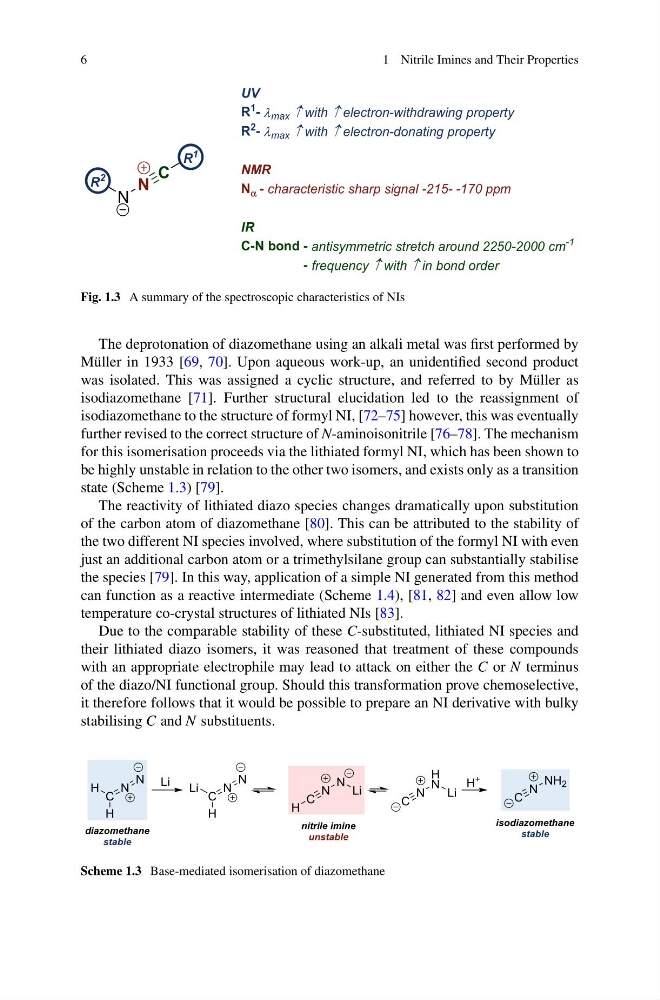
Fig. 1.3 A summary of the spectroscopic characteristics of NIs
The deprotonation of diazomethane using an alkali metal was first performed by
Müller in 1933 [69, 70]. Upon aqueous work-up, an unidentified second product
was isolated. This was assigned a cyclic structure, and referred to by Müller as
isodiazomethane [71]. Further structural elucidation led to the reassignment of
isodiazomethane to the structure of formyl NI, [72–75] however, this was eventually
further revised to the correct structure of N-aminoisonitrile [76–78]. The mechanism
for this isomerisation proceeds via the lithiated formyl NI, which has been shown to
be highly unstable in relation to the other two isomers, and exists only as a transition
state (Scheme 1.3) [79].
The reactivity of lithiated diazo species changes dramatically upon substitution
of the carbon atom of diazomethane [80]. This can be attributed to the stability of
the two different NI species involved, where substitution of the formyl NI with even
just an additional carbon atom or a trimethylsilane group can substantially stabilise
the species [79]. In this way, application of a simple NI generated from this method
can function as a reactive intermediate (Scheme 1.4), [81, 82] and even allow low
temperature co-crystal structures of lithiated NIs [83].
Due to the comparable stability of these C-substituted, lithiated NI species and
their lithiated diazo isomers, it was reasoned that treatment of these compounds
with an appropriate electrophile may lead to attack on either the C or N terminus
of the diazo/NI functional group. Should this transformation prove chemoselective,
it therefore follows that it would be possible to prepare an NI derivative with bulky
stabilising C and N substituents.
C
N
N
H
H
Li
C
N
N
Li
H
C
N
N
H
Li
C
N
H
N Li
C
N
NH 2
H
+
diazomethane
stable
isodiazomethane
stable
nitrile imine
unstable
Scheme 1.3 Base-mediated isomerisation of diazomethane
1 Nitrile Imines and Their Properties
N
C
N
UV
R
1 - max with electron-withdrawing property
R
2 - max with electron-donating property
NMR
N - characteristic sharp signal -215- -170 ppm
IR
C-N bond - antisymmetric stretch around 2250-2000 cm
-1
- frequency with in bond order
R
1
R
2
Fig. 1.3 A summary of the spectroscopic characteristics of NIs
The deprotonation of diazomethane using an alkali metal was first performed by
Müller in 1933 [69, 70]. Upon aqueous work-up, an unidentified second product
was isolated. This was assigned a cyclic structure, and referred to by Müller as
isodiazomethane [71]. Further structural elucidation led to the reassignment of
isodiazomethane to the structure of formyl NI, [72–75] however, this was eventually
further revised to the correct structure of N-aminoisonitrile [76–78]. The mechanism
for this isomerisation proceeds via the lithiated formyl NI, which has been shown to
be highly unstable in relation to the other two isomers, and exists only as a transition
state (Scheme 1.3) [79].
The reactivity of lithiated diazo species changes dramatically upon substitution
of the carbon atom of diazomethane [80]. This can be attributed to the stability of
the two different NI species involved, where substitution of the formyl NI with even
just an additional carbon atom or a trimethylsilane group can substantially stabilise
the species [79]. In this way, application of a simple NI generated from this method
can function as a reactive intermediate (Scheme 1.4), [81, 82] and even allow low
temperature co-crystal structures of lithiated NIs [83].
Due to the comparable stability of these C-substituted, lithiated NI species and
their lithiated diazo isomers, it was reasoned that treatment of these compounds
with an appropriate electrophile may lead to attack on either the C or N terminus
of the diazo/NI functional group. Should this transformation prove chemoselective,
it therefore follows that it would be possible to prepare an NI derivative with bulky
stabilising C and N substituents.
C
N
N
H
H
Li
C
N
N
Li
H
C
N
N
H
Li
C
N
H
N Li
C
N
NH 2
H
+
diazomethane
stable
isodiazomethane
stable
nitrile imine
unstable
Scheme 1.3 Base-mediated isomerisation of diazomethane