

4.3 Materials Chemistry
135
RO 2 C
RO 2 C
RO 2 C
RO 2 C
RO 2 C
CO 2 R
CO 2 R
CO 2 R
CO 2 R
CO 2 R
SH
H 2 N
Et 3 N, CHCl 3
W, 105 °C, 1 h
EtOH
W, 130 °C, 1 h
O
NH
NH
O
HS
HS
H
N
O
HS
O
HN
SH
N
H
O
SH
H
N
O
SH
N
N
NH
O
HS
N
N
N
H
O
SH
O
NH
HS
N N
N N
O
NH
HS
NPh
N
N
PhN
PhN N
PhN N
Au
Au
Au
Au
Au
Au
Au
Au
Au
Au
N
Cl
NH
MeO 2 C
Au
H 2 O
rt, 12 h
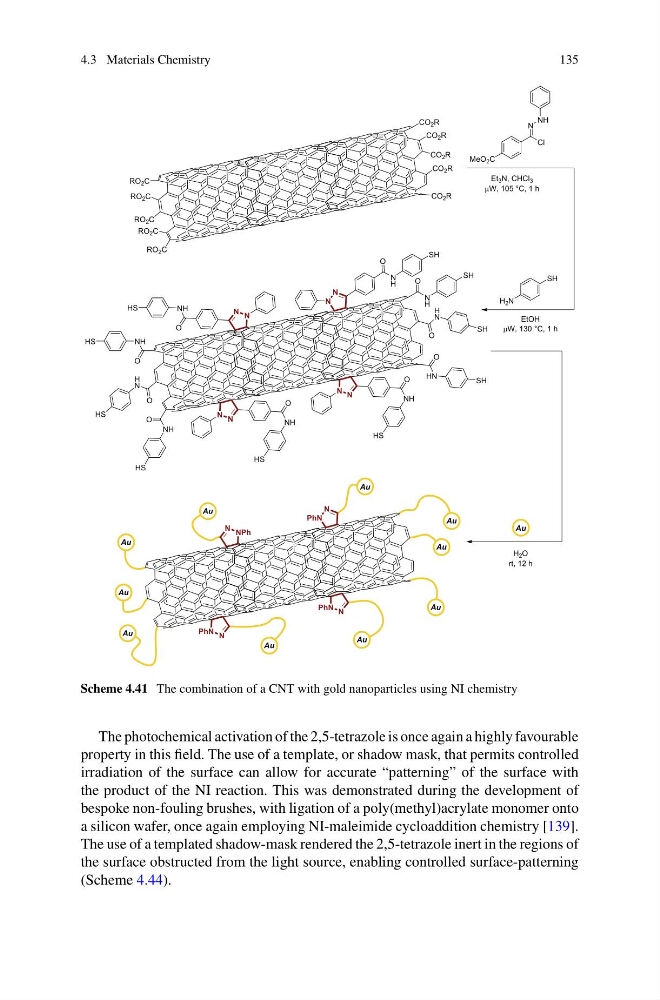
Scheme 4.41 The combination of a CNT with gold nanoparticles using NI chemistry
The photochemical activation of the 2,5-tetrazole is once again a highly favourable
property in this field. The use of a template, or shadow mask, that permits controlled
irradiation of the surface can allow for accurate “patterning” of the surface with
the product of the NI reaction. This was demonstrated during the development of
bespoke non-fouling brushes, with ligation of a poly(methyl)acrylate monomer onto
a silicon wafer, once again employing NI-maleimide cycloaddition chemistry [139].
The use of a templated shadow-mask rendered the 2,5-tetrazole inert in the regions of
the surface obstructed from the light source, enabling controlled surface-patterning
(Scheme 4.44).
135
RO 2 C
RO 2 C
RO 2 C
RO 2 C
RO 2 C
CO 2 R
CO 2 R
CO 2 R
CO 2 R
CO 2 R
SH
H 2 N
Et 3 N, CHCl 3
W, 105 °C, 1 h
EtOH
W, 130 °C, 1 h
O
NH
NH
O
HS
HS
H
N
O
HS
O
HN
SH
N
H
O
SH
H
N
O
SH
N
N
NH
O
HS
N
N
N
H
O
SH
O
NH
HS
N N
N N
O
NH
HS
NPh
N
N
PhN
PhN N
PhN N
Au
Au
Au
Au
Au
Au
Au
Au
Au
Au
N
Cl
NH
MeO 2 C
Au
H 2 O
rt, 12 h
Scheme 4.41 The combination of a CNT with gold nanoparticles using NI chemistry
The photochemical activation of the 2,5-tetrazole is once again a highly favourable
property in this field. The use of a template, or shadow mask, that permits controlled
irradiation of the surface can allow for accurate “patterning” of the surface with
the product of the NI reaction. This was demonstrated during the development of
bespoke non-fouling brushes, with ligation of a poly(methyl)acrylate monomer onto
a silicon wafer, once again employing NI-maleimide cycloaddition chemistry [139].
The use of a templated shadow-mask rendered the 2,5-tetrazole inert in the regions of
the surface obstructed from the light source, enabling controlled surface-patterning
(Scheme 4.44).