

4.2 Bioorthogonal Chemistry
117
H
N
c
A
2
L T F X H Y W X Q L T S
HN
HN
O
O
N
N
N
N
MeO
H
N
c
A
2
L T F X H Y W X Q L T S
N N
MeO
NH
O
NH
O
h
MeCN/H 2 O
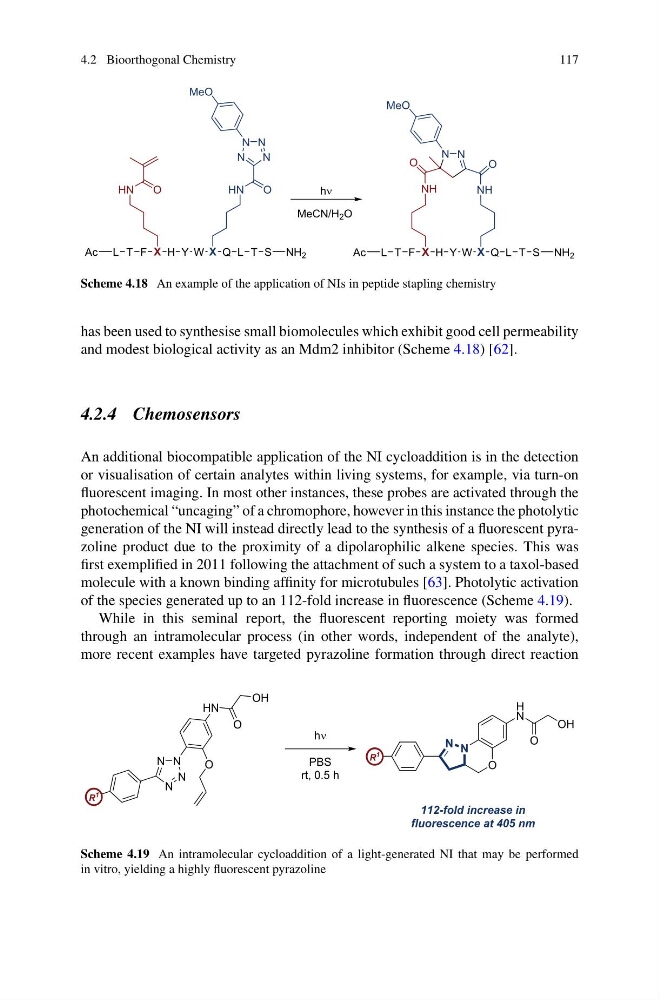
Scheme 4.18 An example of the application of NIs in peptide stapling chemistry
has been used to synthesise small biomolecules which exhibit good cell permeability
and modest biological activity as an Mdm2 inhibitor (Scheme 4.18) [62].
4.2.4 Chemosensors
An additional biocompatible application of the NI cycloaddition is in the detection
or visualisation of certain analytes within living systems, for example, via turn-on
fluorescent imaging. In most other instances, these probes are activated through the
photochemical “uncaging” of a chromophore, however in this instance the photolytic
generation of the NI will instead directly lead to the synthesis of a fluorescent pyrazoline product due to the proximity of a dipolarophilic alkene species. This was
first exemplified in 2011 following the attachment of such a system to a taxol-based
molecule with a known binding affinity for microtubules [63]. Photolytic activation
of the species generated up to an 112-fold increase in fluorescence (Scheme 4.19).
While in this seminal report, the fluorescent reporting moiety was formed
through an intramolecular process (in other words, independent of the analyte),
more recent examples have targeted pyrazoline formation through direct reaction
N
N
N
N
O
HN
O
OH
N
N
O
H
N
O
OH
PBS
rt, 0.5 h
h
112-fold increase in
fluorescence at 405 nm
R
1
R
1
Scheme 4.19 An intramolecular cycloaddition of a light-generated NI that may be performed
in vitro, yielding a highly fluorescent pyrazoline
117
H
N
c
A
2
L T F X H Y W X Q L T S
HN
HN
O
O
N
N
N
N
MeO
H
N
c
A
2
L T F X H Y W X Q L T S
N N
MeO
NH
O
NH
O
h
MeCN/H 2 O
Scheme 4.18 An example of the application of NIs in peptide stapling chemistry
has been used to synthesise small biomolecules which exhibit good cell permeability
and modest biological activity as an Mdm2 inhibitor (Scheme 4.18) [62].
4.2.4 Chemosensors
An additional biocompatible application of the NI cycloaddition is in the detection
or visualisation of certain analytes within living systems, for example, via turn-on
fluorescent imaging. In most other instances, these probes are activated through the
photochemical “uncaging” of a chromophore, however in this instance the photolytic
generation of the NI will instead directly lead to the synthesis of a fluorescent pyrazoline product due to the proximity of a dipolarophilic alkene species. This was
first exemplified in 2011 following the attachment of such a system to a taxol-based
molecule with a known binding affinity for microtubules [63]. Photolytic activation
of the species generated up to an 112-fold increase in fluorescence (Scheme 4.19).
While in this seminal report, the fluorescent reporting moiety was formed
through an intramolecular process (in other words, independent of the analyte),
more recent examples have targeted pyrazoline formation through direct reaction
N
N
N
N
O
HN
O
OH
N
N
O
H
N
O
OH
PBS
rt, 0.5 h
h
112-fold increase in
fluorescence at 405 nm
R
1
R
1
Scheme 4.19 An intramolecular cycloaddition of a light-generated NI that may be performed
in vitro, yielding a highly fluorescent pyrazoline