

4.1 General Synthesis
101
EtO 2 C
N
Cl
NH
Ph
EtO 2 C
N
N
Ph
Ph
HO 2 C
N
N
Ph
Ph
DMF
1 h
71 %
NC
HN
Ph
Ph
H 2 O
100
o C, 4 h
36 %
HO 2 C
HN
Ph
Ph
Ph
KHCO 3 , EtOAc
70
o C, 20 h
62 %
MeOH
rt, 2 h
92 %
NaOH
H 2 SO 4
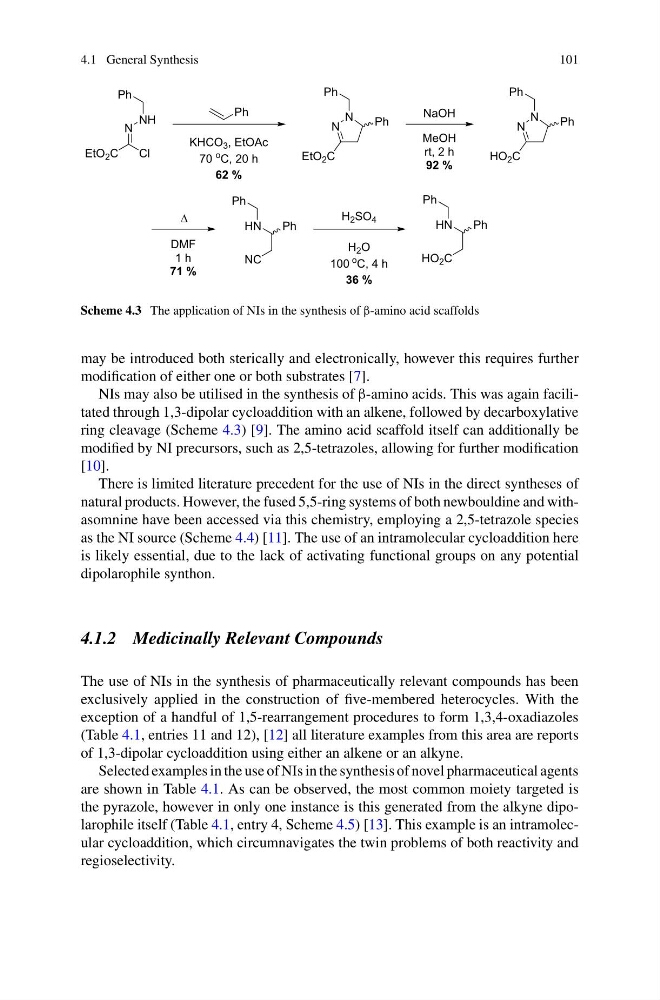
Scheme 4.3 The application of NIs in the synthesis of β-amino acid scaffolds
may be introduced both sterically and electronically, however this requires further
modification of either one or both substrates [7].
NIs may also be utilised in the synthesis of β-amino acids. This was again facilitated through 1,3-dipolar cycloaddition with an alkene, followed by decarboxylative
ring cleavage (Scheme 4.3) [9]. The amino acid scaffold itself can additionally be
modified by NI precursors, such as 2,5-tetrazoles, allowing for further modification
[10].
There is limited literature precedent for the use of NIs in the direct syntheses of
natural products. However, the fused 5,5-ring systems of both newbouldine and withasomnine have been accessed via this chemistry, employing a 2,5-tetrazole species
as the NI source (Scheme 4.4) [11]. The use of an intramolecular cycloaddition here
is likely essential, due to the lack of activating functional groups on any potential
dipolarophile synthon.
4.1.2 Medicinally Relevant Compounds
The use of NIs in the synthesis of pharmaceutically relevant compounds has been
exclusively applied in the construction of five-membered heterocycles. With the
exception of a handful of 1,5-rearrangement procedures to form 1,3,4-oxadiazoles
(Table 4.1, entries 11 and 12), [12] all literature examples from this area are reports
of 1,3-dipolar cycloaddition using either an alkene or an alkyne.
Selected examples in the use of NIs in the synthesis of novel pharmaceutical agents
are shown in Table 4.1. As can be observed, the most common moiety targeted is
the pyrazole, however in only one instance is this generated from the alkyne dipolarophile itself (Table 4.1, entry 4, Scheme 4.5) [13]. This example is an intramolecular cycloaddition, which circumnavigates the twin problems of both reactivity and
regioselectivity.
101
EtO 2 C
N
Cl
NH
Ph
EtO 2 C
N
N
Ph
Ph
HO 2 C
N
N
Ph
Ph
DMF
1 h
71 %
NC
HN
Ph
Ph
H 2 O
100
o C, 4 h
36 %
HO 2 C
HN
Ph
Ph
Ph
KHCO 3 , EtOAc
70
o C, 20 h
62 %
MeOH
rt, 2 h
92 %
NaOH
H 2 SO 4
Scheme 4.3 The application of NIs in the synthesis of β-amino acid scaffolds
may be introduced both sterically and electronically, however this requires further
modification of either one or both substrates [7].
NIs may also be utilised in the synthesis of β-amino acids. This was again facilitated through 1,3-dipolar cycloaddition with an alkene, followed by decarboxylative
ring cleavage (Scheme 4.3) [9]. The amino acid scaffold itself can additionally be
modified by NI precursors, such as 2,5-tetrazoles, allowing for further modification
[10].
There is limited literature precedent for the use of NIs in the direct syntheses of
natural products. However, the fused 5,5-ring systems of both newbouldine and withasomnine have been accessed via this chemistry, employing a 2,5-tetrazole species
as the NI source (Scheme 4.4) [11]. The use of an intramolecular cycloaddition here
is likely essential, due to the lack of activating functional groups on any potential
dipolarophile synthon.
4.1.2 Medicinally Relevant Compounds
The use of NIs in the synthesis of pharmaceutically relevant compounds has been
exclusively applied in the construction of five-membered heterocycles. With the
exception of a handful of 1,5-rearrangement procedures to form 1,3,4-oxadiazoles
(Table 4.1, entries 11 and 12), [12] all literature examples from this area are reports
of 1,3-dipolar cycloaddition using either an alkene or an alkyne.
Selected examples in the use of NIs in the synthesis of novel pharmaceutical agents
are shown in Table 4.1. As can be observed, the most common moiety targeted is
the pyrazole, however in only one instance is this generated from the alkyne dipolarophile itself (Table 4.1, entry 4, Scheme 4.5) [13]. This example is an intramolecular cycloaddition, which circumnavigates the twin problems of both reactivity and
regioselectivity.