

35
temperature conditions lead to disruption of the pre-existing thermodynamic equilibrium. Under turbulent conditions, equilibration of the petroleum compounds in
two phases of natural gas and petroleum liquid is thought to proceed within a short
time frame. The kinetics of aqueous dissolution of petroleum compounds is partly
driven by equilibrium partitioning properties between petroleum phases and seawater (McGinnis et al. 2006; Schwarzenbach et al. 2003) and proceeds on a variety of
time scales depending on the flow conditions and specific area of the interface, as
well as the equilibrium aqueous solubility of each specific compound (Aeppli et al.
2013; Bartha et al. 2015; Gros et al. 2017, 2014; Wardlaw et al. 2008). For example,
>99% of the released methane was observed to remain subsurface during the 2010
Deepwater Horizon disaster, whereas low-solubility compounds were not affected
(<1%) by aqueous dissolution during ascent to the sea surface (Ryerson et al. 2012).
Knowledge of equilibrium partitioning properties under relevant conditions of temperature, pressure, salinity, and composition is crucial for explaining these field
observations (Gros et al. 2016, 2017).
Gas-liquid equilibrium partitioning of petroleum fluids is a common task performed by petroleum engineers, necessary for the evaluation, design, and operation
of extraction wells, and the transport and separation of reservoir fluids (Danesh
1998; McCain 1990; Schou Pedersen et al. 2006). However, industry needs usually
don’t include an understanding of the equilibrium between petroleum fluids and
seawater under the high-pressure and low-temperature conditions prevailing in the
deep sea. The gas-liquid equilibrium partitioning of petroleum fluids is frequently
predicted using equations of state (such as Peng-Robinson or Soave-RedlichKwong), which are solved following ad hoc procedures (Michelsen and Mollerup
2007). For industry needs, petroleum fluids are frequently modeled using a set of
Ϭ͘Ϭ
ϱ͘Ϭ
ϭϬ͘Ϭ
ϭϱ͘Ϭ
ϮϬ͘Ϭ
Ϯϱ͘Ϭ
ϯϬ͘Ϭ
ϯϱ͘Ϭ
Ϭ͘ϬϬ
ϭϬ͘ϬϬ
Ϯ Ϭ͘ϬϬ
ϯϬ͘ϬϬ
ϰ Ϭ͘ϬϬ
ϱϬ͘ϬϬ
ϲ Ϭ͘ϬϬ
ϳϬ͘ϬϬ
ϴ Ϭ͘ϬϬ
ϵϬ͘ϬϬ
ϭ ϬϬ͘ϬϬ
/ŶƚĞƌĨĂĐŝĂůƚĞŶƐŝŽŶ;/&dͿͬŵEŵ Ͳϭ
Ăƚŵ
ϱDWĂ
ϭϬDWĂ
ϭϱDWĂ
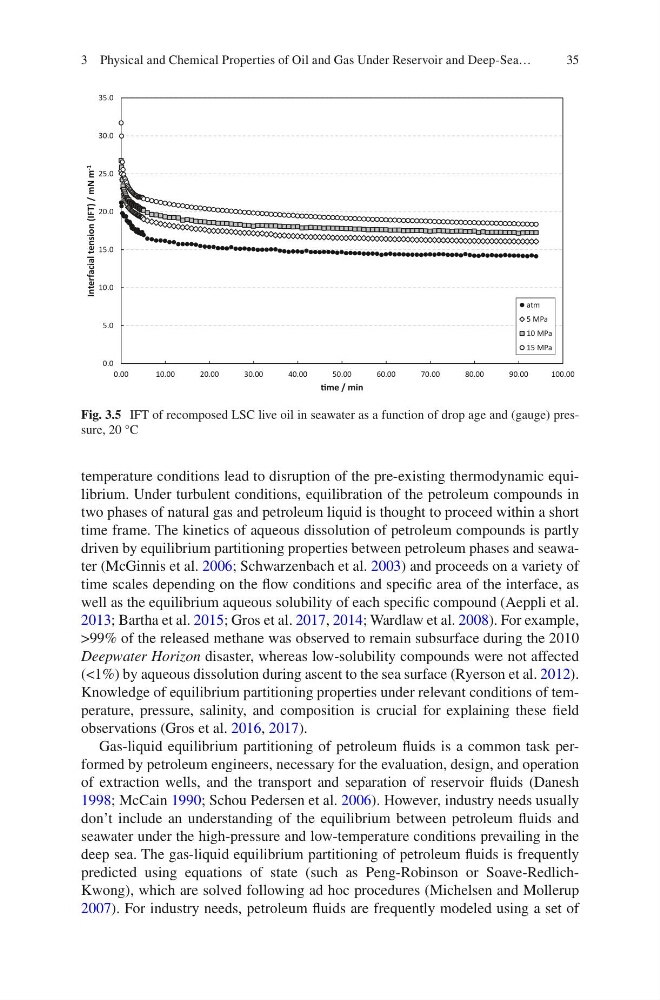
Fig. 3.5 IFT of recomposed LSC live oil in seawater as a function of drop age and (gauge) pressure, 20 °C
3 Physical and Chemical Properties of Oil and Gas Under Reservoir and Deep-Sea…
temperature conditions lead to disruption of the pre-existing thermodynamic equilibrium. Under turbulent conditions, equilibration of the petroleum compounds in
two phases of natural gas and petroleum liquid is thought to proceed within a short
time frame. The kinetics of aqueous dissolution of petroleum compounds is partly
driven by equilibrium partitioning properties between petroleum phases and seawater (McGinnis et al. 2006; Schwarzenbach et al. 2003) and proceeds on a variety of
time scales depending on the flow conditions and specific area of the interface, as
well as the equilibrium aqueous solubility of each specific compound (Aeppli et al.
2013; Bartha et al. 2015; Gros et al. 2017, 2014; Wardlaw et al. 2008). For example,
>99% of the released methane was observed to remain subsurface during the 2010
Deepwater Horizon disaster, whereas low-solubility compounds were not affected
(<1%) by aqueous dissolution during ascent to the sea surface (Ryerson et al. 2012).
Knowledge of equilibrium partitioning properties under relevant conditions of temperature, pressure, salinity, and composition is crucial for explaining these field
observations (Gros et al. 2016, 2017).
Gas-liquid equilibrium partitioning of petroleum fluids is a common task performed by petroleum engineers, necessary for the evaluation, design, and operation
of extraction wells, and the transport and separation of reservoir fluids (Danesh
1998; McCain 1990; Schou Pedersen et al. 2006). However, industry needs usually
don’t include an understanding of the equilibrium between petroleum fluids and
seawater under the high-pressure and low-temperature conditions prevailing in the
deep sea. The gas-liquid equilibrium partitioning of petroleum fluids is frequently
predicted using equations of state (such as Peng-Robinson or Soave-RedlichKwong), which are solved following ad hoc procedures (Michelsen and Mollerup
2007). For industry needs, petroleum fluids are frequently modeled using a set of
Ϭ͘Ϭ
ϱ͘Ϭ
ϭϬ͘Ϭ
ϭϱ͘Ϭ
ϮϬ͘Ϭ
Ϯϱ͘Ϭ
ϯϬ͘Ϭ
ϯϱ͘Ϭ
Ϭ͘ϬϬ
ϭϬ͘ϬϬ
Ϯ Ϭ͘ϬϬ
ϯϬ͘ϬϬ
ϰ Ϭ͘ϬϬ
ϱϬ͘ϬϬ
ϲ Ϭ͘ϬϬ
ϳϬ͘ϬϬ
ϴ Ϭ͘ϬϬ
ϵϬ͘ϬϬ
ϭ ϬϬ͘ϬϬ
/ŶƚĞƌĨĂĐŝĂůƚĞŶƐŝŽŶ;/&dͿͬŵEŵ Ͳϭ
Ăƚŵ
ϱDWĂ
ϭϬDWĂ
ϭϱDWĂ
Fig. 3.5 IFT of recomposed LSC live oil in seawater as a function of drop age and (gauge) pressure, 20 °C
3 Physical and Chemical Properties of Oil and Gas Under Reservoir and Deep-Sea…