

452
weekly timescales (Fig. 26.3), it is not possible to determine whether the difference
between the two measurements reflects real change or normal variability.
26.5.3 Findings of Sea Turtle Studies
The long-term effects of oil exposure and the DWH oil spill on sea turtles are not
well understood or quantified (Vander Zanden et al. 2016). The number of Kemp’s
ridley nests in Tamaulipas, Mexico, in 2010 was below predicted levels and has
remained below expected levels every nesting season since (Dixon and Heppell
2015), but the reduction has not been definitively attributed to the DWH spill
(Caillouet et al. 2016; Caillouet Jr 2014). Some have speculated that the large-scale
oiling of Sargassum (Hu et al. 2016) and subsequent loss of developmental/foraging
habitat for juvenile turtles may have long-term implications for population
recovery.
In response to the DWH oil spill, stage-based spatial matrix models have been
developed to simulate oil spills to assess the potential impact of oil spills on loggerhead populations, defining oceanic-stage survival followed by fecundity as the
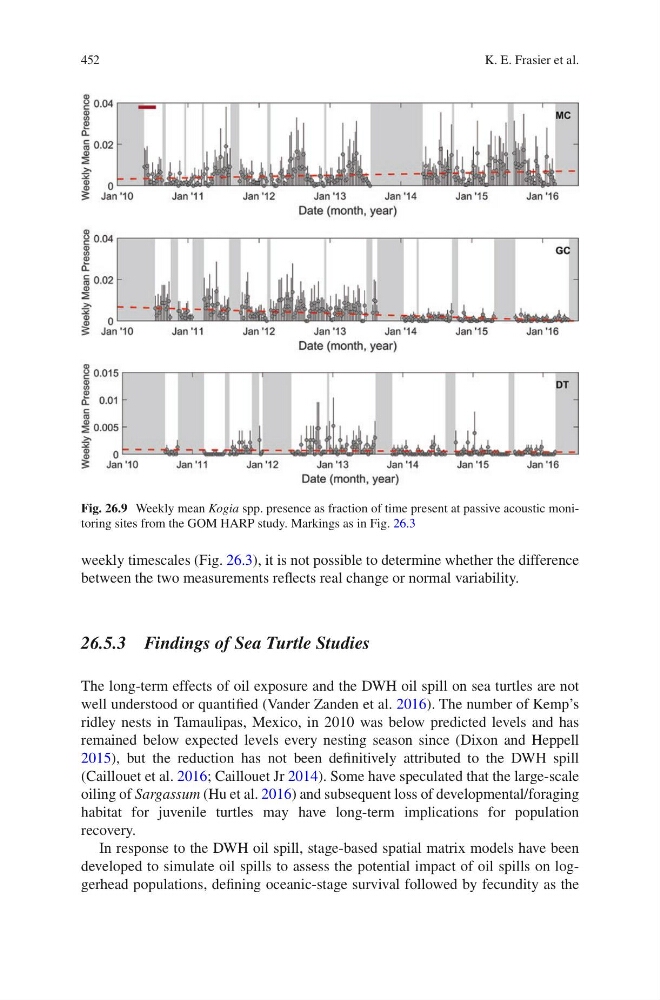
Fig. 26.9 Weekly mean Kogia spp. presence as fraction of time present at passive acoustic monitoring sites from the GOM HARP study. Markings as in Fig. 26.3
K. E. Frasier et al.
weekly timescales (Fig. 26.3), it is not possible to determine whether the difference
between the two measurements reflects real change or normal variability.
26.5.3 Findings of Sea Turtle Studies
The long-term effects of oil exposure and the DWH oil spill on sea turtles are not
well understood or quantified (Vander Zanden et al. 2016). The number of Kemp’s
ridley nests in Tamaulipas, Mexico, in 2010 was below predicted levels and has
remained below expected levels every nesting season since (Dixon and Heppell
2015), but the reduction has not been definitively attributed to the DWH spill
(Caillouet et al. 2016; Caillouet Jr 2014). Some have speculated that the large-scale
oiling of Sargassum (Hu et al. 2016) and subsequent loss of developmental/foraging
habitat for juvenile turtles may have long-term implications for population
recovery.
In response to the DWH oil spill, stage-based spatial matrix models have been
developed to simulate oil spills to assess the potential impact of oil spills on loggerhead populations, defining oceanic-stage survival followed by fecundity as the
Fig. 26.9 Weekly mean Kogia spp. presence as fraction of time present at passive acoustic monitoring sites from the GOM HARP study. Markings as in Fig. 26.3
K. E. Frasier et al.