

422
bluefin tuna. On the other hand, an ICCAT report (2015) showed that numbers of
tuna larvae in 2011 and 2013 were the highest recorded in several decades which
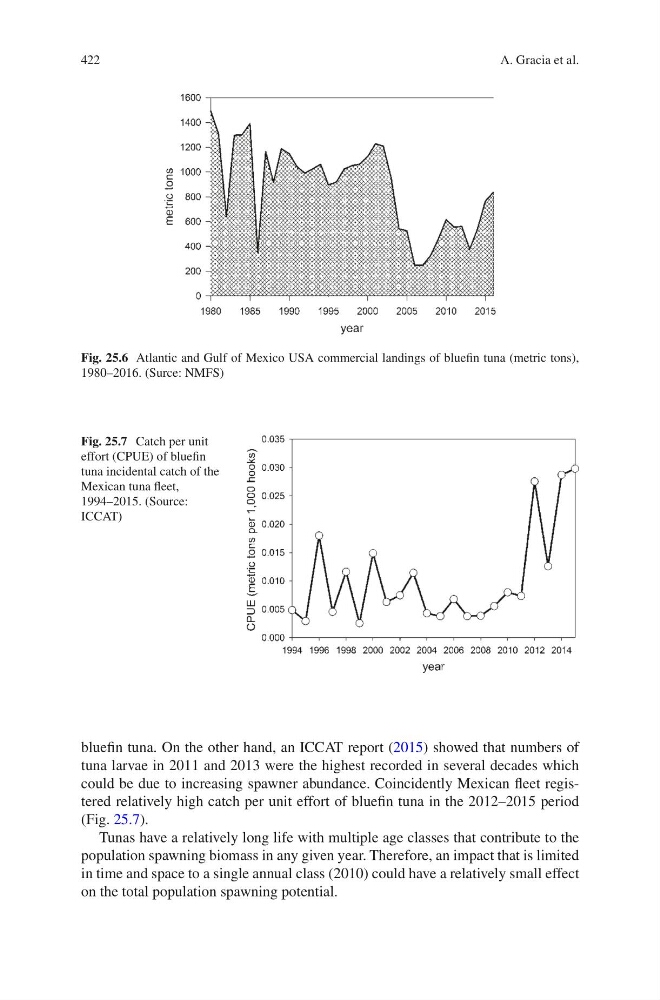
could be due to increasing spawner abundance. Coincidently Mexican fleet registered relatively high catch per unit effort of bluefin tuna in the 2012–2015 period
(Fig. 25.7).
Tunas have a relatively long life with multiple age classes that contribute to the
population spawning biomass in any given year. Therefore, an impact that is limited
in time and space to a single annual class (2010) could have a relatively small effect
on the total population spawning potential.
Fig. 25.6 Atlantic and Gulf of Mexico USA commercial landings of bluefin tuna (metric tons),
1980–2016. (Surce: NMFS)
Fig. 25.7 Catch per unit
effort (CPUE) of bluefin
tuna incidental catch of the
Mexican tuna fleet,
1994–2015. (Source:
ICCAT)
A. Gracia et al.
bluefin tuna. On the other hand, an ICCAT report (2015) showed that numbers of
tuna larvae in 2011 and 2013 were the highest recorded in several decades which
could be due to increasing spawner abundance. Coincidently Mexican fleet registered relatively high catch per unit effort of bluefin tuna in the 2012–2015 period
(Fig. 25.7).
Tunas have a relatively long life with multiple age classes that contribute to the
population spawning biomass in any given year. Therefore, an impact that is limited
in time and space to a single annual class (2010) could have a relatively small effect
on the total population spawning potential.
Fig. 25.6 Atlantic and Gulf of Mexico USA commercial landings of bluefin tuna (metric tons),
1980–2016. (Surce: NMFS)
Fig. 25.7 Catch per unit
effort (CPUE) of bluefin
tuna incidental catch of the
Mexican tuna fleet,
1994–2015. (Source:
ICCAT)
A. Gracia et al.