

349
21.2 Overview of Impacts from the Deepwater Horizon Spill
One of the first steps taken by the Trustees was to convene and employ government
and academic scientists with expertise in deep ocean resources. This included redirecting research cruises that were already previously funded and planned prior to
the spill toward assessment-related activities (Boland et al. 2010). Some of these
early research cruises helped to identify both readily apparent resource injuries and
conversely resources that appeared to be unaffected. For example, the extensive
Lophelia reefs that reside along the continental slope were found to be unaffected.
By contrast, researchers reported soon after the release began overt apparent injuries to red crabs, deep-sea hardground corals, and mesophotic reef fish (Serata
2010). The Trustees quickly identified relevant experts in the field and existing data
sets, and subsequently pursued certain lines of evidence of injury and discontinued
research into others. For example, by late 2010, it became apparent that shallow
coral reefs off the coast of Florida would fortunately remain unscathed as the predictive oil fate and transport models that initially forecasted the potential for oil to
travel past Florida out to the Atlantic were not supported by field observations or
documentation of substantial oil in these areas. Teams of shallow coral researchers
who had worked furiously for six months to collect baseline samples and prepare
impacts studies subsequently discontinued their work on the NRDA.
Other areas of the seafloor did not fare as well, and the Trustees assessing
impacts to the deep ocean coalesced assessment efforts around four primary lines
of evidence of injury, to: the mesophotic reefs along the continental shelf edge led
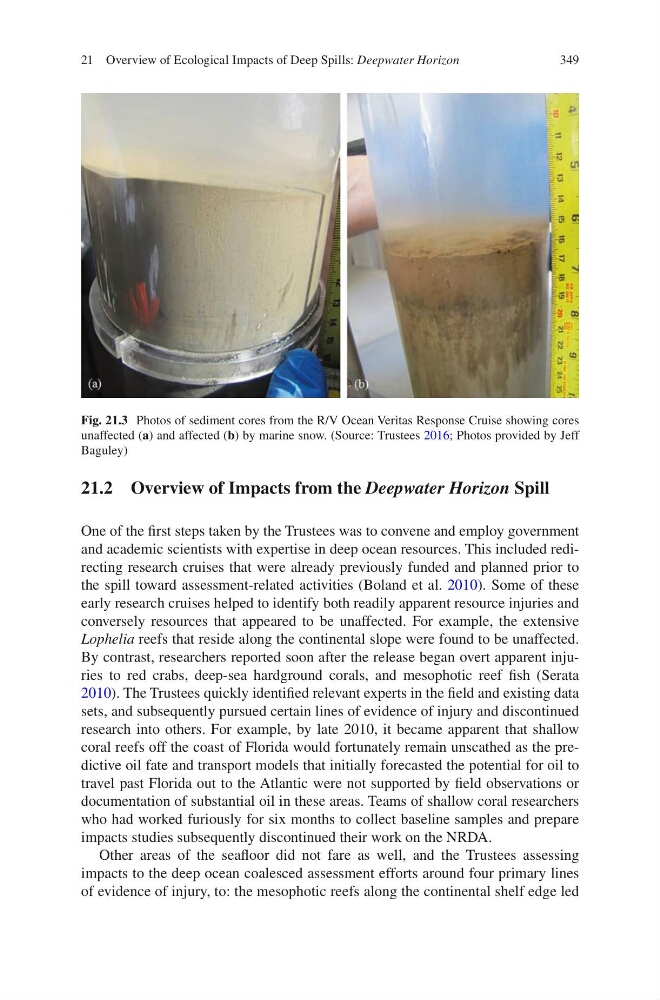
Fig. 21.3 Photos of sediment cores from the R/V Ocean Veritas Response Cruise showing cores
unaffected (a) and affected (b) by marine snow. (Source: Trustees 2016; Photos provided by Jeff
Baguley)
21 Overview of Ecological Impacts of Deep Spills: Deepwater Horizon
21.2 Overview of Impacts from the Deepwater Horizon Spill
One of the first steps taken by the Trustees was to convene and employ government
and academic scientists with expertise in deep ocean resources. This included redirecting research cruises that were already previously funded and planned prior to
the spill toward assessment-related activities (Boland et al. 2010). Some of these
early research cruises helped to identify both readily apparent resource injuries and
conversely resources that appeared to be unaffected. For example, the extensive
Lophelia reefs that reside along the continental slope were found to be unaffected.
By contrast, researchers reported soon after the release began overt apparent injuries to red crabs, deep-sea hardground corals, and mesophotic reef fish (Serata
2010). The Trustees quickly identified relevant experts in the field and existing data
sets, and subsequently pursued certain lines of evidence of injury and discontinued
research into others. For example, by late 2010, it became apparent that shallow
coral reefs off the coast of Florida would fortunately remain unscathed as the predictive oil fate and transport models that initially forecasted the potential for oil to
travel past Florida out to the Atlantic were not supported by field observations or
documentation of substantial oil in these areas. Teams of shallow coral researchers
who had worked furiously for six months to collect baseline samples and prepare
impacts studies subsequently discontinued their work on the NRDA.
Other areas of the seafloor did not fare as well, and the Trustees assessing
impacts to the deep ocean coalesced assessment efforts around four primary lines
of evidence of injury, to: the mesophotic reefs along the continental shelf edge led
Fig. 21.3 Photos of sediment cores from the R/V Ocean Veritas Response Cruise showing cores
unaffected (a) and affected (b) by marine snow. (Source: Trustees 2016; Photos provided by Jeff
Baguley)
21 Overview of Ecological Impacts of Deep Spills: Deepwater Horizon