

346
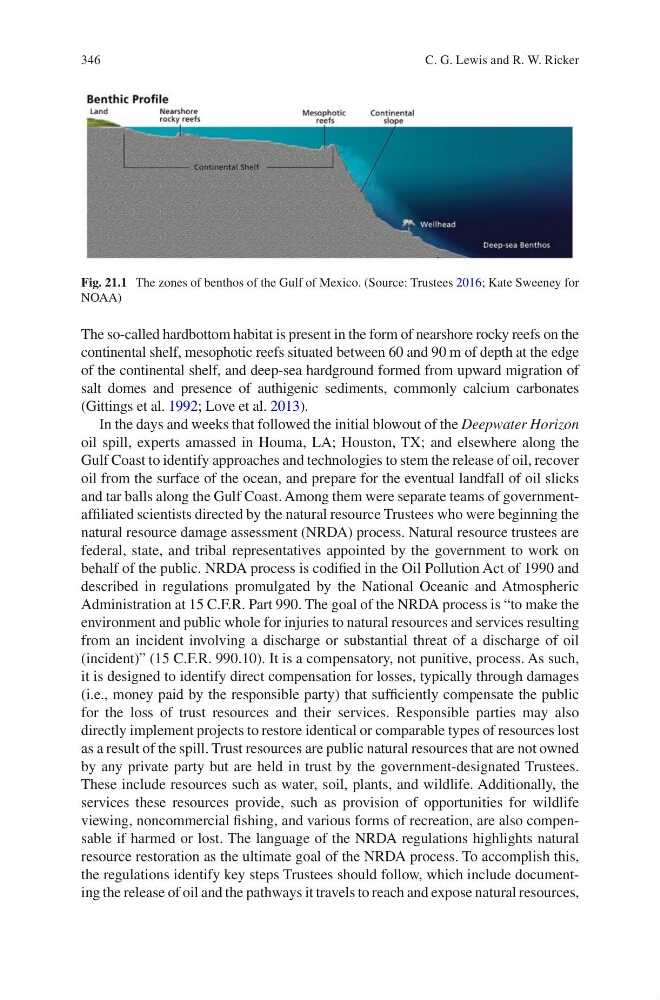
The so-called hardbottom habitat is present in the form of nearshore rocky reefs on the
continental shelf, mesophotic reefs situated between 60 and 90 m of depth at the edge
of the continental shelf, and deep-sea hardground formed from upward migration of
salt domes and presence of authigenic sediments, commonly calcium carbonates
(Gittings et al. 1992; Love et al. 2013).
In the days and weeks that followed the initial blowout of the Deepwater Horizon
oil spill, experts amassed in Houma, LA; Houston, TX; and elsewhere along the
Gulf Coast to identify approaches and technologies to stem the release of oil, recover
oil from the surface of the ocean, and prepare for the eventual landfall of oil slicks
and tar balls along the Gulf Coast. Among them were separate teams of governmentaffiliated scientists directed by the natural resource Trustees who were beginning the
natural resource damage assessment (NRDA) process. Natural resource trustees are
federal, state, and tribal representatives appointed by the government to work on
behalf of the public. NRDA process is codified in the Oil Pollution Act of 1990 and
described in regulations promulgated by the National Oceanic and Atmospheric
Administration at 15 C.F.R. Part 990. The goal of the NRDA process is “to make the
environment and public whole for injuries to natural resources and services resulting
from an incident involving a discharge or substantial threat of a discharge of oil
(incident)” (15 C.F.R. 990.10). It is a compensatory, not punitive, process. As such,
it is designed to identify direct compensation for losses, typically through damages
(i.e., money paid by the responsible party) that sufficiently compensate the public
for the loss of trust resources and their services. Responsible parties may also
directly implement projects to restore identical or comparable types of resources lost
as a result of the spill. Trust resources are public natural resources that are not owned
by any private party but are held in trust by the government-designated Trustees.
These include resources such as water, soil, plants, and wildlife. Additionally, the
services these resources provide, such as provision of opportunities for wildlife
viewing, noncommercial fishing, and various forms of recreation, are also compensable if harmed or lost. The language of the NRDA regulations highlights natural
resource restoration as the ultimate goal of the NRDA process. To accomplish this,
the regulations identify key steps Trustees should follow, which include documenting the release of oil and the pathways it travels to reach and expose natural resources,
Fig. 21.1 The zones of benthos of the Gulf of Mexico. (Source: Trustees 2016; Kate Sweeney for
NOAA)
C. G. Lewis and R. W. Ricker
The so-called hardbottom habitat is present in the form of nearshore rocky reefs on the
continental shelf, mesophotic reefs situated between 60 and 90 m of depth at the edge
of the continental shelf, and deep-sea hardground formed from upward migration of
salt domes and presence of authigenic sediments, commonly calcium carbonates
(Gittings et al. 1992; Love et al. 2013).
In the days and weeks that followed the initial blowout of the Deepwater Horizon
oil spill, experts amassed in Houma, LA; Houston, TX; and elsewhere along the
Gulf Coast to identify approaches and technologies to stem the release of oil, recover
oil from the surface of the ocean, and prepare for the eventual landfall of oil slicks
and tar balls along the Gulf Coast. Among them were separate teams of governmentaffiliated scientists directed by the natural resource Trustees who were beginning the
natural resource damage assessment (NRDA) process. Natural resource trustees are
federal, state, and tribal representatives appointed by the government to work on
behalf of the public. NRDA process is codified in the Oil Pollution Act of 1990 and
described in regulations promulgated by the National Oceanic and Atmospheric
Administration at 15 C.F.R. Part 990. The goal of the NRDA process is “to make the
environment and public whole for injuries to natural resources and services resulting
from an incident involving a discharge or substantial threat of a discharge of oil
(incident)” (15 C.F.R. 990.10). It is a compensatory, not punitive, process. As such,
it is designed to identify direct compensation for losses, typically through damages
(i.e., money paid by the responsible party) that sufficiently compensate the public
for the loss of trust resources and their services. Responsible parties may also
directly implement projects to restore identical or comparable types of resources lost
as a result of the spill. Trust resources are public natural resources that are not owned
by any private party but are held in trust by the government-designated Trustees.
These include resources such as water, soil, plants, and wildlife. Additionally, the
services these resources provide, such as provision of opportunities for wildlife
viewing, noncommercial fishing, and various forms of recreation, are also compensable if harmed or lost. The language of the NRDA regulations highlights natural
resource restoration as the ultimate goal of the NRDA process. To accomplish this,
the regulations identify key steps Trustees should follow, which include documenting the release of oil and the pathways it travels to reach and expose natural resources,
Fig. 21.1 The zones of benthos of the Gulf of Mexico. (Source: Trustees 2016; Kate Sweeney for
NOAA)
C. G. Lewis and R. W. Ricker