

309
oil biodegradation rate in the benthic zone. The effects of oiled artificial marine
snow on the benthic macroinvertebrates Corophium volutator, Hydrobia ulvae, and
Macoma balthica are described in Foekema et al. (2020).
18.4 Conclusions
While dispersants are used to treat oil spills, there is an ongoing debate regarding
their effects on the fate of oil, oil biodegradation, and ultimately their cumulative
effects on the oil-degrading microbial communities. The scientific and technical
understanding of the physicochemical interactions taking place between dispersed
oil, dispersant, marine snow, and how they subsequently affect biological activities
is not (yet) complete. The wide range of results in literature are most likely related
to the varied chemical composition of the oils used (crude oil, weathered oil, or
fresh oil), concentrations, the concentration of the added dispersants, and the characteristics of the microbial population.
In summary, the following general conclusions can be drawn based on the available literature about the effects of dispersants and (artificial) marine snow on oil
biodegradation:
• Chemical dispersants inhibit the degradation of oil, and this effect can be minimized when both alkane- and BTEX-degrading bacteria are present.
• Release of the more toxic BTEX components of crude oil when chemical dispersants are added is toxic for bacteria and hampers biodegradation. This toxicity
effect is less relevant for weathered oil.
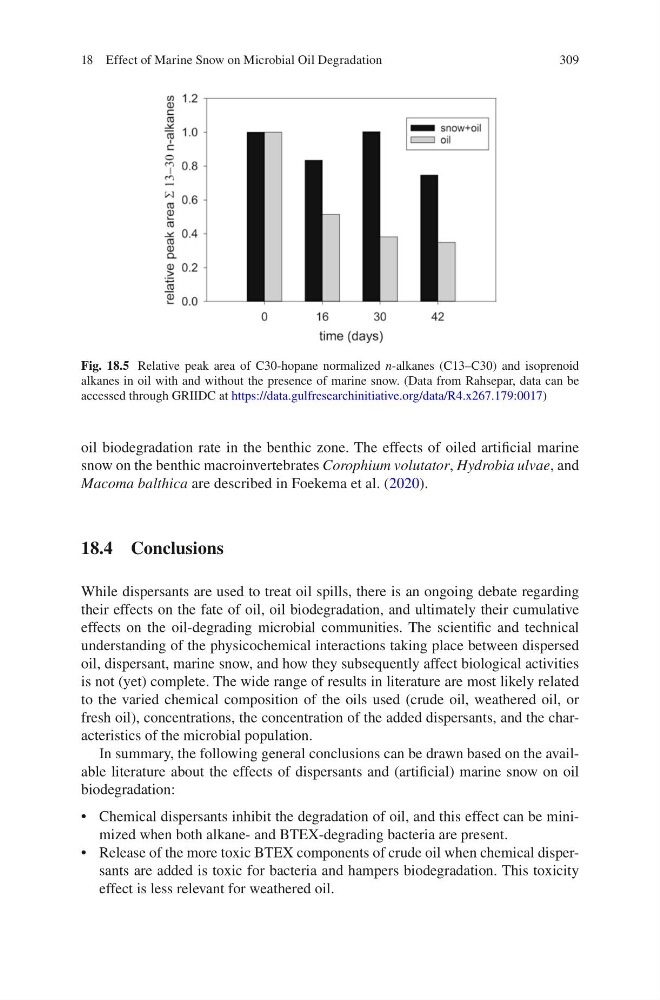
Fig. 18.5 Relative peak area of C30-hopane normalized n-alkanes (C13–C30) and isoprenoid
alkanes in oil with and without the presence of marine snow. (Data from Rahsepar, data can be
accessed through GRIIDC at https://data.gulfresearchinitiative.org/data/R4.x267.179:0017)
18 Effect of Marine Snow on Microbial Oil Degradation
oil biodegradation rate in the benthic zone. The effects of oiled artificial marine
snow on the benthic macroinvertebrates Corophium volutator, Hydrobia ulvae, and
Macoma balthica are described in Foekema et al. (2020).
18.4 Conclusions
While dispersants are used to treat oil spills, there is an ongoing debate regarding
their effects on the fate of oil, oil biodegradation, and ultimately their cumulative
effects on the oil-degrading microbial communities. The scientific and technical
understanding of the physicochemical interactions taking place between dispersed
oil, dispersant, marine snow, and how they subsequently affect biological activities
is not (yet) complete. The wide range of results in literature are most likely related
to the varied chemical composition of the oils used (crude oil, weathered oil, or
fresh oil), concentrations, the concentration of the added dispersants, and the characteristics of the microbial population.
In summary, the following general conclusions can be drawn based on the available literature about the effects of dispersants and (artificial) marine snow on oil
biodegradation:
• Chemical dispersants inhibit the degradation of oil, and this effect can be minimized when both alkane- and BTEX-degrading bacteria are present.
• Release of the more toxic BTEX components of crude oil when chemical dispersants are added is toxic for bacteria and hampers biodegradation. This toxicity
effect is less relevant for weathered oil.
Fig. 18.5 Relative peak area of C30-hopane normalized n-alkanes (C13–C30) and isoprenoid
alkanes in oil with and without the presence of marine snow. (Data from Rahsepar, data can be
accessed through GRIIDC at https://data.gulfresearchinitiative.org/data/R4.x267.179:0017)
18 Effect of Marine Snow on Microbial Oil Degradation