

224
where there are high accumulation rates, fine-grained sediments, and no bioturbation present, which were satisfied by MOSSFA. Records based on
210
Pb (
210
Pb xs )
also corroborated this finding (Brooks et al. 2015; Schwing et al. 2017a; Larson
et al. 2018; Larson et al. 2020). The MOSSFA layer, in which the “pulse” of
increased mass accumulation rates was identified, was primarily comprised of water
column surface and near-surface-derived components. Fridrik et al. (2016) documented a fourfold increase in planktic foraminiferal accumulation rates in the postDWH layer relative to pre-DWH (Fig. 13.2). Biogenic silica percentage and
accumulation rate, which are indicative of surface diatom productivity, both
increased significantly in the MOSSFA layer (Yan et al. 2016; Lee et al. 2018). This
was corroborated by the three- to tenfold increase in the concentration of diatom
16S RNA sequences in the MOSSFA layer (Brooks et al. 2015). In addition to biological evidence of the surface- derived nature of MOSSFA sedimentary inputs,
there was a 2–3 order of magnitude increase in the concentration of the primary
component (DOSS) of the Corexit 9500A dispersant in post-DWH surface sediments (White et al. 2014) and a two- to three fold increase in high molecular weight
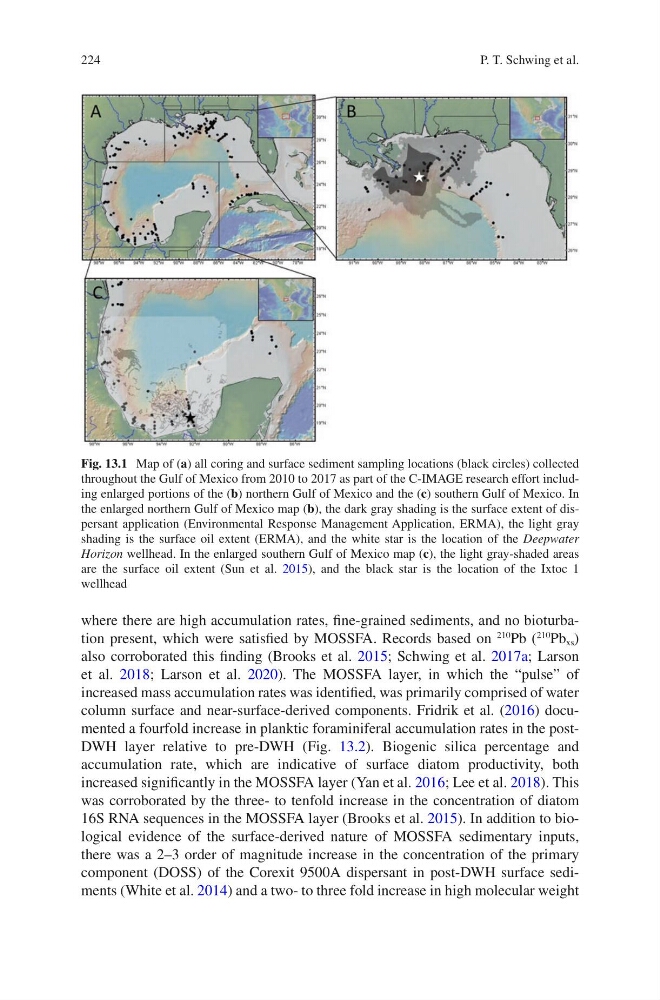
Fig. 13.1 Map of (a) all coring and surface sediment sampling locations (black circles) collected
throughout the Gulf of Mexico from 2010 to 2017 as part of the C-IMAGE research effort including enlarged portions of the (b) northern Gulf of Mexico and the (c) southern Gulf of Mexico. In
the enlarged northern Gulf of Mexico map (b), the dark gray shading is the surface extent of dispersant application (Environmental Response Management Application, ERMA), the light gray
shading is the surface oil extent (ERMA), and the white star is the location of the Deepwater
Horizon wellhead. In the enlarged southern Gulf of Mexico map (c), the light gray-shaded areas
are the surface oil extent (Sun et al. 2015), and the black star is the location of the Ixtoc 1
wellhead
P. T. Schwing et al.
where there are high accumulation rates, fine-grained sediments, and no bioturbation present, which were satisfied by MOSSFA. Records based on
210
Pb (
210
Pb xs )
also corroborated this finding (Brooks et al. 2015; Schwing et al. 2017a; Larson
et al. 2018; Larson et al. 2020). The MOSSFA layer, in which the “pulse” of
increased mass accumulation rates was identified, was primarily comprised of water
column surface and near-surface-derived components. Fridrik et al. (2016) documented a fourfold increase in planktic foraminiferal accumulation rates in the postDWH layer relative to pre-DWH (Fig. 13.2). Biogenic silica percentage and
accumulation rate, which are indicative of surface diatom productivity, both
increased significantly in the MOSSFA layer (Yan et al. 2016; Lee et al. 2018). This
was corroborated by the three- to tenfold increase in the concentration of diatom
16S RNA sequences in the MOSSFA layer (Brooks et al. 2015). In addition to biological evidence of the surface- derived nature of MOSSFA sedimentary inputs,
there was a 2–3 order of magnitude increase in the concentration of the primary
component (DOSS) of the Corexit 9500A dispersant in post-DWH surface sediments (White et al. 2014) and a two- to three fold increase in high molecular weight
Fig. 13.1 Map of (a) all coring and surface sediment sampling locations (black circles) collected
throughout the Gulf of Mexico from 2010 to 2017 as part of the C-IMAGE research effort including enlarged portions of the (b) northern Gulf of Mexico and the (c) southern Gulf of Mexico. In
the enlarged northern Gulf of Mexico map (b), the dark gray shading is the surface extent of dispersant application (Environmental Response Management Application, ERMA), the light gray
shading is the surface oil extent (ERMA), and the white star is the location of the Deepwater
Horizon wellhead. In the enlarged southern Gulf of Mexico map (c), the light gray-shaded areas
are the surface oil extent (Sun et al. 2015), and the black star is the location of the Ixtoc 1
wellhead
P. T. Schwing et al.