

200
2004). Stoffyn-Egli and Lee (2003) compared the performances of kaolinite, quartz,
and montmorillonite of the same median particle size for the formation of OMAs.
They found the higher cation exchange capacity of kaolinite leads to higher surface
hydrophobicity and higher tendency of forming small OMAs. Wang et al. (2011)
examined the interactions between oil and three types of solids, i.e., kaolin, modified kaolin, and diatomite. They found solids with higher hydrophobicity have more
oil-mineral attraction. Stoffyn-Egli and Lee (2003) identified three distinct types of
OMAs, namely, droplets, solid, and flake aggregates. Droplet OMAs are fine droplets surrounded by solid particles (scale of a few μm). Solid OMAs are a mixture of
oil and solid bodies of irregular shapes (scale of tens of μm). Flake OMAs are the
least common and have only been observed in laboratory conditions when montmorillonite and fumed silica were used as the mineral fines. Recently, Zhao et al. (2016)
noted that in addition to their adsorption onto the surface of oil droplets, particles
could actually penetrate into oil droplets, due to hydrodynamic forces. While small
oil droplets coated by sediment or mineral particles become more stable, it was
&
ŝƐƉĞƌƐĂŶƚƐ
KDƐ
ŝĂƚŽŵƐ
DK^
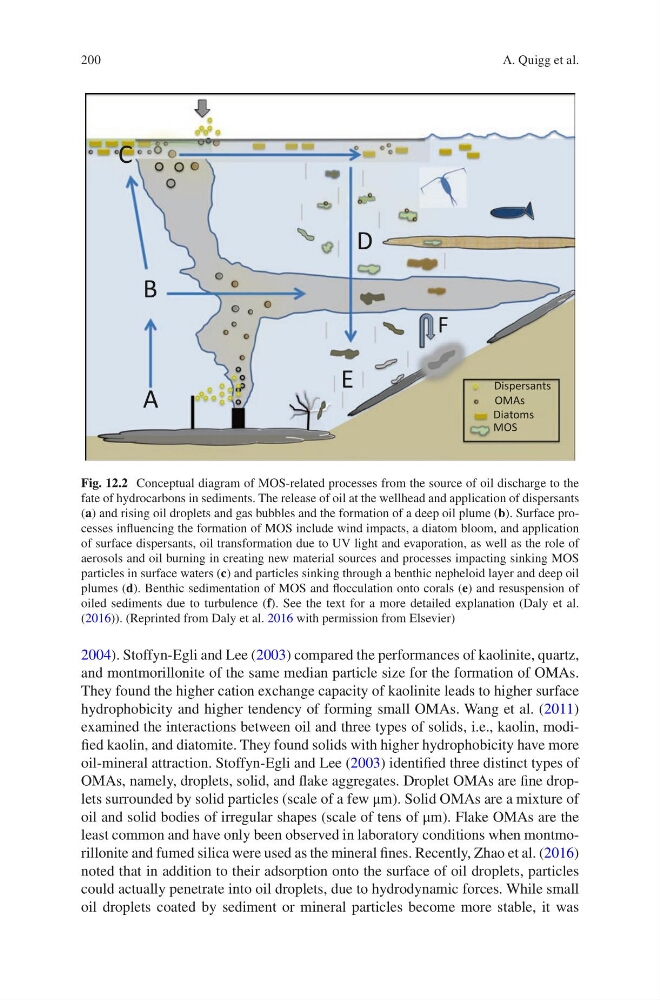
Fig. 12.2 Conceptual diagram of MOS-related processes from the source of oil discharge to the
fate of hydrocarbons in sediments. The release of oil at the wellhead and application of dispersants
(a) and rising oil droplets and gas bubbles and the formation of a deep oil plume (b). Surface processes influencing the formation of MOS include wind impacts, a diatom bloom, and application
of surface dispersants, oil transformation due to UV light and evaporation, as well as the role of
aerosols and oil burning in creating new material sources and processes impacting sinking MOS
particles in surface waters (c) and particles sinking through a benthic nepheloid layer and deep oil
plumes (d). Benthic sedimentation of MOS and flocculation onto corals (e) and resuspension of
oiled sediments due to turbulence (f). See the text for a more detailed explanation (Daly et al.
(2016)). (Reprinted from Daly et al. 2016 with permission from Elsevier)
A. Quigg et al.
2004). Stoffyn-Egli and Lee (2003) compared the performances of kaolinite, quartz,
and montmorillonite of the same median particle size for the formation of OMAs.
They found the higher cation exchange capacity of kaolinite leads to higher surface
hydrophobicity and higher tendency of forming small OMAs. Wang et al. (2011)
examined the interactions between oil and three types of solids, i.e., kaolin, modified kaolin, and diatomite. They found solids with higher hydrophobicity have more
oil-mineral attraction. Stoffyn-Egli and Lee (2003) identified three distinct types of
OMAs, namely, droplets, solid, and flake aggregates. Droplet OMAs are fine droplets surrounded by solid particles (scale of a few μm). Solid OMAs are a mixture of
oil and solid bodies of irregular shapes (scale of tens of μm). Flake OMAs are the
least common and have only been observed in laboratory conditions when montmorillonite and fumed silica were used as the mineral fines. Recently, Zhao et al. (2016)
noted that in addition to their adsorption onto the surface of oil droplets, particles
could actually penetrate into oil droplets, due to hydrodynamic forces. While small
oil droplets coated by sediment or mineral particles become more stable, it was
&
ŝƐƉĞƌƐĂŶƚƐ
KDƐ
ŝĂƚŽŵƐ
DK^
Fig. 12.2 Conceptual diagram of MOS-related processes from the source of oil discharge to the
fate of hydrocarbons in sediments. The release of oil at the wellhead and application of dispersants
(a) and rising oil droplets and gas bubbles and the formation of a deep oil plume (b). Surface processes influencing the formation of MOS include wind impacts, a diatom bloom, and application
of surface dispersants, oil transformation due to UV light and evaporation, as well as the role of
aerosols and oil burning in creating new material sources and processes impacting sinking MOS
particles in surface waters (c) and particles sinking through a benthic nepheloid layer and deep oil
plumes (d). Benthic sedimentation of MOS and flocculation onto corals (e) and resuspension of
oiled sediments due to turbulence (f). See the text for a more detailed explanation (Daly et al.
(2016)). (Reprinted from Daly et al. 2016 with permission from Elsevier)
A. Quigg et al.