

199
the terms oil-sediment aggregates (OSA) (Bandara et al. 2011; Cai et al. 2017) and
oil-suspended particulate matter aggregates (OSMAs) (Khelifa et al. 2008a, b;
Gong et al. 2014; Loh et al. 2014) have also been used to describe the association of
oil droplets in or near the coastal zone, where inorganic mineral particles are predominant and ubiquitous. The term oil-particle aggregates (OPAs) is now commonly used to describe oil-particle interactions involving both inorganic and organic
matter (Fitzpatrick et al. 2015; Zhao et al. 2016, 2017) and is defined by Gustitus
and Clement (2017) to describe the aggregates that are on a scale of 1 mm or less.
OMA/OPAs may have neutral buoyancy and float at or below the water surface or
may sink and become entrained in sediments where they may also become buried
and resuspended by turbulence (Lee et al. 2008; Gong et al. 2014; Fitzpatrick et al.
2015; Gustitus and Clement 2017). In contrast to these microscopic OPAs, the interaction of oil with coarse sediments along sandy marine shorelines may also result in
the formation of macroscopic sediment-oil agglomerates (SOA, cm sized) or even
massive sediment-oil mats (SOM, meter), which although similar in composition to
their microscopic counterparts have different fates and effects on ecosystems
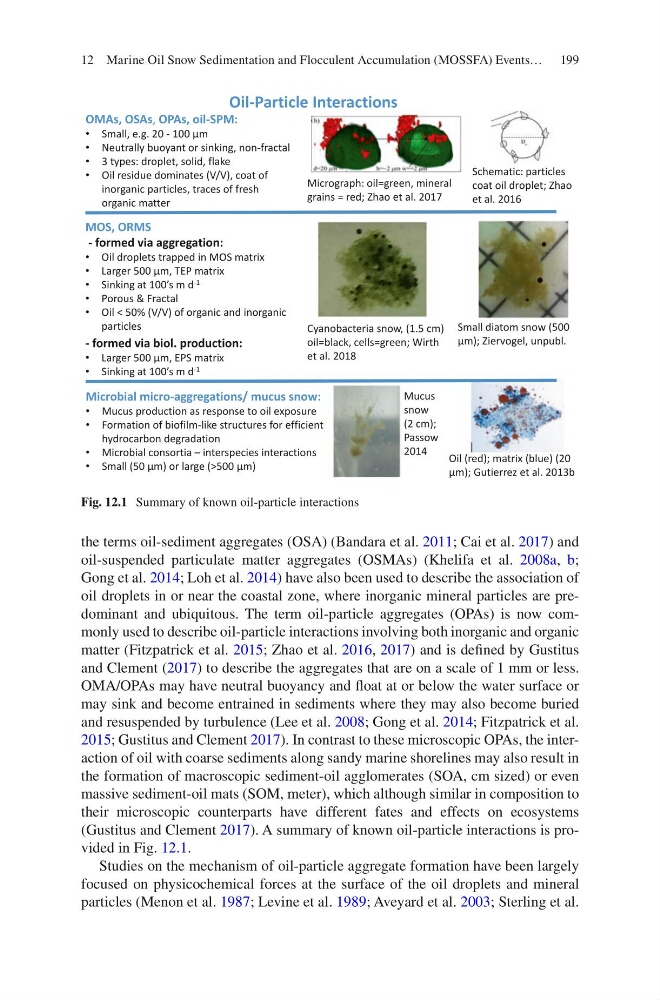
(Gustitus and Clement 2017). A summary of known oil-particle interactions is provided in Fig. 12.1.
Studies on the mechanism of oil-particle aggregate formation have been largely
focused on physicochemical forces at the surface of the oil droplets and mineral
particles (Menon et al. 1987; Levine et al. 1989; Aveyard et al. 2003; Sterling et al.
KŝůͲWĂƌƚŝĐůĞ/ŶƚĞƌĂĐƚŝŽŶƐ
^ĐŚĞŵĂƚŝĐ͗ƉĂƌƚŝĐůĞƐ
ĐŽĂƚŽŝůĚƌŽƉůĞƚ͖ŚĂŽ
ĞƚĂů͘ϮϬϭϲ
DŝĐƌŽŐƌĂƉŚ͗ŽŝůсŐƌĞĞŶ͕ŵŝŶĞƌĂů
ŐƌĂŝŶƐсƌĞĚ͖ŚĂŽĞƚĂů͘ϮϬϭϳ
KDƐ͕K^Ɛ͕ KWƐ͕ŽŝůͲ^WD͗
^ŵĂůů͕Ğ͘Ő͘ϮϬͲ ϭϬϬђŵ
EĞƵƚƌĂůůLJďƵŽLJĂŶƚŽƌƐŝŶŬŝŶŐ͕ŶŽŶͲĨƌĂĐƚĂů
ϯƚLJƉĞƐ͗ĚƌŽƉůĞƚ͕ƐŽůŝĚ͕ĨůĂŬĞ
KŝůƌĞƐŝĚƵĞĚŽŵŝŶĂƚĞƐ;sͬsͿ͕ĐŽĂƚŽĨ
ŝŶŽƌŐĂŶŝĐƉĂƌƚŝĐůĞƐ͕ƚƌĂĐĞƐŽĨĨƌĞƐŚ
ŽƌŐĂŶŝĐŵĂƚƚĞƌ
DK^͕KZD^
Ͳ ĨŽƌŵĞĚǀŝĂĂŐŐƌĞŐĂƚŝŽŶ͗
KŝůĚƌŽƉůĞƚƐƚƌĂƉƉĞĚŝŶDK^ŵĂƚƌŝdž
>ĂƌŐĞƌϱϬϬђŵ͕dWŵĂƚƌŝdž
^ŝŶŬŝŶŐĂƚϭϬϬ͛ƐŵĚ Ͳϭ
WŽƌŽƵƐΘ&ƌĂĐƚĂů
KŝůфϱϬй;sͬsͿŽĨŽƌŐĂŶŝĐĂŶĚŝŶŽƌŐĂŶŝĐ
ƉĂƌƚŝĐůĞƐ
LJĂŶŽďĂĐƚĞƌŝĂƐŶŽǁ͕;ϭ͘ϱĐŵͿ
ŽŝůсďůĂĐŬ͕ĐĞůůƐсŐƌĞĞŶ͖tŝƌƚŚ
ĞƚĂů͘ϮϬϭϴ
^ŵĂůůĚŝĂƚŽŵƐŶŽǁ;ϱϬϬ
ђŵͿ͖ŝĞƌǀŽŐĞů͕ƵŶƉƵďů͘
Ͳ ĨŽƌŵĞĚǀŝĂďŝŽů͘ƉƌŽĚƵĐƚŝŽŶ͗
>ĂƌŐĞƌϱϬϬђŵ͕W^ŵĂƚƌŝdž
^ŝŶŬŝŶŐĂƚϭϬϬ͛ƐŵĚ Ͳϭ
DŝĐƌŽďŝĂůŵŝĐƌŽͲĂŐŐƌĞŐĂƚŝŽŶƐͬŵƵĐƵƐƐŶŽǁ͗
DƵĐƵƐƉƌŽĚƵĐƚŝŽŶĂƐƌĞƐƉŽŶƐĞƚŽŽŝůĞdžƉŽƐƵƌĞ
&ŽƌŵĂƚŝŽŶŽĨďŝŽĨŝůŵͲůŝŬĞƐƚƌƵĐƚƵƌĞƐĨŽƌĞĨĨŝĐŝĞŶƚ
ŚLJĚƌŽĐĂƌďŽŶĚĞŐƌĂĚĂƚŝŽŶ
DŝĐƌŽďŝĂůĐŽŶƐŽƌƚŝĂʹ ŝŶƚĞƌƐƉĞĐŝĞƐŝŶƚĞƌĂĐƚŝŽŶƐ
^ŵĂůů;ϱϬђŵͿŽƌůĂƌŐĞ;хϱϬϬ ђŵͿ
Kŝů;ƌĞĚͿ͖ŵĂƚƌŝdž;ďůƵĞͿ;ϮϬ
ђŵͿ͖'ƵƚŝĞƌƌĞnjĞƚĂů͘ϮϬϭϯď
DƵĐƵƐ
ƐŶŽǁ
;ϮĐŵͿ͖
WĂƐƐŽǁ
ϮϬϭϰ
Fig. 12.1 Summary of known oil-particle interactions
12 Marine Oil Snow Sedimentation and Flocculent Accumulation (MOSSFA) Events…
the terms oil-sediment aggregates (OSA) (Bandara et al. 2011; Cai et al. 2017) and
oil-suspended particulate matter aggregates (OSMAs) (Khelifa et al. 2008a, b;
Gong et al. 2014; Loh et al. 2014) have also been used to describe the association of
oil droplets in or near the coastal zone, where inorganic mineral particles are predominant and ubiquitous. The term oil-particle aggregates (OPAs) is now commonly used to describe oil-particle interactions involving both inorganic and organic
matter (Fitzpatrick et al. 2015; Zhao et al. 2016, 2017) and is defined by Gustitus
and Clement (2017) to describe the aggregates that are on a scale of 1 mm or less.
OMA/OPAs may have neutral buoyancy and float at or below the water surface or
may sink and become entrained in sediments where they may also become buried
and resuspended by turbulence (Lee et al. 2008; Gong et al. 2014; Fitzpatrick et al.
2015; Gustitus and Clement 2017). In contrast to these microscopic OPAs, the interaction of oil with coarse sediments along sandy marine shorelines may also result in
the formation of macroscopic sediment-oil agglomerates (SOA, cm sized) or even
massive sediment-oil mats (SOM, meter), which although similar in composition to
their microscopic counterparts have different fates and effects on ecosystems
(Gustitus and Clement 2017). A summary of known oil-particle interactions is provided in Fig. 12.1.
Studies on the mechanism of oil-particle aggregate formation have been largely
focused on physicochemical forces at the surface of the oil droplets and mineral
particles (Menon et al. 1987; Levine et al. 1989; Aveyard et al. 2003; Sterling et al.
KŝůͲWĂƌƚŝĐůĞ/ŶƚĞƌĂĐƚŝŽŶƐ
^ĐŚĞŵĂƚŝĐ͗ƉĂƌƚŝĐůĞƐ
ĐŽĂƚŽŝůĚƌŽƉůĞƚ͖ŚĂŽ
ĞƚĂů͘ϮϬϭϲ
DŝĐƌŽŐƌĂƉŚ͗ŽŝůсŐƌĞĞŶ͕ŵŝŶĞƌĂů
ŐƌĂŝŶƐсƌĞĚ͖ŚĂŽĞƚĂů͘ϮϬϭϳ
KDƐ͕K^Ɛ͕ KWƐ͕ŽŝůͲ^WD͗
^ŵĂůů͕Ğ͘Ő͘ϮϬͲ ϭϬϬђŵ
EĞƵƚƌĂůůLJďƵŽLJĂŶƚŽƌƐŝŶŬŝŶŐ͕ŶŽŶͲĨƌĂĐƚĂů
ϯƚLJƉĞƐ͗ĚƌŽƉůĞƚ͕ƐŽůŝĚ͕ĨůĂŬĞ
KŝůƌĞƐŝĚƵĞĚŽŵŝŶĂƚĞƐ;sͬsͿ͕ĐŽĂƚŽĨ
ŝŶŽƌŐĂŶŝĐƉĂƌƚŝĐůĞƐ͕ƚƌĂĐĞƐŽĨĨƌĞƐŚ
ŽƌŐĂŶŝĐŵĂƚƚĞƌ
DK^͕KZD^
Ͳ ĨŽƌŵĞĚǀŝĂĂŐŐƌĞŐĂƚŝŽŶ͗
KŝůĚƌŽƉůĞƚƐƚƌĂƉƉĞĚŝŶDK^ŵĂƚƌŝdž
>ĂƌŐĞƌϱϬϬђŵ͕dWŵĂƚƌŝdž
^ŝŶŬŝŶŐĂƚϭϬϬ͛ƐŵĚ Ͳϭ
WŽƌŽƵƐΘ&ƌĂĐƚĂů
KŝůфϱϬй;sͬsͿŽĨŽƌŐĂŶŝĐĂŶĚŝŶŽƌŐĂŶŝĐ
ƉĂƌƚŝĐůĞƐ
LJĂŶŽďĂĐƚĞƌŝĂƐŶŽǁ͕;ϭ͘ϱĐŵͿ
ŽŝůсďůĂĐŬ͕ĐĞůůƐсŐƌĞĞŶ͖tŝƌƚŚ
ĞƚĂů͘ϮϬϭϴ
^ŵĂůůĚŝĂƚŽŵƐŶŽǁ;ϱϬϬ
ђŵͿ͖ŝĞƌǀŽŐĞů͕ƵŶƉƵďů͘
Ͳ ĨŽƌŵĞĚǀŝĂďŝŽů͘ƉƌŽĚƵĐƚŝŽŶ͗
>ĂƌŐĞƌϱϬϬђŵ͕W^ŵĂƚƌŝdž
^ŝŶŬŝŶŐĂƚϭϬϬ͛ƐŵĚ Ͳϭ
DŝĐƌŽďŝĂůŵŝĐƌŽͲĂŐŐƌĞŐĂƚŝŽŶƐͬŵƵĐƵƐƐŶŽǁ͗
DƵĐƵƐƉƌŽĚƵĐƚŝŽŶĂƐƌĞƐƉŽŶƐĞƚŽŽŝůĞdžƉŽƐƵƌĞ
&ŽƌŵĂƚŝŽŶŽĨďŝŽĨŝůŵͲůŝŬĞƐƚƌƵĐƚƵƌĞƐĨŽƌĞĨĨŝĐŝĞŶƚ
ŚLJĚƌŽĐĂƌďŽŶĚĞŐƌĂĚĂƚŝŽŶ
DŝĐƌŽďŝĂůĐŽŶƐŽƌƚŝĂʹ ŝŶƚĞƌƐƉĞĐŝĞƐŝŶƚĞƌĂĐƚŝŽŶƐ
^ŵĂůů;ϱϬђŵͿŽƌůĂƌŐĞ;хϱϬϬ ђŵͿ
Kŝů;ƌĞĚͿ͖ŵĂƚƌŝdž;ďůƵĞͿ;ϮϬ
ђŵͿ͖'ƵƚŝĞƌƌĞnjĞƚĂů͘ϮϬϭϯď
DƵĐƵƐ
ƐŶŽǁ
;ϮĐŵͿ͖
WĂƐƐŽǁ
ϮϬϭϰ
Fig. 12.1 Summary of known oil-particle interactions
12 Marine Oil Snow Sedimentation and Flocculent Accumulation (MOSSFA) Events…