

8
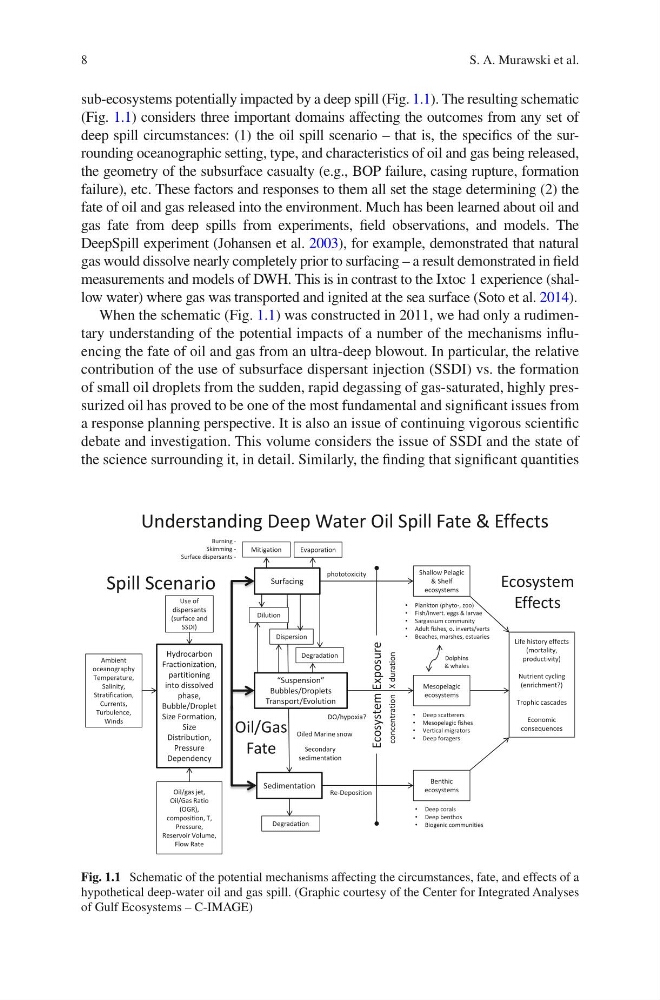
sub-ecosystems potentially impacted by a deep spill (Fig. 1.1). The resulting schematic
(Fig. 1.1) considers three important domains affecting the outcomes from any set of
deep spill circumstances: (1) the oil spill scenario – that is, the specifics of the surrounding oceanographic setting, type, and characteristics of oil and gas being released,
the geometry of the subsurface casualty (e.g., BOP failure, casing rupture, formation
failure), etc. These factors and responses to them all set the stage determining (2) the
fate of oil and gas released into the environment. Much has been learned about oil and
gas fate from deep spills from experiments, field observations, and models. The
DeepSpill experiment (Johansen et al. 2003), for example, demonstrated that natural
gas would dissolve nearly completely prior to surfacing – a result demonstrated in field
measurements and models of DWH. This is in contrast to the Ixtoc 1 experience (shallow water) where gas was transported and ignited at the sea surface (Soto et al. 2014).
When the schematic (Fig. 1.1) was constructed in 2011, we had only a rudimentary understanding of the potential impacts of a number of the mechanisms influencing the fate of oil and gas from an ultra-deep blowout. In particular, the relative
contribution of the use of subsurface dispersant injection (SSDI) vs. the formation
of small oil droplets from the sudden, rapid degassing of gas-saturated, highly pressurized oil has proved to be one of the most fundamental and significant issues from
a response planning perspective. It is also an issue of continuing vigorous scientific
debate and investigation. This volume considers the issue of SSDI and the state of
the science surrounding it, in detail. Similarly, the finding that significant quantities
hƐĞŽĨ
ĚŝƐƉĞƌƐĂŶƚƐ
;ƐƵƌĨĂĐĞĂŶĚ
^^/Ϳ
KŝůͬŐĂƐũĞƚ͕
Kŝůͬ'ĂƐZĂƚŝŽ
;K'ZͿ͕
ĐŽŵƉŽƐŝƚŝŽŶ͕d͕
WƌĞƐƐƵƌĞ͕
ZĞƐĞƌǀŽŝƌsŽůƵŵĞ͕
&ůŽǁZĂƚĞ
ŵďŝĞŶƚ
ŽĐĞĂŶŽŐƌĂƉŚLJ
dĞŵƉĞƌĂƚƵƌĞ͕
^ĂůŝŶŝƚLJ͕
^ƚƌĂƚŝĨŝĐĂƚŝŽŶ͕
ƵƌƌĞŶƚƐ͕
dƵƌďƵůĞŶĐĞ͕
tŝŶĚƐ
͞^ƵƐƉĞŶƐŝŽŶ͟
ƵďďůĞƐͬƌŽƉůĞƚƐ
dƌĂŶƐƉŽƌƚͬǀŽůƵƚŝŽŶ
ŝůƵƚŝŽŶ
ŝƐƉĞƌƐŝŽŶ
ĞŐƌĂĚĂƚŝŽŶ
ĞŐƌĂĚĂƚŝŽŶ
^ĞĐŽŶĚĂƌLJ
ƐĞĚŝŵĞŶƚĂƚŝŽŶ
DŝƚŝŐĂƚŝŽŶ
ƵƌŶŝŶŐͲ
^ŬŝŵŵŝŶŐͲ
^ƵƌĨĂĐĞĚŝƐƉĞƌƐĂŶƚƐͲ
^ŚĂůůŽǁWĞůĂŐŝĐ
Θ^ŚĞůĨ
ĞĐŽƐLJƐƚĞŵƐ
DĞƐŽƉĞůĂŐŝĐ
ĞĐŽƐLJƐƚĞŵƐ
ĞŶƚŚŝĐ
ĞĐŽƐLJƐƚĞŵƐ
>ŝĨĞŚŝƐƚŽƌLJĞĨĨĞĐƚƐ
;ŵŽƌƚĂůŝƚLJ͕
ƉƌŽĚƵĐƚŝǀŝƚLJͿ
EƵƚƌŝĞŶƚĐLJĐůŝŶŐ
;ĞŶƌŝĐŚŵĞŶƚ͍Ϳ
dƌŽƉŚŝĐĐĂƐĐĂĚĞƐ
ĐŽŶŽŵŝĐ
ĐŽŶƐĞƋƵĞŶĐĞƐ
WůĂŶŬƚŽŶ;ƉŚLJƚŽͲ͕njŽŽͿ
&ŝƐŚͬŝŶǀĞƌƚ͘ĞŐŐƐΘůĂƌǀĂĞ
^ĂƌŐĂƐƐƵŵ ĐŽŵŵƵŶŝƚLJ
ĚƵůƚĨŝƐŚĞƐ͕Ž͘ŝŶǀĞƌƚƐͬǀĞƌƚƐ
ĞĂĐŚĞƐ͕ŵĂƌƐŚĞƐ͕ĞƐƚƵĂƌŝĞƐ
ĞĞƉƐĐĂƚƚĞƌĞƌƐ
DĞƐŽƉĞůĂŐŝĐĨŝƐŚĞƐ
sĞƌƚŝĐĂůŵŝŐƌĂƚŽƌƐ
ĞĞƉĨŽƌĂŐĞƌƐ
ĞĞƉĐŽƌĂůƐ
ĞĞƉďĞŶƚŚŽƐ
ŝŽŐĞŶŝĐĐŽŵŵƵŶŝƚŝĞƐ
ŽůƉŚŝŶƐ
ΘǁŚĂůĞƐ
ĐŽƐLJƐƚĞŵdžƉŽƐƵƌĞ
,LJĚƌŽĐĂƌďŽŶ
&ƌĂĐƚŝŽŶŝnjĂƚŝŽŶ͕
ƉĂƌƚŝƚŝŽŶŝŶŐ
ŝŶƚŽĚŝƐƐŽůǀĞĚ
ƉŚĂƐĞ͕
ƵďďůĞͬƌŽƉůĞƚ
^ŝnjĞ&ŽƌŵĂƚŝŽŶ͕
^ŝnjĞ
ŝƐƚƌŝďƵƚŝŽŶ͕
WƌĞƐƐƵƌĞ
ĞƉĞŶĚĞŶĐLJ
Kŝůͬ'ĂƐ
&ĂƚĞ
ĐŽƐLJƐƚĞŵ
ĨĨĞĐƚƐ
^Ɖŝůů^ĐĞŶĂƌŝŽ
hŶĚĞƌƐƚĂŶĚŝŶŐĞĞƉtĂƚĞƌKŝů^Ɖŝůů&ĂƚĞΘĨĨĞĐƚƐ
ĐŽŶĐĞŶƚƌĂƚŝŽŶyĚƵƌĂƚŝŽŶ
KͬŚLJƉŽdžŝĂ͍
KŝůĞĚDĂƌŝŶĞƐŶŽǁ
ǀĂƉŽƌĂƚŝŽŶ
ƉŚŽƚŽƚŽdžŝĐŝƚLJ
ZĞͲĞƉŽƐŝƚŝŽŶ
^ƵƌĨĂĐŝŶŐ
^ĞĚŝŵĞŶƚĂƚŝŽŶ
Fig. 1.1 Schematic of the potential mechanisms affecting the circumstances, fate, and effects of a
hypothetical deep-water oil and gas spill. (Graphic courtesy of the Center for Integrated Analyses
of Gulf Ecosystems – C-IMAGE)
S. A. Murawski et al.
sub-ecosystems potentially impacted by a deep spill (Fig. 1.1). The resulting schematic
(Fig. 1.1) considers three important domains affecting the outcomes from any set of
deep spill circumstances: (1) the oil spill scenario – that is, the specifics of the surrounding oceanographic setting, type, and characteristics of oil and gas being released,
the geometry of the subsurface casualty (e.g., BOP failure, casing rupture, formation
failure), etc. These factors and responses to them all set the stage determining (2) the
fate of oil and gas released into the environment. Much has been learned about oil and
gas fate from deep spills from experiments, field observations, and models. The
DeepSpill experiment (Johansen et al. 2003), for example, demonstrated that natural
gas would dissolve nearly completely prior to surfacing – a result demonstrated in field
measurements and models of DWH. This is in contrast to the Ixtoc 1 experience (shallow water) where gas was transported and ignited at the sea surface (Soto et al. 2014).
When the schematic (Fig. 1.1) was constructed in 2011, we had only a rudimentary understanding of the potential impacts of a number of the mechanisms influencing the fate of oil and gas from an ultra-deep blowout. In particular, the relative
contribution of the use of subsurface dispersant injection (SSDI) vs. the formation
of small oil droplets from the sudden, rapid degassing of gas-saturated, highly pressurized oil has proved to be one of the most fundamental and significant issues from
a response planning perspective. It is also an issue of continuing vigorous scientific
debate and investigation. This volume considers the issue of SSDI and the state of
the science surrounding it, in detail. Similarly, the finding that significant quantities
hƐĞŽĨ
ĚŝƐƉĞƌƐĂŶƚƐ
;ƐƵƌĨĂĐĞĂŶĚ
^^/Ϳ
KŝůͬŐĂƐũĞƚ͕
Kŝůͬ'ĂƐZĂƚŝŽ
;K'ZͿ͕
ĐŽŵƉŽƐŝƚŝŽŶ͕d͕
WƌĞƐƐƵƌĞ͕
ZĞƐĞƌǀŽŝƌsŽůƵŵĞ͕
&ůŽǁZĂƚĞ
ŵďŝĞŶƚ
ŽĐĞĂŶŽŐƌĂƉŚLJ
dĞŵƉĞƌĂƚƵƌĞ͕
^ĂůŝŶŝƚLJ͕
^ƚƌĂƚŝĨŝĐĂƚŝŽŶ͕
ƵƌƌĞŶƚƐ͕
dƵƌďƵůĞŶĐĞ͕
tŝŶĚƐ
͞^ƵƐƉĞŶƐŝŽŶ͟
ƵďďůĞƐͬƌŽƉůĞƚƐ
dƌĂŶƐƉŽƌƚͬǀŽůƵƚŝŽŶ
ŝůƵƚŝŽŶ
ŝƐƉĞƌƐŝŽŶ
ĞŐƌĂĚĂƚŝŽŶ
ĞŐƌĂĚĂƚŝŽŶ
^ĞĐŽŶĚĂƌLJ
ƐĞĚŝŵĞŶƚĂƚŝŽŶ
DŝƚŝŐĂƚŝŽŶ
ƵƌŶŝŶŐͲ
^ŬŝŵŵŝŶŐͲ
^ƵƌĨĂĐĞĚŝƐƉĞƌƐĂŶƚƐͲ
^ŚĂůůŽǁWĞůĂŐŝĐ
Θ^ŚĞůĨ
ĞĐŽƐLJƐƚĞŵƐ
DĞƐŽƉĞůĂŐŝĐ
ĞĐŽƐLJƐƚĞŵƐ
ĞŶƚŚŝĐ
ĞĐŽƐLJƐƚĞŵƐ
>ŝĨĞŚŝƐƚŽƌLJĞĨĨĞĐƚƐ
;ŵŽƌƚĂůŝƚLJ͕
ƉƌŽĚƵĐƚŝǀŝƚLJͿ
EƵƚƌŝĞŶƚĐLJĐůŝŶŐ
;ĞŶƌŝĐŚŵĞŶƚ͍Ϳ
dƌŽƉŚŝĐĐĂƐĐĂĚĞƐ
ĐŽŶŽŵŝĐ
ĐŽŶƐĞƋƵĞŶĐĞƐ
WůĂŶŬƚŽŶ;ƉŚLJƚŽͲ͕njŽŽͿ
&ŝƐŚͬŝŶǀĞƌƚ͘ĞŐŐƐΘůĂƌǀĂĞ
^ĂƌŐĂƐƐƵŵ ĐŽŵŵƵŶŝƚLJ
ĚƵůƚĨŝƐŚĞƐ͕Ž͘ŝŶǀĞƌƚƐͬǀĞƌƚƐ
ĞĂĐŚĞƐ͕ŵĂƌƐŚĞƐ͕ĞƐƚƵĂƌŝĞƐ
ĞĞƉƐĐĂƚƚĞƌĞƌƐ
DĞƐŽƉĞůĂŐŝĐĨŝƐŚĞƐ
sĞƌƚŝĐĂůŵŝŐƌĂƚŽƌƐ
ĞĞƉĨŽƌĂŐĞƌƐ
ĞĞƉĐŽƌĂůƐ
ĞĞƉďĞŶƚŚŽƐ
ŝŽŐĞŶŝĐĐŽŵŵƵŶŝƚŝĞƐ
ŽůƉŚŝŶƐ
ΘǁŚĂůĞƐ
ĐŽƐLJƐƚĞŵdžƉŽƐƵƌĞ
,LJĚƌŽĐĂƌďŽŶ
&ƌĂĐƚŝŽŶŝnjĂƚŝŽŶ͕
ƉĂƌƚŝƚŝŽŶŝŶŐ
ŝŶƚŽĚŝƐƐŽůǀĞĚ
ƉŚĂƐĞ͕
ƵďďůĞͬƌŽƉůĞƚ
^ŝnjĞ&ŽƌŵĂƚŝŽŶ͕
^ŝnjĞ
ŝƐƚƌŝďƵƚŝŽŶ͕
WƌĞƐƐƵƌĞ
ĞƉĞŶĚĞŶĐLJ
Kŝůͬ'ĂƐ
&ĂƚĞ
ĐŽƐLJƐƚĞŵ
ĨĨĞĐƚƐ
^Ɖŝůů^ĐĞŶĂƌŝŽ
hŶĚĞƌƐƚĂŶĚŝŶŐĞĞƉtĂƚĞƌKŝů^Ɖŝůů&ĂƚĞΘĨĨĞĐƚƐ
ĐŽŶĐĞŶƚƌĂƚŝŽŶyĚƵƌĂƚŝŽŶ
KͬŚLJƉŽdžŝĂ͍
KŝůĞĚDĂƌŝŶĞƐŶŽǁ
ǀĂƉŽƌĂƚŝŽŶ
ƉŚŽƚŽƚŽdžŝĐŝƚLJ
ZĞͲĞƉŽƐŝƚŝŽŶ
^ƵƌĨĂĐŝŶŐ
^ĞĚŝŵĞŶƚĂƚŝŽŶ
Fig. 1.1 Schematic of the potential mechanisms affecting the circumstances, fate, and effects of a
hypothetical deep-water oil and gas spill. (Graphic courtesy of the Center for Integrated Analyses
of Gulf Ecosystems – C-IMAGE)
S. A. Murawski et al.