

3.3 Biological Bio-augmented Composting and Secondary …
77
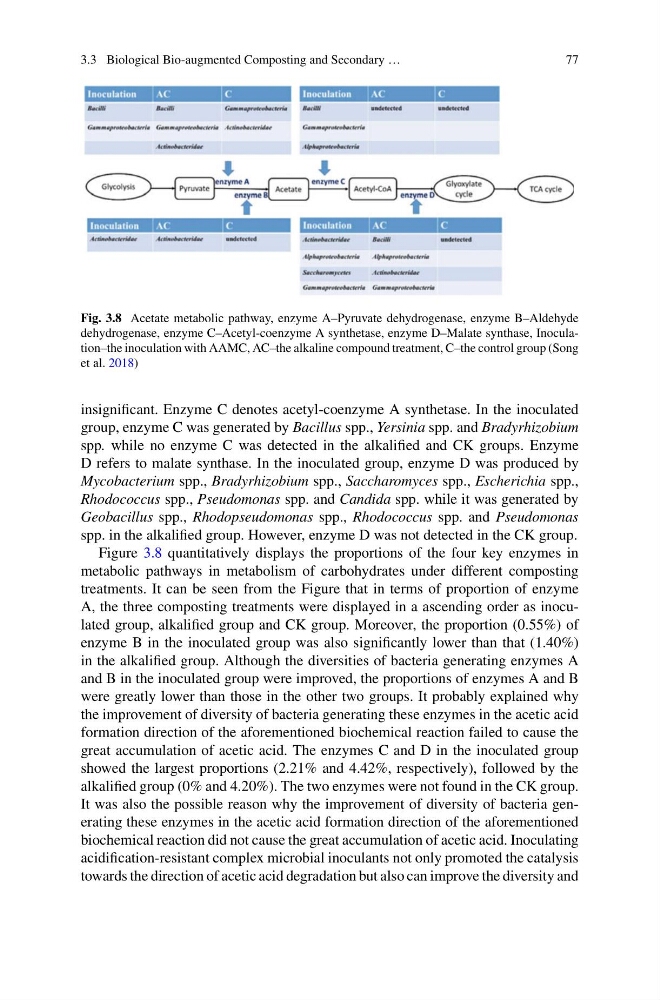
Fig. 3.8 Acetate metabolic pathway, enzyme A–Pyruvate dehydrogenase, enzyme B–Aldehyde
dehydrogenase, enzyme C–Acetyl-coenzyme A synthetase, enzyme D–Malate synthase, Inoculation–the inoculation with AAMC, AC–the alkaline compound treatment, C–the control group (Song
et al. 2018)
insignificant. Enzyme C denotes acetyl-coenzyme A synthetase. In the inoculated
group, enzyme C was generated by Bacillus spp., Yersinia spp. and Bradyrhizobium
spp. while no enzyme C was detected in the alkalified and CK groups. Enzyme
D refers to malate synthase. In the inoculated group, enzyme D was produced by
Mycobacterium spp., Bradyrhizobium spp., Saccharomyces spp., Escherichia spp.,
Rhodococcus spp., Pseudomonas spp. and Candida spp. while it was generated by
Geobacillus spp., Rhodopseudomonas spp., Rhodococcus spp. and Pseudomonas
spp. in the alkalified group. However, enzyme D was not detected in the CK group.
Figure 3.8 quantitatively displays the proportions of the four key enzymes in
metabolic pathways in metabolism of carbohydrates under different composting
treatments. It can be seen from the Figure that in terms of proportion of enzyme
A, the three composting treatments were displayed in a ascending order as inoculated group, alkalified group and CK group. Moreover, the proportion (0.55%) of
enzyme B in the inoculated group was also significantly lower than that (1.40%)
in the alkalified group. Although the diversities of bacteria generating enzymes A
and B in the inoculated group were improved, the proportions of enzymes A and B
were greatly lower than those in the other two groups. It probably explained why
the improvement of diversity of bacteria generating these enzymes in the acetic acid
formation direction of the aforementioned biochemical reaction failed to cause the
great accumulation of acetic acid. The enzymes C and D in the inoculated group
showed the largest proportions (2.21% and 4.42%, respectively), followed by the
alkalified group (0% and 4.20%). The two enzymes were not found in the CK group.
It was also the possible reason why the improvement of diversity of bacteria generating these enzymes in the acetic acid formation direction of the aforementioned
biochemical reaction did not cause the great accumulation of acetic acid. Inoculating
acidification-resistant complex microbial inoculants not only promoted the catalysis
towards the direction of acetic acid degradation but also can improve the diversity and
77
Fig. 3.8 Acetate metabolic pathway, enzyme A–Pyruvate dehydrogenase, enzyme B–Aldehyde
dehydrogenase, enzyme C–Acetyl-coenzyme A synthetase, enzyme D–Malate synthase, Inoculation–the inoculation with AAMC, AC–the alkaline compound treatment, C–the control group (Song
et al. 2018)
insignificant. Enzyme C denotes acetyl-coenzyme A synthetase. In the inoculated
group, enzyme C was generated by Bacillus spp., Yersinia spp. and Bradyrhizobium
spp. while no enzyme C was detected in the alkalified and CK groups. Enzyme
D refers to malate synthase. In the inoculated group, enzyme D was produced by
Mycobacterium spp., Bradyrhizobium spp., Saccharomyces spp., Escherichia spp.,
Rhodococcus spp., Pseudomonas spp. and Candida spp. while it was generated by
Geobacillus spp., Rhodopseudomonas spp., Rhodococcus spp. and Pseudomonas
spp. in the alkalified group. However, enzyme D was not detected in the CK group.
Figure 3.8 quantitatively displays the proportions of the four key enzymes in
metabolic pathways in metabolism of carbohydrates under different composting
treatments. It can be seen from the Figure that in terms of proportion of enzyme
A, the three composting treatments were displayed in a ascending order as inoculated group, alkalified group and CK group. Moreover, the proportion (0.55%) of
enzyme B in the inoculated group was also significantly lower than that (1.40%)
in the alkalified group. Although the diversities of bacteria generating enzymes A
and B in the inoculated group were improved, the proportions of enzymes A and B
were greatly lower than those in the other two groups. It probably explained why
the improvement of diversity of bacteria generating these enzymes in the acetic acid
formation direction of the aforementioned biochemical reaction failed to cause the
great accumulation of acetic acid. The enzymes C and D in the inoculated group
showed the largest proportions (2.21% and 4.42%, respectively), followed by the
alkalified group (0% and 4.20%). The two enzymes were not found in the CK group.
It was also the possible reason why the improvement of diversity of bacteria generating these enzymes in the acetic acid formation direction of the aforementioned
biochemical reaction did not cause the great accumulation of acetic acid. Inoculating
acidification-resistant complex microbial inoculants not only promoted the catalysis
towards the direction of acetic acid degradation but also can improve the diversity and