

3.3 Biological Bio-augmented Composting and Secondary …
73
Dothideomycetes
3.1%
mitosporic Ascomycota
3.1%
Basidiomycota
4.7%
Other Fungi
6.3%
Schizosaccharomycetes
14.1%
Sordariomycetes
9.4%
Eurotiomycetes
32.8%
Saccharomycetes
26.6%
Actinobacteria
5.5%
Other Bacteria
6.9%
Bacilli
6.4%
Deltaproteobacteria
0.5%
Epsilonproteobacteria
0.9%
Alphaproteobacteria
8.7%
Betaproteobacteria
11.5%
Clostridia
2.8%
Enterobacteriales
12.6%
Other
Gammaproteobacteria
16.6%
Pseudomonadales
27.6%
Bacteria
Fungi
a InoculaƟon group
Bacteria
Fungi
Betaproteobacteria
5.3%
Alphaproteobacteria
10.9%
Other
Gammaproteobacteria
16.9%
Clostridia
3.3%
Bacilli
16.0%
Deltaproteobacteria
5.0%
Enterobacteriales
14.2%
Epsilonproteobacteria
1.2%
Pseudomonadales
15.1%
Actinobacteria
4.4%
Other Bacteria
7.7%
Basidiomycota
4.9%
Other Fungi
4.9%
Leotiomycetes
1.6%
Dothideomycetes
1.6%
Sordariomycetes
10.8%
Eurotiomycetes
10.8%
Schizosaccharomycetes
17.3%
Saccharomycetes
48.1%
b Control
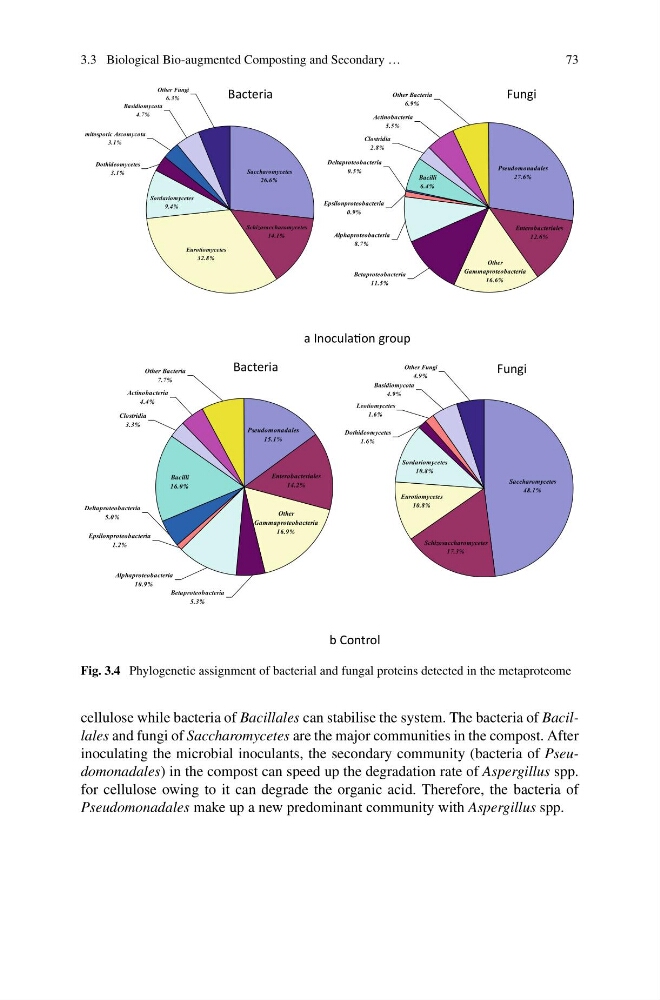
Fig. 3.4 Phylogenetic assignment of bacterial and fungal proteins detected in the metaproteome
cellulose while bacteria of Bacillales can stabilise the system. The bacteria of Bacillales and fungi of Saccharomycetes are the major communities in the compost. After
inoculating the microbial inoculants, the secondary community (bacteria of Pseudomonadales) in the compost can speed up the degradation rate of Aspergillus spp.
for cellulose owing to it can degrade the organic acid. Therefore, the bacteria of
Pseudomonadales make up a new predominant community with Aspergillus spp.
73
Dothideomycetes
3.1%
mitosporic Ascomycota
3.1%
Basidiomycota
4.7%
Other Fungi
6.3%
Schizosaccharomycetes
14.1%
Sordariomycetes
9.4%
Eurotiomycetes
32.8%
Saccharomycetes
26.6%
Actinobacteria
5.5%
Other Bacteria
6.9%
Bacilli
6.4%
Deltaproteobacteria
0.5%
Epsilonproteobacteria
0.9%
Alphaproteobacteria
8.7%
Betaproteobacteria
11.5%
Clostridia
2.8%
Enterobacteriales
12.6%
Other
Gammaproteobacteria
16.6%
Pseudomonadales
27.6%
Bacteria
Fungi
a InoculaƟon group
Bacteria
Fungi
Betaproteobacteria
5.3%
Alphaproteobacteria
10.9%
Other
Gammaproteobacteria
16.9%
Clostridia
3.3%
Bacilli
16.0%
Deltaproteobacteria
5.0%
Enterobacteriales
14.2%
Epsilonproteobacteria
1.2%
Pseudomonadales
15.1%
Actinobacteria
4.4%
Other Bacteria
7.7%
Basidiomycota
4.9%
Other Fungi
4.9%
Leotiomycetes
1.6%
Dothideomycetes
1.6%
Sordariomycetes
10.8%
Eurotiomycetes
10.8%
Schizosaccharomycetes
17.3%
Saccharomycetes
48.1%
b Control
Fig. 3.4 Phylogenetic assignment of bacterial and fungal proteins detected in the metaproteome
cellulose while bacteria of Bacillales can stabilise the system. The bacteria of Bacillales and fungi of Saccharomycetes are the major communities in the compost. After
inoculating the microbial inoculants, the secondary community (bacteria of Pseudomonadales) in the compost can speed up the degradation rate of Aspergillus spp.
for cellulose owing to it can degrade the organic acid. Therefore, the bacteria of
Pseudomonadales make up a new predominant community with Aspergillus spp.