

3.3 Biological Bio-augmented Composting and Secondary Pollution …
71
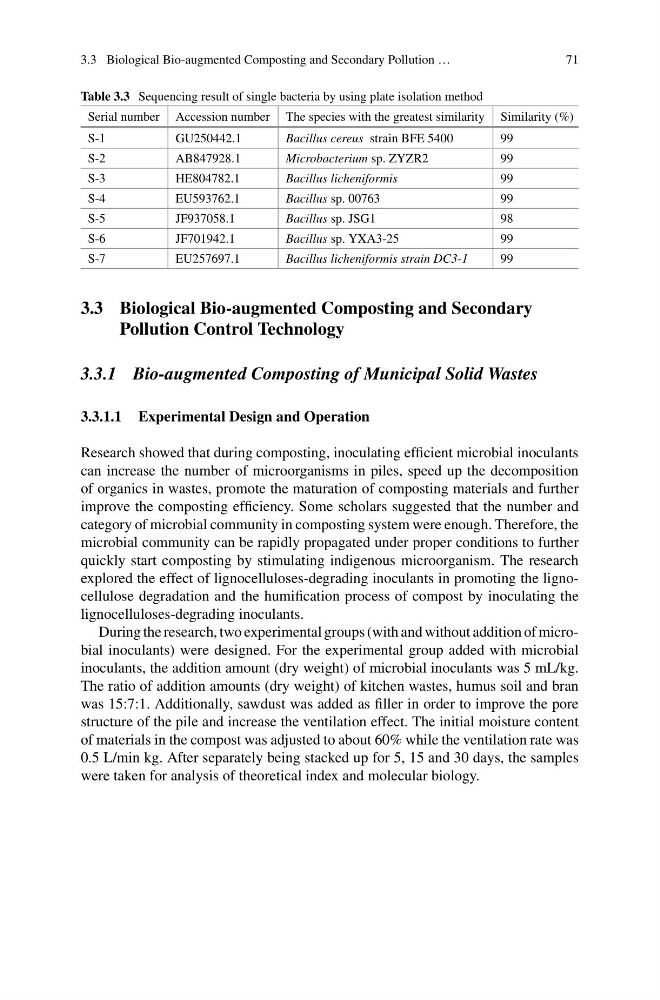
Table 3.3 Sequencing result of single bacteria by using plate isolation method
Serial number Accession number The species with the greatest similarity Similarity (%)
S-1
GU250442.1
Bacillus cereus strain BFE 5400
99
S-2
AB847928.1
Microbacterium sp. ZYZR2
99
S-3
HE804782.1
Bacillus licheniformis
99
S-4
EU593762.1
Bacillus sp. 00763
99
S-5
JF937058.1
Bacillus sp. JSG1
98
S-6
JF701942.1
Bacillus sp. YXA3-25
99
S-7
EU257697.1
Bacillus licheniformis strain DC3-1
99
3.3 Biological Bio-augmented Composting and Secondary
Pollution Control Technology
3.3.1 Bio-augmented Composting of Municipal Solid Wastes
3.3.1.1 Experimental Design and Operation
Research showed that during composting, inoculating efficient microbial inoculants
can increase the number of microorganisms in piles, speed up the decomposition
of organics in wastes, promote the maturation of composting materials and further
improve the composting efficiency. Some scholars suggested that the number and
category of microbial community in composting system were enough. Therefore, the
microbial community can be rapidly propagated under proper conditions to further
quickly start composting by stimulating indigenous microorganism. The research
explored the effect of lignocelluloses-degrading inoculants in promoting the lignocellulose degradation and the humification process of compost by inoculating the
lignocelluloses-degrading inoculants.
During the research, two experimental groups (with and without addition of microbial inoculants) were designed. For the experimental group added with microbial
inoculants, the addition amount (dry weight) of microbial inoculants was 5 mL/kg.
The ratio of addition amounts (dry weight) of kitchen wastes, humus soil and bran
was 15:7:1. Additionally, sawdust was added as filler in order to improve the pore
structure of the pile and increase the ventilation effect. The initial moisture content
of materials in the compost was adjusted to about 60% while the ventilation rate was
0.5 L/min kg. After separately being stacked up for 5, 15 and 30 days, the samples
were taken for analysis of theoretical index and molecular biology.
71
Table 3.3 Sequencing result of single bacteria by using plate isolation method
Serial number Accession number The species with the greatest similarity Similarity (%)
S-1
GU250442.1
Bacillus cereus strain BFE 5400
99
S-2
AB847928.1
Microbacterium sp. ZYZR2
99
S-3
HE804782.1
Bacillus licheniformis
99
S-4
EU593762.1
Bacillus sp. 00763
99
S-5
JF937058.1
Bacillus sp. JSG1
98
S-6
JF701942.1
Bacillus sp. YXA3-25
99
S-7
EU257697.1
Bacillus licheniformis strain DC3-1
99
3.3 Biological Bio-augmented Composting and Secondary
Pollution Control Technology
3.3.1 Bio-augmented Composting of Municipal Solid Wastes
3.3.1.1 Experimental Design and Operation
Research showed that during composting, inoculating efficient microbial inoculants
can increase the number of microorganisms in piles, speed up the decomposition
of organics in wastes, promote the maturation of composting materials and further
improve the composting efficiency. Some scholars suggested that the number and
category of microbial community in composting system were enough. Therefore, the
microbial community can be rapidly propagated under proper conditions to further
quickly start composting by stimulating indigenous microorganism. The research
explored the effect of lignocelluloses-degrading inoculants in promoting the lignocellulose degradation and the humification process of compost by inoculating the
lignocelluloses-degrading inoculants.
During the research, two experimental groups (with and without addition of microbial inoculants) were designed. For the experimental group added with microbial
inoculants, the addition amount (dry weight) of microbial inoculants was 5 mL/kg.
The ratio of addition amounts (dry weight) of kitchen wastes, humus soil and bran
was 15:7:1. Additionally, sawdust was added as filler in order to improve the pore
structure of the pile and increase the ventilation effect. The initial moisture content
of materials in the compost was adjusted to about 60% while the ventilation rate was
0.5 L/min kg. After separately being stacked up for 5, 15 and 30 days, the samples
were taken for analysis of theoretical index and molecular biology.