

5.8 Application of the Project of Centralised Supply of Biological Gas-II
133
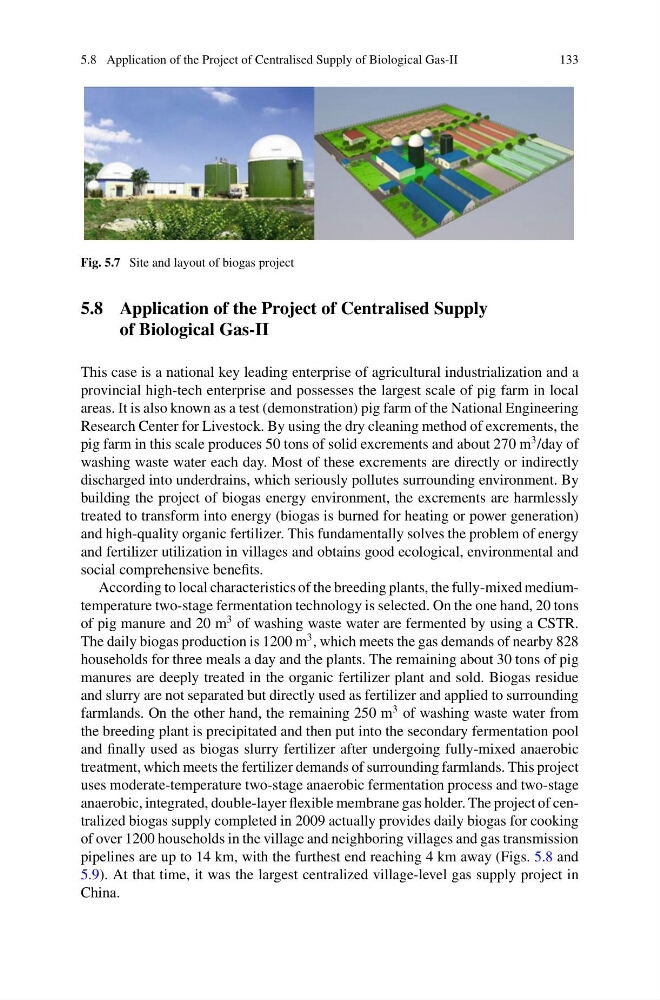
Fig. 5.7 Site and layout of biogas project
5.8 Application of the Project of Centralised Supply
of Biological Gas-II
This case is a national key leading enterprise of agricultural industrialization and a
provincial high-tech enterprise and possesses the largest scale of pig farm in local
areas. It is also known as a test (demonstration) pig farm of the National Engineering
Research Center for Livestock. By using the dry cleaning method of excrements, the
pig farm in this scale produces 50 tons of solid excrements and about 270 m
3 /day of
washing waste water each day. Most of these excrements are directly or indirectly
discharged into underdrains, which seriously pollutes surrounding environment. By
building the project of biogas energy environment, the excrements are harmlessly
treated to transform into energy (biogas is burned for heating or power generation)
and high-quality organic fertilizer. This fundamentally solves the problem of energy
and fertilizer utilization in villages and obtains good ecological, environmental and
social comprehensive benefits.
According to local characteristics of the breeding plants, the fully-mixed mediumtemperature two-stage fermentation technology is selected. On the one hand, 20 tons
of pig manure and 20 m
3 of washing waste water are fermented by using a CSTR.
The daily biogas production is 1200 m
3 , which meets the gas demands of nearby 828
households for three meals a day and the plants. The remaining about 30 tons of pig
manures are deeply treated in the organic fertilizer plant and sold. Biogas residue
and slurry are not separated but directly used as fertilizer and applied to surrounding
farmlands. On the other hand, the remaining 250 m
3 of washing waste water from
the breeding plant is precipitated and then put into the secondary fermentation pool
and finally used as biogas slurry fertilizer after undergoing fully-mixed anaerobic
treatment, which meets the fertilizer demands of surrounding farmlands. This project
uses moderate-temperature two-stage anaerobic fermentation process and two-stage
anaerobic, integrated, double-layer flexible membrane gas holder. The project of centralized biogas supply completed in 2009 actually provides daily biogas for cooking
of over 1200 households in the village and neighboring villages and gas transmission
pipelines are up to 14 km, with the furthest end reaching 4 km away (Figs. 5.8 and
5.9). At that time, it was the largest centralized village-level gas supply project in
China.
133
Fig. 5.7 Site and layout of biogas project
5.8 Application of the Project of Centralised Supply
of Biological Gas-II
This case is a national key leading enterprise of agricultural industrialization and a
provincial high-tech enterprise and possesses the largest scale of pig farm in local
areas. It is also known as a test (demonstration) pig farm of the National Engineering
Research Center for Livestock. By using the dry cleaning method of excrements, the
pig farm in this scale produces 50 tons of solid excrements and about 270 m
3 /day of
washing waste water each day. Most of these excrements are directly or indirectly
discharged into underdrains, which seriously pollutes surrounding environment. By
building the project of biogas energy environment, the excrements are harmlessly
treated to transform into energy (biogas is burned for heating or power generation)
and high-quality organic fertilizer. This fundamentally solves the problem of energy
and fertilizer utilization in villages and obtains good ecological, environmental and
social comprehensive benefits.
According to local characteristics of the breeding plants, the fully-mixed mediumtemperature two-stage fermentation technology is selected. On the one hand, 20 tons
of pig manure and 20 m
3 of washing waste water are fermented by using a CSTR.
The daily biogas production is 1200 m
3 , which meets the gas demands of nearby 828
households for three meals a day and the plants. The remaining about 30 tons of pig
manures are deeply treated in the organic fertilizer plant and sold. Biogas residue
and slurry are not separated but directly used as fertilizer and applied to surrounding
farmlands. On the other hand, the remaining 250 m
3 of washing waste water from
the breeding plant is precipitated and then put into the secondary fermentation pool
and finally used as biogas slurry fertilizer after undergoing fully-mixed anaerobic
treatment, which meets the fertilizer demands of surrounding farmlands. This project
uses moderate-temperature two-stage anaerobic fermentation process and two-stage
anaerobic, integrated, double-layer flexible membrane gas holder. The project of centralized biogas supply completed in 2009 actually provides daily biogas for cooking
of over 1200 households in the village and neighboring villages and gas transmission
pipelines are up to 14 km, with the furthest end reaching 4 km away (Figs. 5.8 and
5.9). At that time, it was the largest centralized village-level gas supply project in
China.