

Water Chemistry Field Sampling
52
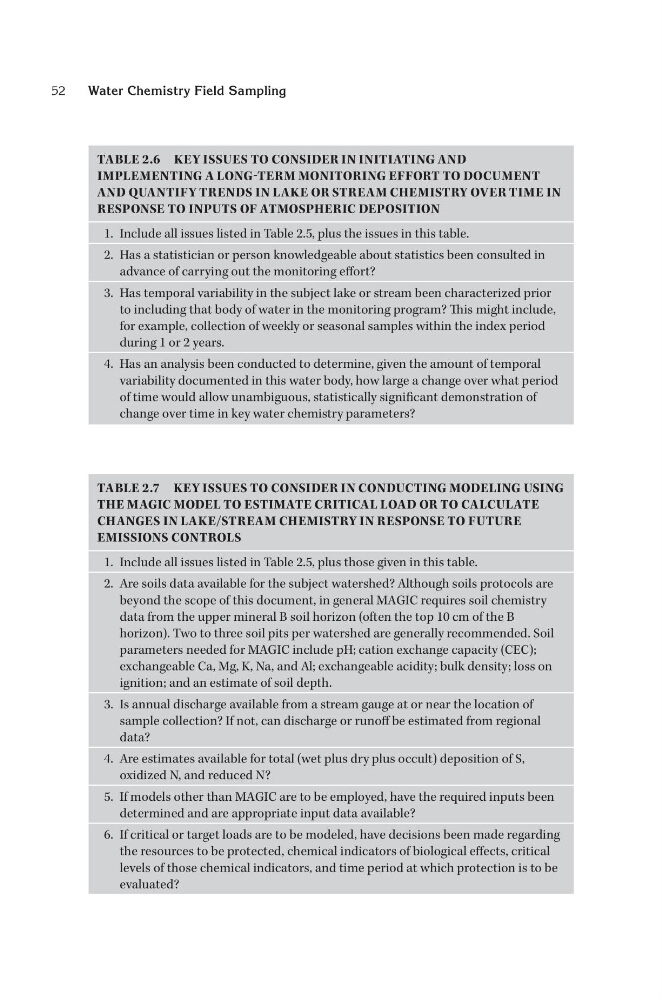
TABLE 2.6 KEY ISSUES TO CONSIDER IN INITIATING AND
IMPLEMENTING A LONG-TERM MONITORING EFFORT TO DOCUMENT
AND QUANTIFY TRENDS IN LAKE OR STREAM CHEMISTRY OVER TIME IN
RESPONSE TO INPUTS OF ATMOSPHERIC DEPOSITION
1. Include all issues listed in Table 2.5, plus the issues in this table.
2. Has a statistician or person knowledgeable about statistics been consulted in
advance of carrying out the monitoring effort?
3. Has temporal variability in the subject lake or stream been characterized prior
to including that body of water in the monitoring program? This might include,
for example, collection of weekly or seasonal samples within the index period
during 1 or 2 years.
4. Has an analysis been conducted to determine, given the amount of temporal
variability documented in this water body, how large a change over what period
of time would allow unambiguous, statistically significant demonstration of
change over time in key water chemistry parameters?
TABLE 2.7 KEY ISSUES TO CONSIDER IN CONDUCTING MODELING USING
THE MAGIC MODEL TO ESTIMATE CRITICAL LOAD OR TO CALCULATE
CHANGES IN LAKE/STREAM CHEMISTRY IN RESPONSE TO FUTURE
EMISSIONS CONTROLS
1. Include all issues listed in Table 2.5, plus those given in this table.
2. Are soils data available for the subject watershed? Although soils protocols are
beyond the scope of this document, in general MAGIC requires soil chemistry
data from the upper mineral B soil horizon (often the top 10 cm of the B
horizon). Two to three soil pits per watershed are generally recommended. Soil
parameters needed for MAGIC include pH; cation exchange capacity (CEC);
exchangeable Ca, Mg, K, Na, and Al; exchangeable acidity; bulk density; loss on
ignition; and an estimate of soil depth.
3. Is annual discharge available from a stream gauge at or near the location of
sample collection? If not, can discharge or runoff be estimated from regional
data?
4. Are estimates available for total (wet plus dry plus occult) deposition of S,
oxidized N, and reduced N?
5. If models other than MAGIC are to be employed, have the required inputs been
determined and are appropriate input data available?
6. If critical or target loads are to be modeled, have decisions been made regarding
the resources to be protected, chemical indicators of biological effects, critical
levels of those chemical indicators, and time period at which protection is to be
evaluated?
52
TABLE 2.6 KEY ISSUES TO CONSIDER IN INITIATING AND
IMPLEMENTING A LONG-TERM MONITORING EFFORT TO DOCUMENT
AND QUANTIFY TRENDS IN LAKE OR STREAM CHEMISTRY OVER TIME IN
RESPONSE TO INPUTS OF ATMOSPHERIC DEPOSITION
1. Include all issues listed in Table 2.5, plus the issues in this table.
2. Has a statistician or person knowledgeable about statistics been consulted in
advance of carrying out the monitoring effort?
3. Has temporal variability in the subject lake or stream been characterized prior
to including that body of water in the monitoring program? This might include,
for example, collection of weekly or seasonal samples within the index period
during 1 or 2 years.
4. Has an analysis been conducted to determine, given the amount of temporal
variability documented in this water body, how large a change over what period
of time would allow unambiguous, statistically significant demonstration of
change over time in key water chemistry parameters?
TABLE 2.7 KEY ISSUES TO CONSIDER IN CONDUCTING MODELING USING
THE MAGIC MODEL TO ESTIMATE CRITICAL LOAD OR TO CALCULATE
CHANGES IN LAKE/STREAM CHEMISTRY IN RESPONSE TO FUTURE
EMISSIONS CONTROLS
1. Include all issues listed in Table 2.5, plus those given in this table.
2. Are soils data available for the subject watershed? Although soils protocols are
beyond the scope of this document, in general MAGIC requires soil chemistry
data from the upper mineral B soil horizon (often the top 10 cm of the B
horizon). Two to three soil pits per watershed are generally recommended. Soil
parameters needed for MAGIC include pH; cation exchange capacity (CEC);
exchangeable Ca, Mg, K, Na, and Al; exchangeable acidity; bulk density; loss on
ignition; and an estimate of soil depth.
3. Is annual discharge available from a stream gauge at or near the location of
sample collection? If not, can discharge or runoff be estimated from regional
data?
4. Are estimates available for total (wet plus dry plus occult) deposition of S,
oxidized N, and reduced N?
5. If models other than MAGIC are to be employed, have the required inputs been
determined and are appropriate input data available?
6. If critical or target loads are to be modeled, have decisions been made regarding
the resources to be protected, chemical indicators of biological effects, critical
levels of those chemical indicators, and time period at which protection is to be
evaluated?