

Water Chemistry Field Sampling
74
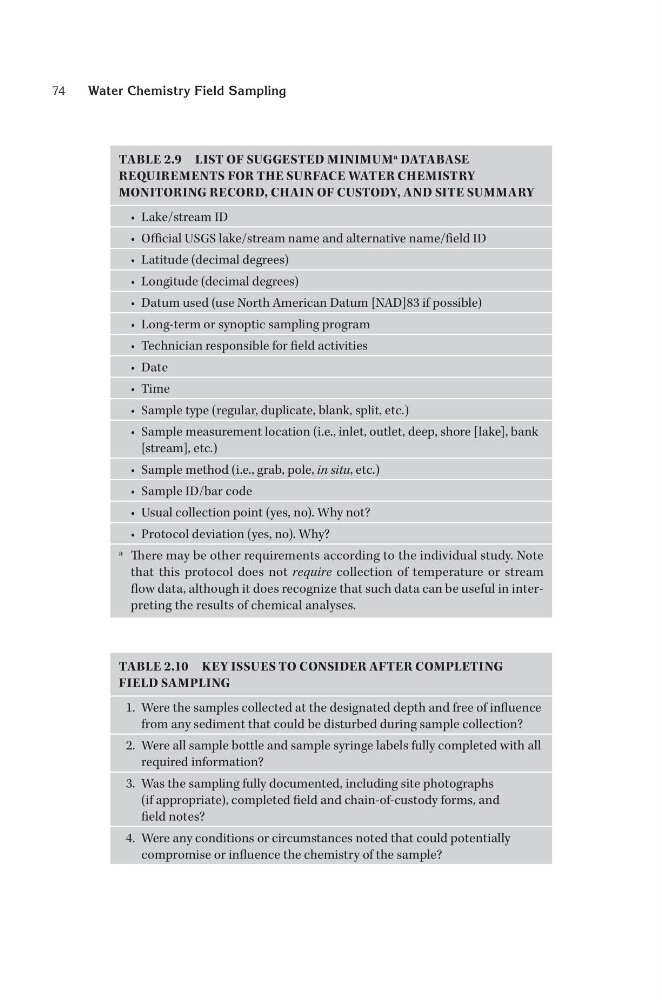
TABLE 2.9 LIST OF SUGGESTED MINIMUM a DATABASE
REQUIREMENTS FOR THE SURFACE WATER CHEMISTRY
MONITORING RECORD, CHAIN OF CUSTODY, AND SITE SUMMARY
• Lake/stream ID
• Official USGS lake/stream name and alternative name/field ID
• Latitude (decimal degrees)
• Longitude (decimal degrees)
• Datum used (use North American Datum [NAD]83 if possible)
• Long-term or synoptic sampling program
• Technician responsible for field activities
• Date
• Time
• Sample type (regular, duplicate, blank, split, etc.)
• Sample measurement location (i.e., inlet, outlet, deep, shore [lake], bank
[stream], etc.)
• Sample method (i.e., grab, pole, in situ, etc.)
• Sample ID/bar code
• Usual collection point (yes, no). Why not?
• Protocol deviation (yes, no). Why?
a There may be other requirements according to the individual study. Note
that this protocol does not require collection of temperature or stream
flow data, although it does recognize that such data can be useful in interpreting the results of chemical analyses.
TABLE 2.10 KEY ISSUES TO CONSIDER AFTER COMPLETING
FIELD SAMPLING
1. Were the samples collected at the designated depth and free of influence
from any sediment that could be disturbed during sample collection?
2. Were all sample bottle and sample syringe labels fully completed with all
required information?
3. Was the sampling fully documented, including site photographs
(if appropriate), completed field and chain-of-custody forms, and
field notes?
4. Were any conditions or circumstances noted that could potentially
compromise or influence the chemistry of the sample?
74
TABLE 2.9 LIST OF SUGGESTED MINIMUM a DATABASE
REQUIREMENTS FOR THE SURFACE WATER CHEMISTRY
MONITORING RECORD, CHAIN OF CUSTODY, AND SITE SUMMARY
• Lake/stream ID
• Official USGS lake/stream name and alternative name/field ID
• Latitude (decimal degrees)
• Longitude (decimal degrees)
• Datum used (use North American Datum [NAD]83 if possible)
• Long-term or synoptic sampling program
• Technician responsible for field activities
• Date
• Time
• Sample type (regular, duplicate, blank, split, etc.)
• Sample measurement location (i.e., inlet, outlet, deep, shore [lake], bank
[stream], etc.)
• Sample method (i.e., grab, pole, in situ, etc.)
• Sample ID/bar code
• Usual collection point (yes, no). Why not?
• Protocol deviation (yes, no). Why?
a There may be other requirements according to the individual study. Note
that this protocol does not require collection of temperature or stream
flow data, although it does recognize that such data can be useful in interpreting the results of chemical analyses.
TABLE 2.10 KEY ISSUES TO CONSIDER AFTER COMPLETING
FIELD SAMPLING
1. Were the samples collected at the designated depth and free of influence
from any sediment that could be disturbed during sample collection?
2. Were all sample bottle and sample syringe labels fully completed with all
required information?
3. Was the sampling fully documented, including site photographs
(if appropriate), completed field and chain-of-custody forms, and
field notes?
4. Were any conditions or circumstances noted that could potentially
compromise or influence the chemistry of the sample?