

Generalities
34
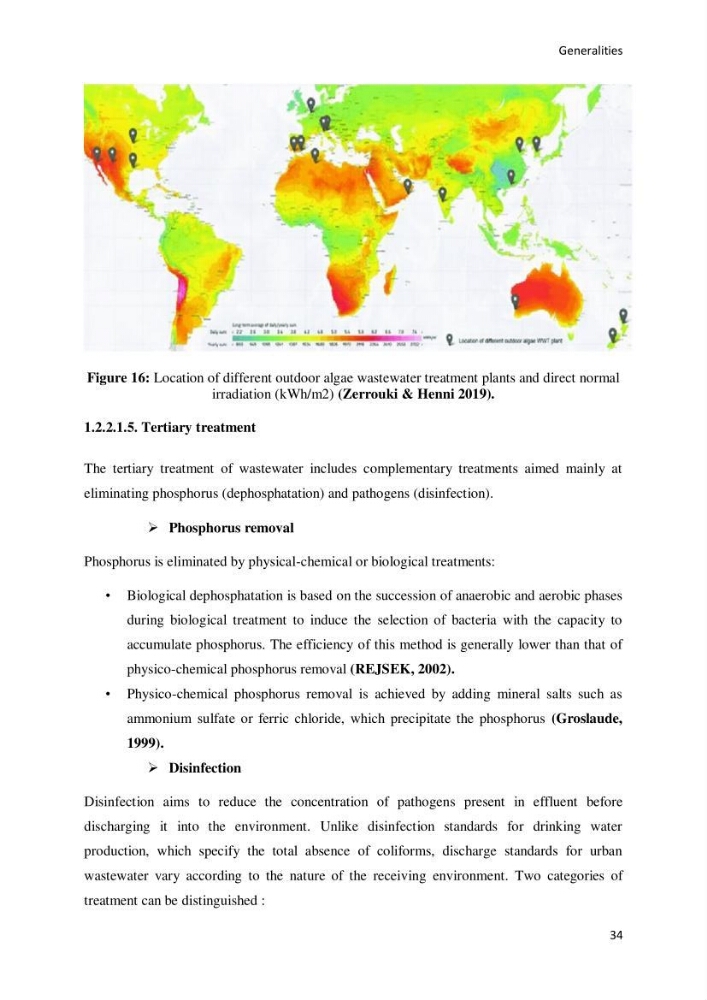
Figure 16: Location of different outdoor algae wastewater treatment plants and direct normal
irradiation (kWh/m2) (Zerrouki & Henni 2019).
1.2.2.1.5. Tertiary treatment
The tertiary treatment of wastewater includes complementary treatments aimed mainly at
eliminating phosphorus (dephosphatation) and pathogens (disinfection).
Phosphorus removal
Phosphorus is eliminated by physical-chemical or biological treatments:
• Biological dephosphatation is based on the succession of anaerobic and aerobic phases
during biological treatment to induce the selection of bacteria with the capacity to
accumulate phosphorus. The efficiency of this method is generally lower than that of
physico-chemical phosphorus removal (REJSEK, 2002).
• Physico-chemical phosphorus removal is achieved by adding mineral salts such as
ammonium sulfate or ferric chloride, which precipitate the phosphorus (Groslaude,
1999).
Disinfection
Disinfection aims to reduce the concentration of pathogens present in effluent before
discharging it into the environment. Unlike disinfection standards for drinking water
production, which specify the total absence of coliforms, discharge standards for urban
wastewater vary according to the nature of the receiving environment. Two categories of
treatment can be distinguished :
34
Figure 16: Location of different outdoor algae wastewater treatment plants and direct normal
irradiation (kWh/m2) (Zerrouki & Henni 2019).
1.2.2.1.5. Tertiary treatment
The tertiary treatment of wastewater includes complementary treatments aimed mainly at
eliminating phosphorus (dephosphatation) and pathogens (disinfection).
Phosphorus removal
Phosphorus is eliminated by physical-chemical or biological treatments:
• Biological dephosphatation is based on the succession of anaerobic and aerobic phases
during biological treatment to induce the selection of bacteria with the capacity to
accumulate phosphorus. The efficiency of this method is generally lower than that of
physico-chemical phosphorus removal (REJSEK, 2002).
• Physico-chemical phosphorus removal is achieved by adding mineral salts such as
ammonium sulfate or ferric chloride, which precipitate the phosphorus (Groslaude,
1999).
Disinfection
Disinfection aims to reduce the concentration of pathogens present in effluent before
discharging it into the environment. Unlike disinfection standards for drinking water
production, which specify the total absence of coliforms, discharge standards for urban
wastewater vary according to the nature of the receiving environment. Two categories of
treatment can be distinguished :