

Generalities
33
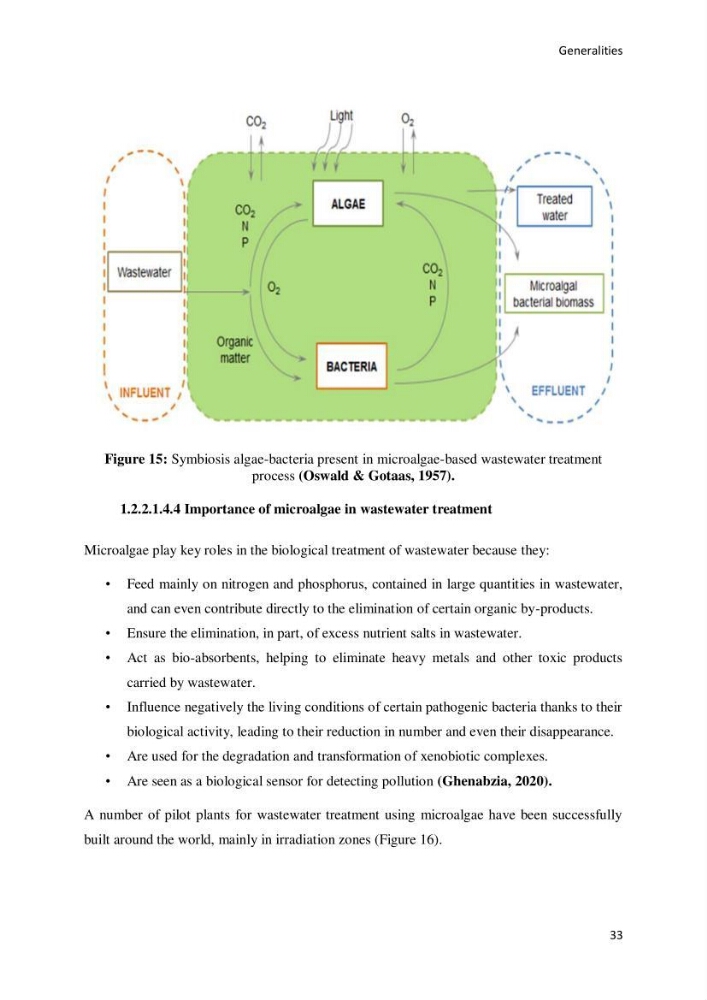
Figure 15: Symbiosis algae-bacteria present in microalgae-based wastewater treatment
process (Oswald & Gotaas, 1957).
1.2.2.1.4.4 Importance of microalgae in wastewater treatment
Microalgae play key roles in the biological treatment of wastewater because they:
• Feed mainly on nitrogen and phosphorus, contained in large quantities in wastewater,
and can even contribute directly to the elimination of certain organic by-products.
• Ensure the elimination, in part, of excess nutrient salts in wastewater.
• Act as bio-absorbents, helping to eliminate heavy metals and other toxic products
carried by wastewater.
• Influence negatively the living conditions of certain pathogenic bacteria thanks to their
biological activity, leading to their reduction in number and even their disappearance.
• Are used for the degradation and transformation of xenobiotic complexes.
• Are seen as a biological sensor for detecting pollution (Ghenabzia, 2020).
A number of pilot plants for wastewater treatment using microalgae have been successfully
built around the world, mainly in irradiation zones (Figure 16).
33
Figure 15: Symbiosis algae-bacteria present in microalgae-based wastewater treatment
process (Oswald & Gotaas, 1957).
1.2.2.1.4.4 Importance of microalgae in wastewater treatment
Microalgae play key roles in the biological treatment of wastewater because they:
• Feed mainly on nitrogen and phosphorus, contained in large quantities in wastewater,
and can even contribute directly to the elimination of certain organic by-products.
• Ensure the elimination, in part, of excess nutrient salts in wastewater.
• Act as bio-absorbents, helping to eliminate heavy metals and other toxic products
carried by wastewater.
• Influence negatively the living conditions of certain pathogenic bacteria thanks to their
biological activity, leading to their reduction in number and even their disappearance.
• Are used for the degradation and transformation of xenobiotic complexes.
• Are seen as a biological sensor for detecting pollution (Ghenabzia, 2020).
A number of pilot plants for wastewater treatment using microalgae have been successfully
built around the world, mainly in irradiation zones (Figure 16).