

Generalities
16
1.1.9.1. Food applications
Microalgae are used in human and animal nutrition, and even in aquaculture. These
microorganisms provide a real nutritional contribution, and the biomass produced can take
several forms (powder, capsules and pellets) (Pulz &Gross, 2004).
β-carotene is a pigment synthesized by the alga Dunaliella and used as a colorant in the food
industry. Polysaccharides derived from microalgae are exploited in the food industry as gelling
or thickening agents (Tebbani et al., 2014).
Microalgae are an important source of food for aquatic organisms such as fish, shrimp and
oysters (Person, 2010). They are also used to improve water quality in fish farms.
1.1.9.2. Pharmaceuticals
Microalgae produce a wide variety of bioactive compounds (antioxidants,
pigments and fatty acids) and toxins that can be used to produce drugs and pharmaceutical
products. Polysaccharides extracted from microalgae enable the synthesis of antioxidant,
anticoagulant, antiviral and anti-tumor agents. Microalgae also have the capacity to synthesize
vitamins (For exemple Vitamine B12 and E) (Tebbani et al., 2014).
1.1.9.3. Cosmetics
Several species of microalgae, mainly Spirulina and Chlorella, are used industrially
in cosmetics. Due to their diverse natures (moisturizer, antioxidant, etc.), their extracts can be
found in various products such as refreshing or regenerating skincare products, anti-aging
creams, emollients as anti-irritants in exfoliating scrubs and also in hair care and sun protection
products (Person, 2010).
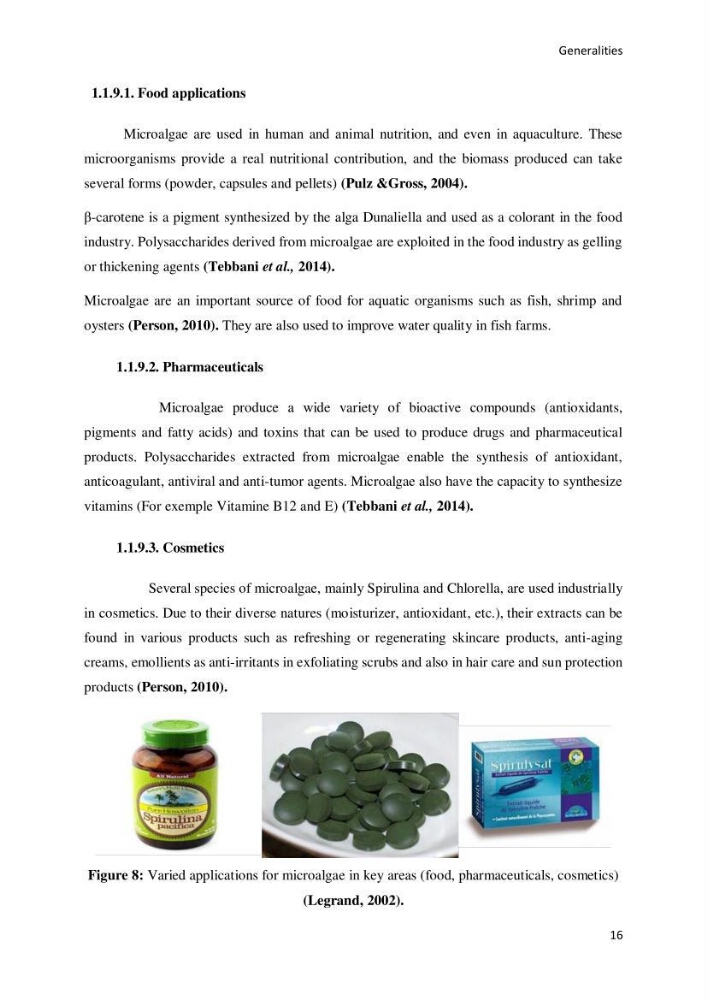
Figure 8: Varied applications for microalgae in key areas (food, pharmaceuticals, cosmetics)
(Legrand, 2002).
16
1.1.9.1. Food applications
Microalgae are used in human and animal nutrition, and even in aquaculture. These
microorganisms provide a real nutritional contribution, and the biomass produced can take
several forms (powder, capsules and pellets) (Pulz &Gross, 2004).
β-carotene is a pigment synthesized by the alga Dunaliella and used as a colorant in the food
industry. Polysaccharides derived from microalgae are exploited in the food industry as gelling
or thickening agents (Tebbani et al., 2014).
Microalgae are an important source of food for aquatic organisms such as fish, shrimp and
oysters (Person, 2010). They are also used to improve water quality in fish farms.
1.1.9.2. Pharmaceuticals
Microalgae produce a wide variety of bioactive compounds (antioxidants,
pigments and fatty acids) and toxins that can be used to produce drugs and pharmaceutical
products. Polysaccharides extracted from microalgae enable the synthesis of antioxidant,
anticoagulant, antiviral and anti-tumor agents. Microalgae also have the capacity to synthesize
vitamins (For exemple Vitamine B12 and E) (Tebbani et al., 2014).
1.1.9.3. Cosmetics
Several species of microalgae, mainly Spirulina and Chlorella, are used industrially
in cosmetics. Due to their diverse natures (moisturizer, antioxidant, etc.), their extracts can be
found in various products such as refreshing or regenerating skincare products, anti-aging
creams, emollients as anti-irritants in exfoliating scrubs and also in hair care and sun protection
products (Person, 2010).
Figure 8: Varied applications for microalgae in key areas (food, pharmaceuticals, cosmetics)
(Legrand, 2002).