

Chapter V
Hydraulic Performance
68
In general, mean overtopping discharge is expressed by two typical forms shown in equations
below, A and B are tabled coefficients that vary depending on the geometry of the structure.
Overtopping discharge and freeboard are described by the dimensionless parameters Q and í µí±¹ í µí² ,
respectively.
í µí± = í µí°´ exp (í µí°µí µí± í µí± )
í µí± = í µí°´í µí±
−í µí°µ
Equation V-4
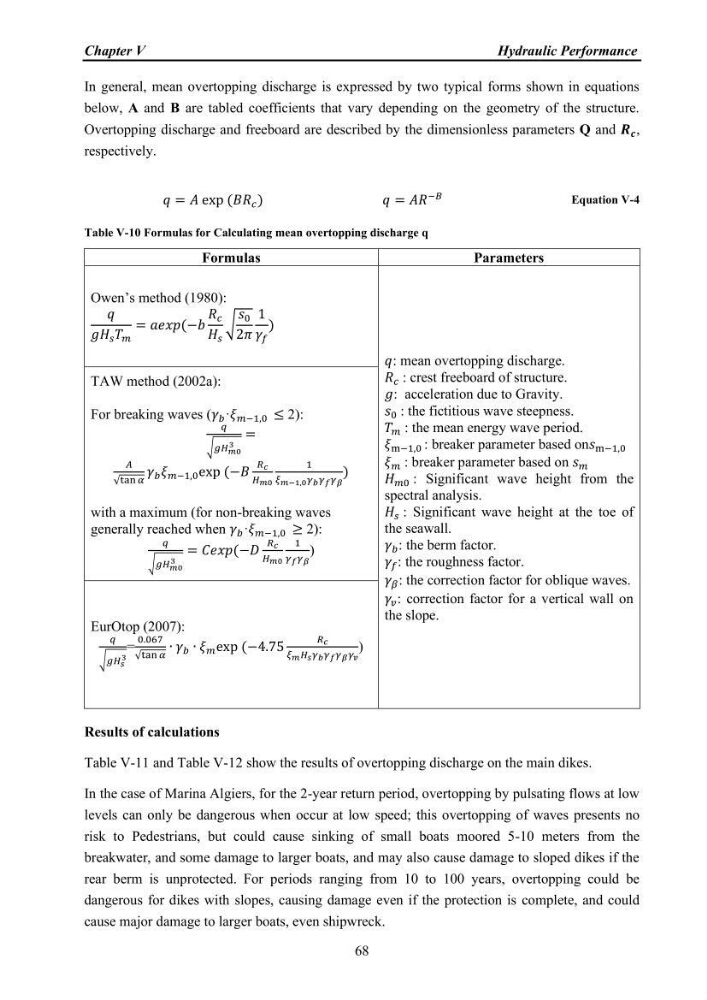
Table V-10 Formulas for Calculating mean overtopping discharge q
Formulas
Parameters
Owen’s method (1980):
í µí±
í µí±í µí°» í µí± í µí± í µí±
= í µí±í µí±í µí±¥í µí±(−í µí±
í µí± í µí±
í µí°» í µí±
√
í µí± 0
2í µí¼
1
í µí»¾ í µí±
)
í µí±: mean overtopping discharge.
í µí± í µí± : crest freeboard of structure.
í µí±: acceleration due to Gravity.
í µí± 0 : the fictitious wave steepness.
í µí± í µí± : the mean energy wave period.
í µí¼ m−1,0 : breaker parameter based oní µí± m−1,0
í µí¼ í µí± : breaker parameter based on í µí± í µí±
í µí°» í µí±0 : Significant wave height from the
spectral analysis.
í µí°» í µí± : Significant wave height at the toe of
the seawall.
í µí»¾ í µí± : the berm factor.
í µí»¾ í µí± : the roughness factor.
í µí»¾ í µí»½ : the correction factor for oblique waves.
í µí»¾ í µí±£ : correction factor for a vertical wall on
the slope.
TAW method (2002a):
For breaking waves (í µí»¾ í µí± ·í µí¼ í µí±−1,0 ≤ 2):
í µí±
√í µí±í µí°» í µí±0
3
=
í µí°´
√tan í µí»¼
í µí»¾ í µí± í µí¼ í µí±−1,0 exp (−í µí°µ
í µí± í µí±
í µí°» í µí±0
1
í µí¼ í µí±−1,0 í µí»¾ í µí± í µí»¾ í µí± í µí»¾ í µí»½
)
with a maximum (for non-breaking waves
generally reached when í µí»¾ í µí± ·í µí¼ í µí±−1,0 ≥ 2):
í µí±
√í µí±í µí°» í µí±0
3
= í µí°¶í µí±í µí±¥í µí±(−í µí°·
í µí± í µí±
í µí°» í µí±0
1
í µí»¾ í µí± í µí»¾ í µí»½
)
EurOtop (2007):
í µí±
√í µí±í µí°» í µí±
3
=
0.067
√tan í µí»¼
∙ í µí»¾ í µí± ∙ í µí¼ í µí± exp (−4.75
í µí± í µí±
í µí¼ í µí± í µí°» í µí± í µí»¾ í µí± í µí»¾ í µí± í µí»¾ í µí»½ í µí»¾ í µí±£
)
Results of calculations
Table V-11 and Table V-12 show the results of overtopping discharge on the main dikes.
In the case of Marina Algiers, for the 2-year return period, overtopping by pulsating flows at low
levels can only be dangerous when occur at low speed; this overtopping of waves presents no
risk to Pedestrians, but could cause sinking of small boats moored 5-10 meters from the
breakwater, and some damage to larger boats, and may also cause damage to sloped dikes if the
rear berm is unprotected. For periods ranging from 10 to 100 years, overtopping could be
dangerous for dikes with slopes, causing damage even if the protection is complete, and could
cause major damage to larger boats, even shipwreck.
Hydraulic Performance
68
In general, mean overtopping discharge is expressed by two typical forms shown in equations
below, A and B are tabled coefficients that vary depending on the geometry of the structure.
Overtopping discharge and freeboard are described by the dimensionless parameters Q and í µí±¹ í µí² ,
respectively.
í µí± = í µí°´ exp (í µí°µí µí± í µí± )
í µí± = í µí°´í µí±
−í µí°µ
Equation V-4
Table V-10 Formulas for Calculating mean overtopping discharge q
Formulas
Parameters
Owen’s method (1980):
í µí±
í µí±í µí°» í µí± í µí± í µí±
= í µí±í µí±í µí±¥í µí±(−í µí±
í µí± í µí±
í µí°» í µí±
√
í µí± 0
2í µí¼
1
í µí»¾ í µí±
)
í µí±: mean overtopping discharge.
í µí± í µí± : crest freeboard of structure.
í µí±: acceleration due to Gravity.
í µí± 0 : the fictitious wave steepness.
í µí± í µí± : the mean energy wave period.
í µí¼ m−1,0 : breaker parameter based oní µí± m−1,0
í µí¼ í µí± : breaker parameter based on í µí± í µí±
í µí°» í µí±0 : Significant wave height from the
spectral analysis.
í µí°» í µí± : Significant wave height at the toe of
the seawall.
í µí»¾ í µí± : the berm factor.
í µí»¾ í µí± : the roughness factor.
í µí»¾ í µí»½ : the correction factor for oblique waves.
í µí»¾ í µí±£ : correction factor for a vertical wall on
the slope.
TAW method (2002a):
For breaking waves (í µí»¾ í µí± ·í µí¼ í µí±−1,0 ≤ 2):
í µí±
√í µí±í µí°» í µí±0
3
=
í µí°´
√tan í µí»¼
í µí»¾ í µí± í µí¼ í µí±−1,0 exp (−í µí°µ
í µí± í µí±
í µí°» í µí±0
1
í µí¼ í µí±−1,0 í µí»¾ í µí± í µí»¾ í µí± í µí»¾ í µí»½
)
with a maximum (for non-breaking waves
generally reached when í µí»¾ í µí± ·í µí¼ í µí±−1,0 ≥ 2):
í µí±
√í µí±í µí°» í µí±0
3
= í µí°¶í µí±í µí±¥í µí±(−í µí°·
í µí± í µí±
í µí°» í µí±0
1
í µí»¾ í µí± í µí»¾ í µí»½
)
EurOtop (2007):
í µí±
√í µí±í µí°» í µí±
3
=
0.067
√tan í µí»¼
∙ í µí»¾ í µí± ∙ í µí¼ í µí± exp (−4.75
í µí± í µí±
í µí¼ í µí± í µí°» í µí± í µí»¾ í µí± í µí»¾ í µí± í µí»¾ í µí»½ í µí»¾ í µí±£
)
Results of calculations
Table V-11 and Table V-12 show the results of overtopping discharge on the main dikes.
In the case of Marina Algiers, for the 2-year return period, overtopping by pulsating flows at low
levels can only be dangerous when occur at low speed; this overtopping of waves presents no
risk to Pedestrians, but could cause sinking of small boats moored 5-10 meters from the
breakwater, and some damage to larger boats, and may also cause damage to sloped dikes if the
rear berm is unprotected. For periods ranging from 10 to 100 years, overtopping could be
dangerous for dikes with slopes, causing damage even if the protection is complete, and could
cause major damage to larger boats, even shipwreck.