

Chapter V
Hydraulic Performance
64
í µí± í µí±¢2%
í µí°» í µí±
= í µí°´ξ + í µí°µ
Equation V-2
Where:
í µí± í µí±¢2% : the run-up exceeded by 2% of waves.
í µí¼
: the surf similarity parameter, also known as the Iribarren number í µí¼ =
tan í µí»¼
√í µí± 0
í µí± 0
: the fictitious wave steepness. í µí± 0 =
í µí°»
í µí°¿ 0
=
2í µí¼
í µí±
í µí°»
í µí± 2
í µí°» (í µí±) : the local wave height.
í µí°¿ 0
: the theoretical wavelength of the offshore wave.
í µí±
: the period of wave.
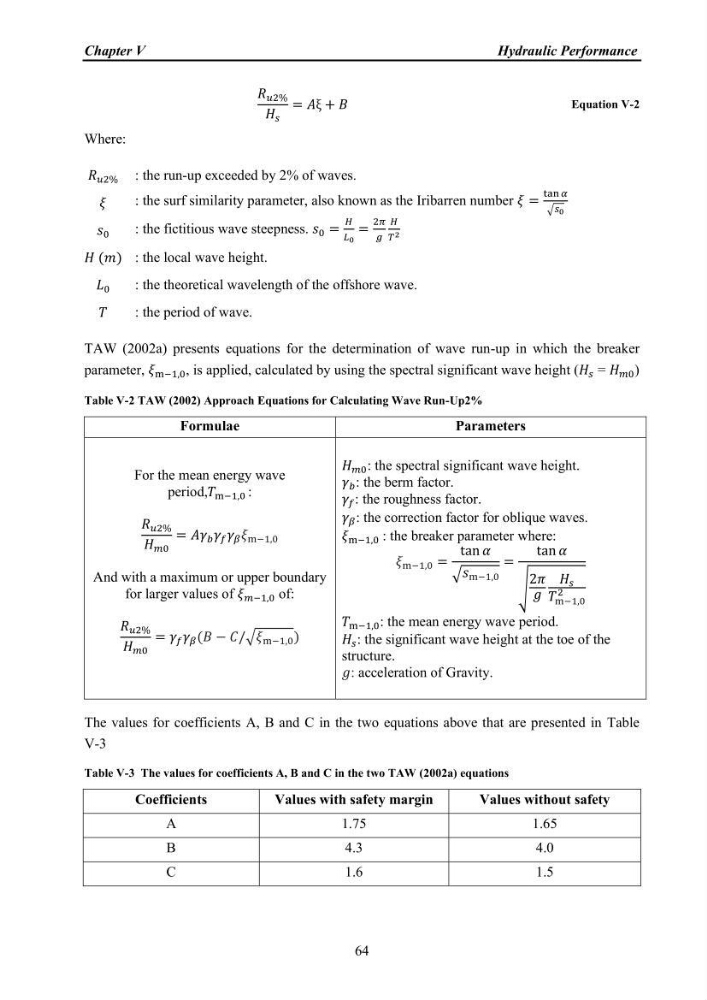
TAW (2002a) presents equations for the determination of wave run-up in which the breaker
parameter, í µí¼ m−1,0 , is applied, calculated by using the spectral significant wave height (í µí°» í µí± = í µí°» í µí±0 )
Table V-2 TAW (2002) Approach Equations for Calculating Wave Run-Up2%
Formulae
Parameters
For the mean energy wave
period,í µí± m−1,0 :
í µí± í µí±¢2%
í µí°» í µí±0
= í µí°´í µí»¾ í µí± í µí»¾ í µí± í µí»¾ í µí»½ í µí¼ m−1,0
And with a maximum or upper boundary
for larger values of í µí¼ í µí±−1,0 of:
í µí± í µí±¢2%
í µí°» í µí±0
= í µí»¾ í µí± í µí»¾ í µí»½ (í µí°µ − í µí°¶/√í µí¼ m−1,0 )
í µí°» í µí±0 : the spectral significant wave height.
í µí»¾ í µí± : the berm factor.
í µí»¾ í µí± : the roughness factor.
í µí»¾ í µí»½ : the correction factor for oblique waves.
í µí¼ m−1,0 : the breaker parameter where:
í µí¼ m−1,0 =
tan í µí»¼
√ í µí± m−1,0
=
tan í µí»¼
√
2í µí¼
í µí±
í µí°» í µí±
í µí± m−1,0
2
í µí± m−1,0 : the mean energy wave period.
í µí°» í µí± : the significant wave height at the toe of the
structure.
í µí±: acceleration of Gravity.
The values for coefficients A, B and C in the two equations above that are presented in Table
V-3
Table V-3 The values for coefficients A, B and C in the two TAW (2002a) equations
Coefficients
Values with safety margin
Values without safety
A
1.75
1.65
B
4.3
4.0
C
1.6
1.5
Hydraulic Performance
64
í µí± í µí±¢2%
í µí°» í µí±
= í µí°´ξ + í µí°µ
Equation V-2
Where:
í µí± í µí±¢2% : the run-up exceeded by 2% of waves.
í µí¼
: the surf similarity parameter, also known as the Iribarren number í µí¼ =
tan í µí»¼
√í µí± 0
í µí± 0
: the fictitious wave steepness. í µí± 0 =
í µí°»
í µí°¿ 0
=
2í µí¼
í µí±
í µí°»
í µí± 2
í µí°» (í µí±) : the local wave height.
í µí°¿ 0
: the theoretical wavelength of the offshore wave.
í µí±
: the period of wave.
TAW (2002a) presents equations for the determination of wave run-up in which the breaker
parameter, í µí¼ m−1,0 , is applied, calculated by using the spectral significant wave height (í µí°» í µí± = í µí°» í µí±0 )
Table V-2 TAW (2002) Approach Equations for Calculating Wave Run-Up2%
Formulae
Parameters
For the mean energy wave
period,í µí± m−1,0 :
í µí± í µí±¢2%
í µí°» í µí±0
= í µí°´í µí»¾ í µí± í µí»¾ í µí± í µí»¾ í µí»½ í µí¼ m−1,0
And with a maximum or upper boundary
for larger values of í µí¼ í µí±−1,0 of:
í µí± í µí±¢2%
í µí°» í µí±0
= í µí»¾ í µí± í µí»¾ í µí»½ (í µí°µ − í µí°¶/√í µí¼ m−1,0 )
í µí°» í µí±0 : the spectral significant wave height.
í µí»¾ í µí± : the berm factor.
í µí»¾ í µí± : the roughness factor.
í µí»¾ í µí»½ : the correction factor for oblique waves.
í µí¼ m−1,0 : the breaker parameter where:
í µí¼ m−1,0 =
tan í µí»¼
√ í µí± m−1,0
=
tan í µí»¼
√
2í µí¼
í µí±
í µí°» í µí±
í µí± m−1,0
2
í µí± m−1,0 : the mean energy wave period.
í µí°» í µí± : the significant wave height at the toe of the
structure.
í µí±: acceleration of Gravity.
The values for coefficients A, B and C in the two equations above that are presented in Table
V-3
Table V-3 The values for coefficients A, B and C in the two TAW (2002a) equations
Coefficients
Values with safety margin
Values without safety
A
1.75
1.65
B
4.3
4.0
C
1.6
1.5