

87
Although the wilaya of Algiers is twice smaller than that of the Tipaza, it hosts more than 3
million inhabitants in 57 municipalities, four times higher than the wilaya of Tipaza. Moreover,
along with its large population, the wilaya of Algiers generates more solid waste and urban
wastewater, thus, using more energy for MSW collection, transportation, landfilling and UW
treatment. Consequently, GHG emissions are higher in the wilaya of Algiers than in Tipaza,
leading to an EF_Total_Waste seven times larger in the wilaya of Algiers.
For both cases, waste generation is coherent with population growth. Tipaza's annual waste
generation rate equals 0.58 kg per capita per day. Municipalities such as Kolea, Fouka,
Hadjout, Cherchell, Tipaza, and Bou Ismail have the largest records in Tipaza (Appendix 9).
These communes account for 58 percent of total MSW, consistent with the regions' high
population and expanding urbanization. In Algiers, that rate equals 0.86 kg per capita per day
Municipalities with the most significant records are Les Eucalyptus, Borj El-Kiffan, Gue de
Constantine, Borj El-Bahri, and Baraki, representing 23% of total MSW (Appendix 9).
It is complex to define the exact production origin of materials in consumer goods.
Nevertheless, the results indicate that the materials consumed in Algiers are associated with
higher emissions. The majority of waste ends in landfills. Indeed, aside from plastic PET, which
is the most recycled product, diverted waste is negligible in both cases due to data shortage.
However, it could be argued that accurate data is expected to increase the total EF of waste
transportation and treatment, especially in the wilaya of Tipaza, which lacks data regarding
waste transportation.
The landfilled materials in the two wilayas represent more than 99% of the waste tonnage
collected. The emissions generated by the manufacture of consumables (which become waste
after use) were estimated on the basis of the emission factors of one tonne of each type of
product (landfilled product or recycled product). The EF associated with the manufacture of
products is systematically more important in the wilaya of Algiers, as it depends on the
0%
20%
40%
60%
80%
100%
Algiers
Tipaza
% OF ECOLOGICAL FOOTPRINT
EF_emb_energy
EF_opt_energy
EF_c
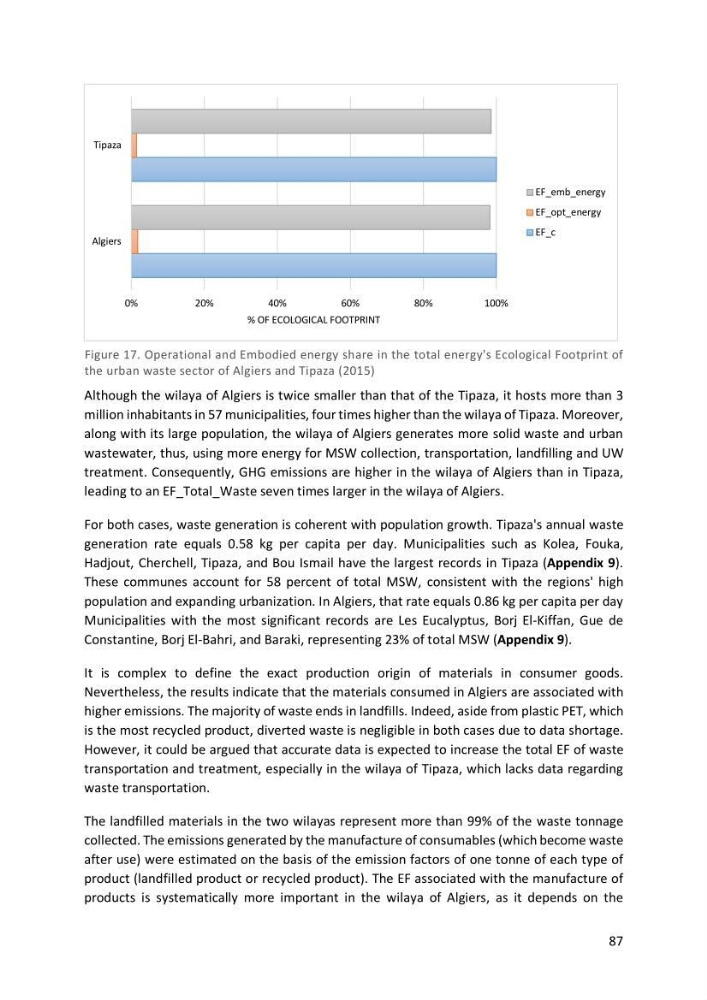
Figure 17. Operational and Embodied energy share in the total energy's Ecological Footprint of
the urban waste sector of Algiers and Tipaza (2015)
Although the wilaya of Algiers is twice smaller than that of the Tipaza, it hosts more than 3
million inhabitants in 57 municipalities, four times higher than the wilaya of Tipaza. Moreover,
along with its large population, the wilaya of Algiers generates more solid waste and urban
wastewater, thus, using more energy for MSW collection, transportation, landfilling and UW
treatment. Consequently, GHG emissions are higher in the wilaya of Algiers than in Tipaza,
leading to an EF_Total_Waste seven times larger in the wilaya of Algiers.
For both cases, waste generation is coherent with population growth. Tipaza's annual waste
generation rate equals 0.58 kg per capita per day. Municipalities such as Kolea, Fouka,
Hadjout, Cherchell, Tipaza, and Bou Ismail have the largest records in Tipaza (Appendix 9).
These communes account for 58 percent of total MSW, consistent with the regions' high
population and expanding urbanization. In Algiers, that rate equals 0.86 kg per capita per day
Municipalities with the most significant records are Les Eucalyptus, Borj El-Kiffan, Gue de
Constantine, Borj El-Bahri, and Baraki, representing 23% of total MSW (Appendix 9).
It is complex to define the exact production origin of materials in consumer goods.
Nevertheless, the results indicate that the materials consumed in Algiers are associated with
higher emissions. The majority of waste ends in landfills. Indeed, aside from plastic PET, which
is the most recycled product, diverted waste is negligible in both cases due to data shortage.
However, it could be argued that accurate data is expected to increase the total EF of waste
transportation and treatment, especially in the wilaya of Tipaza, which lacks data regarding
waste transportation.
The landfilled materials in the two wilayas represent more than 99% of the waste tonnage
collected. The emissions generated by the manufacture of consumables (which become waste
after use) were estimated on the basis of the emission factors of one tonne of each type of
product (landfilled product or recycled product). The EF associated with the manufacture of
products is systematically more important in the wilaya of Algiers, as it depends on the
0%
20%
40%
60%
80%
100%
Algiers
Tipaza
% OF ECOLOGICAL FOOTPRINT
EF_emb_energy
EF_opt_energy
EF_c
Figure 17. Operational and Embodied energy share in the total energy's Ecological Footprint of
the urban waste sector of Algiers and Tipaza (2015)