

A similar study was performed with dolphin liver (27 males and 10 females) of
striped dolphin (Stenella coeruleoalba) from the Mediterranean coast of southern
Spain [8]. Pyrethroids were detected in 87% of the samples, including bifenthrin,
cyhalothrin, deltamethrin, permethrin and tetramethrin. Mean total pyrethroid
concentration was 300 Æ 932 ng/g lw (range 2.70–5,200 ng/g lw).
While there were not enough samples for a life trend assessment, the results
were not dissimilar from the ones reported for the Brazilian dolphins. Concentrations
seemed to increase somewhat from calves to juveniles due to dietary intake. After
achieving sexual maturity, the levels stayed stable as metabolization of pyrethroids
would compete with further bioaccumulation.
No statistical differences were found with the Brazilian levels. Franciscana
dolphins are live in coastal waters, while striped dolphins are found further offshore.
The smaller size of the Mediterranean Sea, which is surrounded by human
population, as opposed to the big and open Atlantic Ocean, might compensate
for the distance of the striped dolphins to the source of contamination. Additionally,
the western Mediterranean Sea has been identified as a global PCB hotspot for
marine mammals [38], which might also be true for other pollutants like pyrethroids.
Other organic contaminants have been analysed in striped dolphin from the
Mediterranean Sea, including PBDEs, decloranes, hexabromobenzene (HBB),
PCBs and DDT (Fig. 2) [39–42]. Striped dolphins from the same area and years
showed a higher mean for PBDEs (940 ng/g lw) albeit in the lower half of the
reported pyrethroid range. Ranges of dechloranes and HBB in those dolphins
were detected in the same low area (<380 and <9 ng/g lw, respectively). In other
regions of the Mediterranean Sea, PCBs and DDT were present in striped dolphins
at much higher concentrations (2.1–170 and 1.1–260 μg/g lw, respectively),
whereas PBDEs (12–290 ng/g lw) and PAH (200 ng/g lw) were included in the
pyrethroid range.
Regarding fish, the bioaccumulation of pyrethroids in wild river fish was first
reported using 42 pooled edible fish samples from four Iberian river basins [43].
One of the sampling points corresponded to a reservoir. The selected species
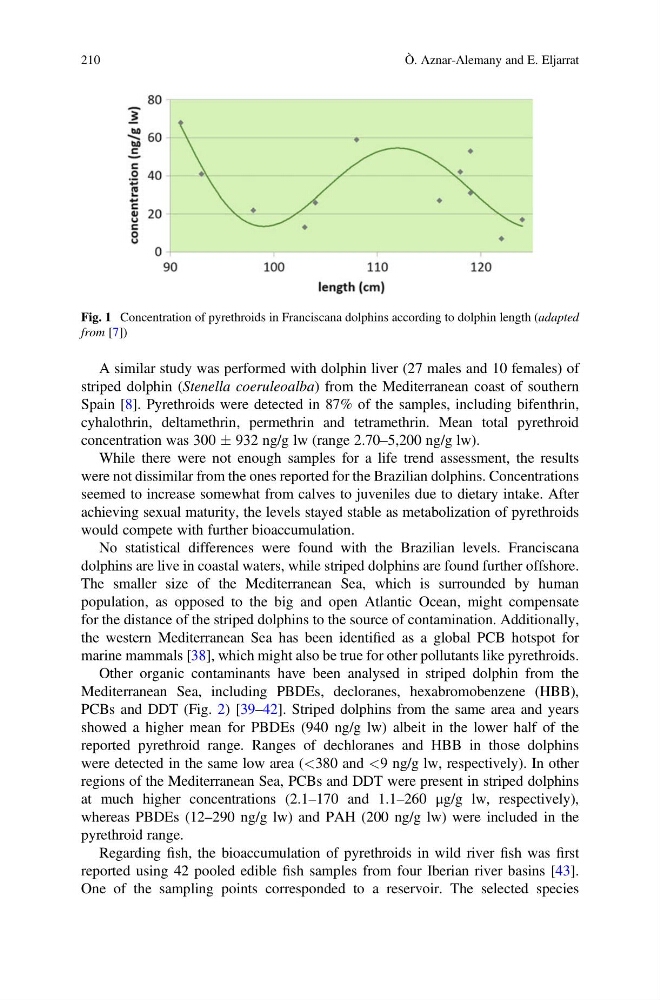
Fig. 1 Concentration of pyrethroids in Franciscana dolphins according to dolphin length (adapted
from [7])
210
Ò. Aznar-Alemany and E. Eljarrat
striped dolphin (Stenella coeruleoalba) from the Mediterranean coast of southern
Spain [8]. Pyrethroids were detected in 87% of the samples, including bifenthrin,
cyhalothrin, deltamethrin, permethrin and tetramethrin. Mean total pyrethroid
concentration was 300 Æ 932 ng/g lw (range 2.70–5,200 ng/g lw).
While there were not enough samples for a life trend assessment, the results
were not dissimilar from the ones reported for the Brazilian dolphins. Concentrations
seemed to increase somewhat from calves to juveniles due to dietary intake. After
achieving sexual maturity, the levels stayed stable as metabolization of pyrethroids
would compete with further bioaccumulation.
No statistical differences were found with the Brazilian levels. Franciscana
dolphins are live in coastal waters, while striped dolphins are found further offshore.
The smaller size of the Mediterranean Sea, which is surrounded by human
population, as opposed to the big and open Atlantic Ocean, might compensate
for the distance of the striped dolphins to the source of contamination. Additionally,
the western Mediterranean Sea has been identified as a global PCB hotspot for
marine mammals [38], which might also be true for other pollutants like pyrethroids.
Other organic contaminants have been analysed in striped dolphin from the
Mediterranean Sea, including PBDEs, decloranes, hexabromobenzene (HBB),
PCBs and DDT (Fig. 2) [39–42]. Striped dolphins from the same area and years
showed a higher mean for PBDEs (940 ng/g lw) albeit in the lower half of the
reported pyrethroid range. Ranges of dechloranes and HBB in those dolphins
were detected in the same low area (<380 and <9 ng/g lw, respectively). In other
regions of the Mediterranean Sea, PCBs and DDT were present in striped dolphins
at much higher concentrations (2.1–170 and 1.1–260 μg/g lw, respectively),
whereas PBDEs (12–290 ng/g lw) and PAH (200 ng/g lw) were included in the
pyrethroid range.
Regarding fish, the bioaccumulation of pyrethroids in wild river fish was first
reported using 42 pooled edible fish samples from four Iberian river basins [43].
One of the sampling points corresponded to a reservoir. The selected species
Fig. 1 Concentration of pyrethroids in Franciscana dolphins according to dolphin length (adapted
from [7])
210
Ò. Aznar-Alemany and E. Eljarrat