

crustaceans (Cladocera, Ostracoda, Copepoda, Amphipoda, Isopoda, and Decapoda)
were more acutely sensitive to pyrethroids than other invertebrate groups (bivalves,
mollusks). Further, these sensitive groups had pyrethroid sensitivities in the range of
some pest species including midge, fly, and mosquito larvae, suggesting that aquatic
pesticide applications intended to eliminate these pest insects could be lethal to other
aquatic invertebrates [66]. At lethal doses, pyrethroid binding to the Vgsc target site
elicits a response which includes altered swimming behaviors, convulsions, and
eventually paralysis and death, and immobilization phenotypes are often irreversible
[69]. Acute toxicity is exacerbated by increased salinity and decreased temperatures
[70]. At higher salinities, pyrethroids are less soluble in water, rendering them more
likely to adsorb to the sediment or more prone to partitioning into lipid (within biota)
[70, 71].
u r b a n
a g ri cu lt u re
Cl
F
F F
O
O
mosquito
larva
hyalella
run off
run off ff
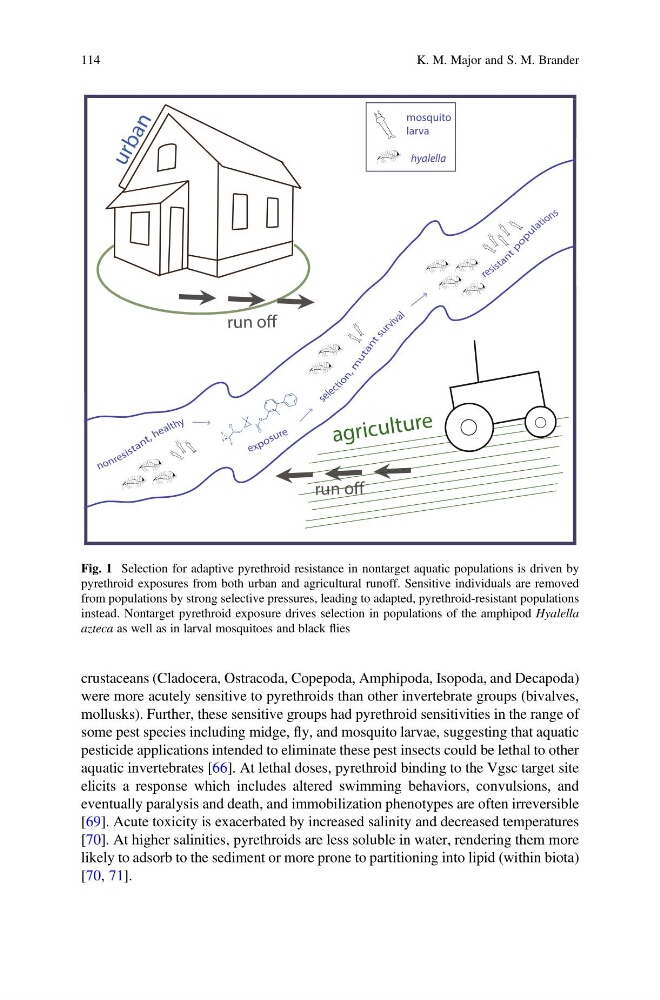
Fig. 1 Selection for adaptive pyrethroid resistance in nontarget aquatic populations is driven by
pyrethroid exposures from both urban and agricultural runoff. Sensitive individuals are removed
from populations by strong selective pressures, leading to adapted, pyrethroid-resistant populations
instead. Nontarget pyrethroid exposure drives selection in populations of the amphipod Hyalella
azteca as well as in larval mosquitoes and black flies
114
K. M. Major and S. M. Brander
were more acutely sensitive to pyrethroids than other invertebrate groups (bivalves,
mollusks). Further, these sensitive groups had pyrethroid sensitivities in the range of
some pest species including midge, fly, and mosquito larvae, suggesting that aquatic
pesticide applications intended to eliminate these pest insects could be lethal to other
aquatic invertebrates [66]. At lethal doses, pyrethroid binding to the Vgsc target site
elicits a response which includes altered swimming behaviors, convulsions, and
eventually paralysis and death, and immobilization phenotypes are often irreversible
[69]. Acute toxicity is exacerbated by increased salinity and decreased temperatures
[70]. At higher salinities, pyrethroids are less soluble in water, rendering them more
likely to adsorb to the sediment or more prone to partitioning into lipid (within biota)
[70, 71].
u r b a n
a g ri cu lt u re
Cl
F
F F
O
O
mosquito
larva
hyalella
run off
run off ff
Fig. 1 Selection for adaptive pyrethroid resistance in nontarget aquatic populations is driven by
pyrethroid exposures from both urban and agricultural runoff. Sensitive individuals are removed
from populations by strong selective pressures, leading to adapted, pyrethroid-resistant populations
instead. Nontarget pyrethroid exposure drives selection in populations of the amphipod Hyalella
azteca as well as in larval mosquitoes and black flies
114
K. M. Major and S. M. Brander