

compounds have a potential for long-range transport through grasshopping, that is,
successive volatilization and deposition steps. In the case of pyrethroids, the potential for long range transport is limited by their potential degradation in the environment. It has to be underlined that in the case of cold environments with snow
deposition events, even chemicals with high K AW partition coefficients can be
deposited due to the high sorption capacity of snow [74]. More importantly, the
physicochemical characteristics of the other pyrethroids are similar to that of high
molecular weight polycyclic aromatic hydrocarbons (PAHs), DDT and its
degradation products (DDE and DDD), and hexachlorobenzene; therefore pyrethroids can be expected to have the same environmental behavior. In contrast,
organophosphosphate pesticides have a greater solubility in water (lower K AW )
and will behave more as “swimmers,” tending less to sorb on particles and with
limited atmospheric transport [75].
In the case of legacy persistent organic pollutants (POPs), their important emissions combined to analytical progresses made it possible to quantify their
Soils
Atmosphere
aerosols
particles
particles
Sediments
Sediments
dissolved
phase
dissolved
phase
sorption
desorption
Air water
exchange
Air water
exchange
Runoff
sedimentation
resuspension
Air soil
exchange
gaseous
phase
B
sedimentation
resuspension
Rivers
Sea
sorption
desorption
dry and wet deposition
A
dry and wet
deposition
Air aerosol
exchange
River
inputs
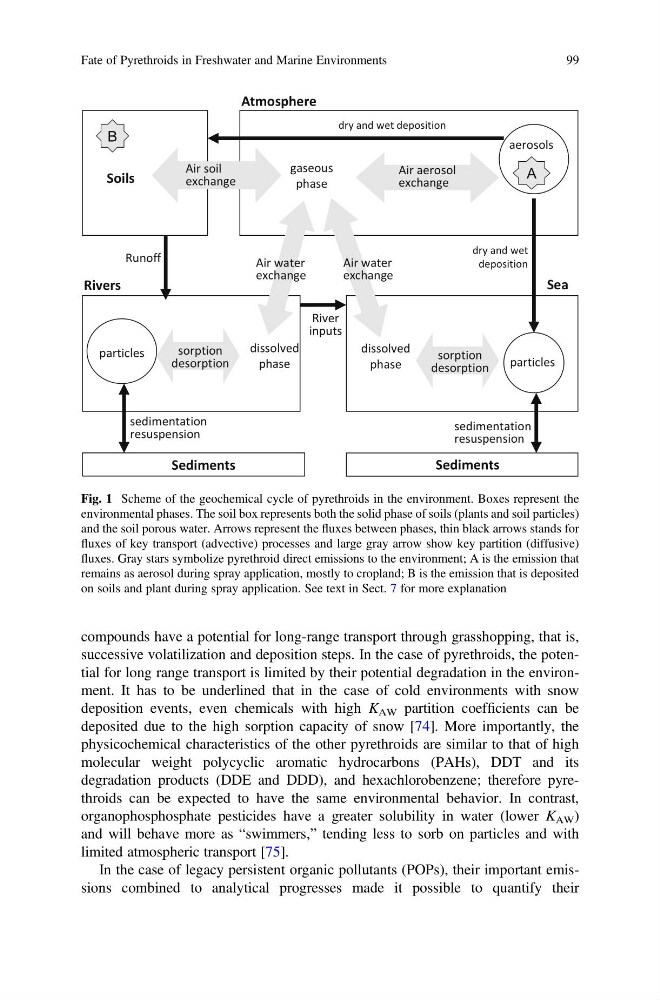
Fig. 1 Scheme of the geochemical cycle of pyrethroids in the environment. Boxes represent the
environmental phases. The soil box represents both the solid phase of soils (plants and soil particles)
and the soil porous water. Arrows represent the fluxes between phases, thin black arrows stands for
fluxes of key transport (advective) processes and large gray arrow show key partition (diffusive)
fluxes. Gray stars symbolize pyrethroid direct emissions to the environment; A is the emission that
remains as aerosol during spray application, mostly to cropland; B is the emission that is deposited
on soils and plant during spray application. See text in Sect. 7 for more explanation
Fate of Pyrethroids in Freshwater and Marine Environments
99
successive volatilization and deposition steps. In the case of pyrethroids, the potential for long range transport is limited by their potential degradation in the environment. It has to be underlined that in the case of cold environments with snow
deposition events, even chemicals with high K AW partition coefficients can be
deposited due to the high sorption capacity of snow [74]. More importantly, the
physicochemical characteristics of the other pyrethroids are similar to that of high
molecular weight polycyclic aromatic hydrocarbons (PAHs), DDT and its
degradation products (DDE and DDD), and hexachlorobenzene; therefore pyrethroids can be expected to have the same environmental behavior. In contrast,
organophosphosphate pesticides have a greater solubility in water (lower K AW )
and will behave more as “swimmers,” tending less to sorb on particles and with
limited atmospheric transport [75].
In the case of legacy persistent organic pollutants (POPs), their important emissions combined to analytical progresses made it possible to quantify their
Soils
Atmosphere
aerosols
particles
particles
Sediments
Sediments
dissolved
phase
dissolved
phase
sorption
desorption
Air water
exchange
Air water
exchange
Runoff
sedimentation
resuspension
Air soil
exchange
gaseous
phase
B
sedimentation
resuspension
Rivers
Sea
sorption
desorption
dry and wet deposition
A
dry and wet
deposition
Air aerosol
exchange
River
inputs
Fig. 1 Scheme of the geochemical cycle of pyrethroids in the environment. Boxes represent the
environmental phases. The soil box represents both the solid phase of soils (plants and soil particles)
and the soil porous water. Arrows represent the fluxes between phases, thin black arrows stands for
fluxes of key transport (advective) processes and large gray arrow show key partition (diffusive)
fluxes. Gray stars symbolize pyrethroid direct emissions to the environment; A is the emission that
remains as aerosol during spray application, mostly to cropland; B is the emission that is deposited
on soils and plant during spray application. See text in Sect. 7 for more explanation
Fate of Pyrethroids in Freshwater and Marine Environments
99