

1 Establishing the Origin of Particulate Matter in Eastern Germany …
5
1.2.2 Model Improvements
From comparisons with groundbased observations it was found that the model largely
underestimates the PM concentrations during episodes with exceedances. The underestimation was especially visible in the comparison of carbonaceous aerosols. To this
end a few model improvements were realised.
A new scientific based emission database for residential combustion has been
implemented. This database includes emission factors from the GAINS model for
residential fossil fuel combustion. And includes the impact of condensable material [3]. The revised residential wood combustion emissions are higher than those
officially reported by a factor of 2–3.
The temporal variability of the residential PM emissions was further improved
by using the heating degree days concept. In this concept the emissions vary on a
daily basis based on ambient temperature. Hence, during cold spells the emissions
are increased compared to periods with relatively warm winter weather.
The deposition routine over snowy surfaces was evaluated. Stability and deposition factors were updated using settings appropriate for snowy conditions, leading
to a decrease of deposition under these conditions.
1.3 Results
1.3.1 PM Modeling
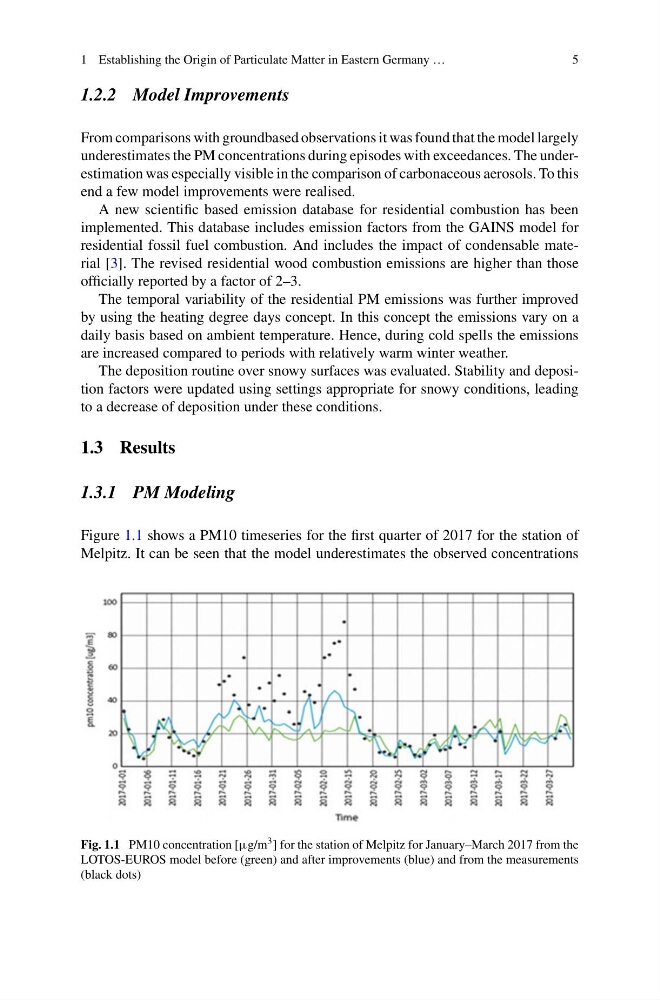
Figure 1.1 shows a PM10 timeseries for the first quarter of 2017 for the station of
Melpitz. It can be seen that the model underestimates the observed concentrations
Fig. 1.1 PM10 concentration [µg/m 3 ] for the station of Melpitz for January–March 2017 from the
LOTOS-EUROS model before (green) and after improvements (blue) and from the measurements
(black dots)
5
1.2.2 Model Improvements
From comparisons with groundbased observations it was found that the model largely
underestimates the PM concentrations during episodes with exceedances. The underestimation was especially visible in the comparison of carbonaceous aerosols. To this
end a few model improvements were realised.
A new scientific based emission database for residential combustion has been
implemented. This database includes emission factors from the GAINS model for
residential fossil fuel combustion. And includes the impact of condensable material [3]. The revised residential wood combustion emissions are higher than those
officially reported by a factor of 2–3.
The temporal variability of the residential PM emissions was further improved
by using the heating degree days concept. In this concept the emissions vary on a
daily basis based on ambient temperature. Hence, during cold spells the emissions
are increased compared to periods with relatively warm winter weather.
The deposition routine over snowy surfaces was evaluated. Stability and deposition factors were updated using settings appropriate for snowy conditions, leading
to a decrease of deposition under these conditions.
1.3 Results
1.3.1 PM Modeling
Figure 1.1 shows a PM10 timeseries for the first quarter of 2017 for the station of
Melpitz. It can be seen that the model underestimates the observed concentrations
Fig. 1.1 PM10 concentration [µg/m 3 ] for the station of Melpitz for January–March 2017 from the
LOTOS-EUROS model before (green) and after improvements (blue) and from the measurements
(black dots)