

456
J. Liu et al.
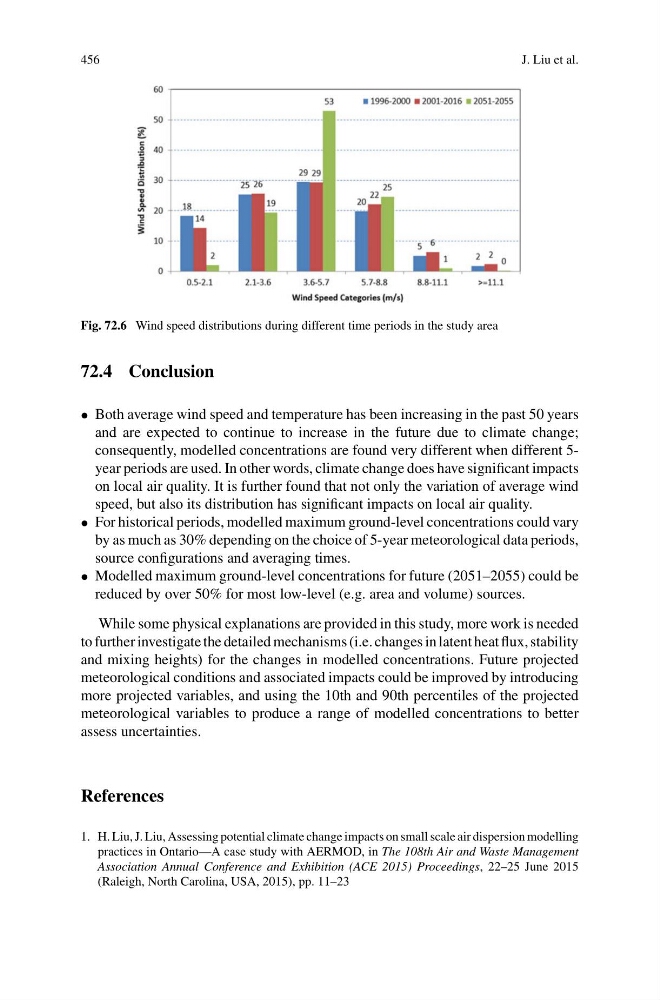
Fig. 72.6 Wind speed distributions during different time periods in the study area
72.4 Conclusion
• Both average wind speed and temperature has been increasing in the past 50 years
and are expected to continue to increase in the future due to climate change;
consequently, modelled concentrations are found very different when different 5year periods are used. In other words, climate change does have significant impacts
on local air quality. It is further found that not only the variation of average wind
speed, but also its distribution has significant impacts on local air quality.
• For historical periods, modelled maximum ground-level concentrations could vary
by as much as 30% depending on the choice of 5-year meteorological data periods,
source configurations and averaging times.
• Modelled maximum ground-level concentrations for future (2051–2055) could be
reduced by over 50% for most low-level (e.g. area and volume) sources.
While some physical explanations are provided in this study, more work is needed
to further investigate the detailed mechanisms (i.e. changes in latent heat flux, stability
and mixing heights) for the changes in modelled concentrations. Future projected
meteorological conditions and associated impacts could be improved by introducing
more projected variables, and using the 10th and 90th percentiles of the projected
meteorological variables to produce a range of modelled concentrations to better
assess uncertainties.
References
1. H. Liu, J. Liu, Assessing potential climate change impacts on small scale air dispersion modelling
practices in Ontario—A case study with AERMOD, in The 108th Air and Waste Management
Association Annual Conference and Exhibition (ACE 2015) Proceedings, 22–25 June 2015
(Raleigh, North Carolina, USA, 2015), pp. 11–23
J. Liu et al.
Fig. 72.6 Wind speed distributions during different time periods in the study area
72.4 Conclusion
• Both average wind speed and temperature has been increasing in the past 50 years
and are expected to continue to increase in the future due to climate change;
consequently, modelled concentrations are found very different when different 5year periods are used. In other words, climate change does have significant impacts
on local air quality. It is further found that not only the variation of average wind
speed, but also its distribution has significant impacts on local air quality.
• For historical periods, modelled maximum ground-level concentrations could vary
by as much as 30% depending on the choice of 5-year meteorological data periods,
source configurations and averaging times.
• Modelled maximum ground-level concentrations for future (2051–2055) could be
reduced by over 50% for most low-level (e.g. area and volume) sources.
While some physical explanations are provided in this study, more work is needed
to further investigate the detailed mechanisms (i.e. changes in latent heat flux, stability
and mixing heights) for the changes in modelled concentrations. Future projected
meteorological conditions and associated impacts could be improved by introducing
more projected variables, and using the 10th and 90th percentiles of the projected
meteorological variables to produce a range of modelled concentrations to better
assess uncertainties.
References
1. H. Liu, J. Liu, Assessing potential climate change impacts on small scale air dispersion modelling
practices in Ontario—A case study with AERMOD, in The 108th Air and Waste Management
Association Annual Conference and Exhibition (ACE 2015) Proceedings, 22–25 June 2015
(Raleigh, North Carolina, USA, 2015), pp. 11–23