

398
G. Fanourgakis et al.
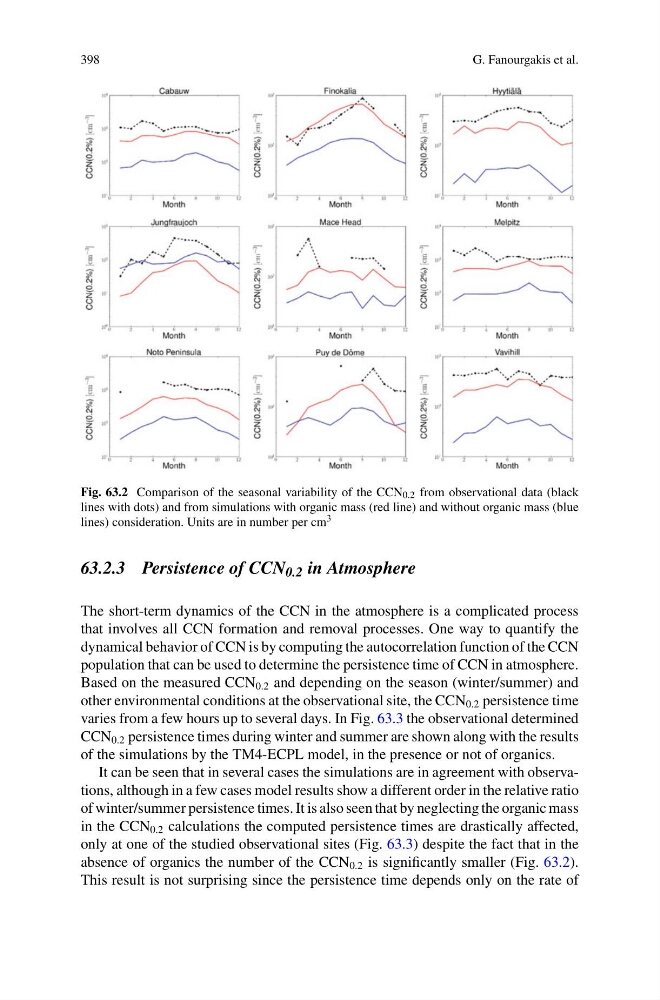
Fig. 63.2 Comparison of the seasonal variability of the CCN 0.2 from observational data (black
lines with dots) and from simulations with organic mass (red line) and without organic mass (blue
lines) consideration. Units are in number per cm 3
63.2.3 Persistence of CCN 0.2 in Atmosphere
The short-term dynamics of the CCN in the atmosphere is a complicated process
that involves all CCN formation and removal processes. One way to quantify the
dynamical behavior of CCN is by computing the autocorrelation function of the CCN
population that can be used to determine the persistence time of CCN in atmosphere.
Based on the measured CCN 0.2 and depending on the season (winter/summer) and
other environmental conditions at the observational site, the CCN 0.2 persistence time
varies from a few hours up to several days. In Fig. 63.3 the observational determined
CCN 0.2 persistence times during winter and summer are shown along with the results
of the simulations by the TM4-ECPL model, in the presence or not of organics.
It can be seen that in several cases the simulations are in agreement with observations, although in a few cases model results show a different order in the relative ratio
of winter/summer persistence times. It is also seen that by neglecting the organic mass
in the CCN 0.2 calculations the computed persistence times are drastically affected,
only at one of the studied observational sites (Fig. 63.3) despite the fact that in the
absence of organics the number of the CCN 0.2 is significantly smaller (Fig. 63.2).
This result is not surprising since the persistence time depends only on the rate of
G. Fanourgakis et al.
Fig. 63.2 Comparison of the seasonal variability of the CCN 0.2 from observational data (black
lines with dots) and from simulations with organic mass (red line) and without organic mass (blue
lines) consideration. Units are in number per cm 3
63.2.3 Persistence of CCN 0.2 in Atmosphere
The short-term dynamics of the CCN in the atmosphere is a complicated process
that involves all CCN formation and removal processes. One way to quantify the
dynamical behavior of CCN is by computing the autocorrelation function of the CCN
population that can be used to determine the persistence time of CCN in atmosphere.
Based on the measured CCN 0.2 and depending on the season (winter/summer) and
other environmental conditions at the observational site, the CCN 0.2 persistence time
varies from a few hours up to several days. In Fig. 63.3 the observational determined
CCN 0.2 persistence times during winter and summer are shown along with the results
of the simulations by the TM4-ECPL model, in the presence or not of organics.
It can be seen that in several cases the simulations are in agreement with observations, although in a few cases model results show a different order in the relative ratio
of winter/summer persistence times. It is also seen that by neglecting the organic mass
in the CCN 0.2 calculations the computed persistence times are drastically affected,
only at one of the studied observational sites (Fig. 63.3) despite the fact that in the
absence of organics the number of the CCN 0.2 is significantly smaller (Fig. 63.2).
This result is not surprising since the persistence time depends only on the rate of