

59 Evaluation of Seven Chemical Aging Modeling Schemes …
375
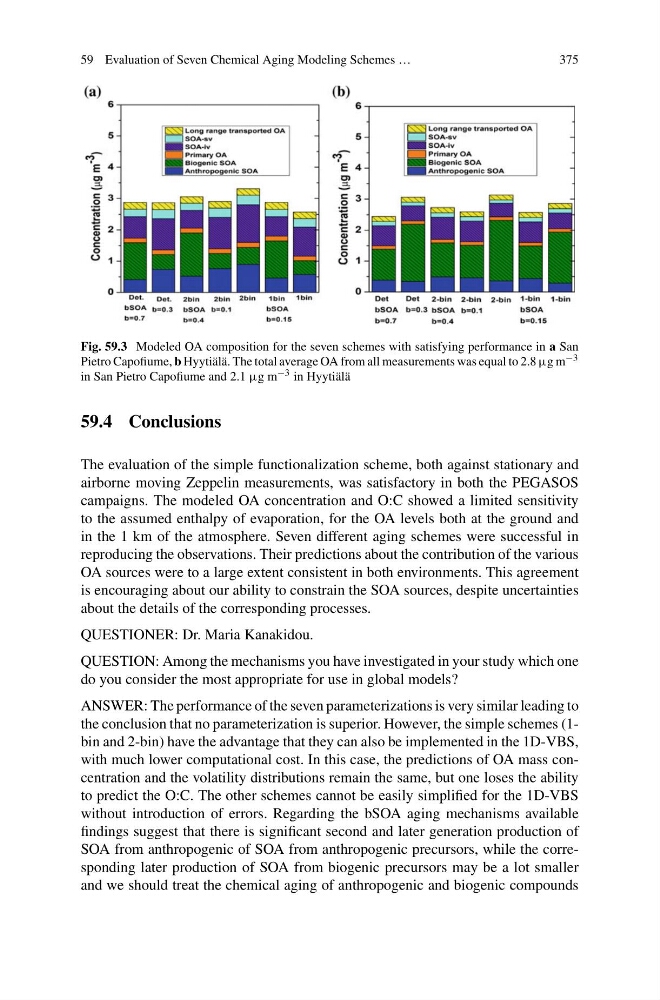
Fig. 59.3 Modeled OA composition for the seven schemes with satisfying performance in a San
Pietro Capofiume, b Hyytiälä. The total average OA from all measurements was equal to 2.8 µg m −3
in San Pietro Capofiume and 2.1 µg m −3 in Hyytiälä
59.4 Conclusions
The evaluation of the simple functionalization scheme, both against stationary and
airborne moving Zeppelin measurements, was satisfactory in both the PEGASOS
campaigns. The modeled OA concentration and O:C showed a limited sensitivity
to the assumed enthalpy of evaporation, for the OA levels both at the ground and
in the 1 km of the atmosphere. Seven different aging schemes were successful in
reproducing the observations. Their predictions about the contribution of the various
OA sources were to a large extent consistent in both environments. This agreement
is encouraging about our ability to constrain the SOA sources, despite uncertainties
about the details of the corresponding processes.
QUESTIONER: Dr. Maria Kanakidou.
QUESTION: Among the mechanisms you have investigated in your study which one
do you consider the most appropriate for use in global models?
ANSWER: The performance of the seven parameterizations is very similar leading to
the conclusion that no parameterization is superior. However, the simple schemes (1bin and 2-bin) have the advantage that they can also be implemented in the 1D-VBS,
with much lower computational cost. In this case, the predictions of OA mass concentration and the volatility distributions remain the same, but one loses the ability
to predict the O:C. The other schemes cannot be easily simplified for the 1D-VBS
without introduction of errors. Regarding the bSOA aging mechanisms available
findings suggest that there is significant second and later generation production of
SOA from anthropogenic of SOA from anthropogenic precursors, while the corresponding later production of SOA from biogenic precursors may be a lot smaller
and we should treat the chemical aging of anthropogenic and biogenic compounds
375
Fig. 59.3 Modeled OA composition for the seven schemes with satisfying performance in a San
Pietro Capofiume, b Hyytiälä. The total average OA from all measurements was equal to 2.8 µg m −3
in San Pietro Capofiume and 2.1 µg m −3 in Hyytiälä
59.4 Conclusions
The evaluation of the simple functionalization scheme, both against stationary and
airborne moving Zeppelin measurements, was satisfactory in both the PEGASOS
campaigns. The modeled OA concentration and O:C showed a limited sensitivity
to the assumed enthalpy of evaporation, for the OA levels both at the ground and
in the 1 km of the atmosphere. Seven different aging schemes were successful in
reproducing the observations. Their predictions about the contribution of the various
OA sources were to a large extent consistent in both environments. This agreement
is encouraging about our ability to constrain the SOA sources, despite uncertainties
about the details of the corresponding processes.
QUESTIONER: Dr. Maria Kanakidou.
QUESTION: Among the mechanisms you have investigated in your study which one
do you consider the most appropriate for use in global models?
ANSWER: The performance of the seven parameterizations is very similar leading to
the conclusion that no parameterization is superior. However, the simple schemes (1bin and 2-bin) have the advantage that they can also be implemented in the 1D-VBS,
with much lower computational cost. In this case, the predictions of OA mass concentration and the volatility distributions remain the same, but one loses the ability
to predict the O:C. The other schemes cannot be easily simplified for the 1D-VBS
without introduction of errors. Regarding the bSOA aging mechanisms available
findings suggest that there is significant second and later generation production of
SOA from anthropogenic of SOA from anthropogenic precursors, while the corresponding later production of SOA from biogenic precursors may be a lot smaller
and we should treat the chemical aging of anthropogenic and biogenic compounds