

43 Assimilation of Meteorological Data in Online …
277
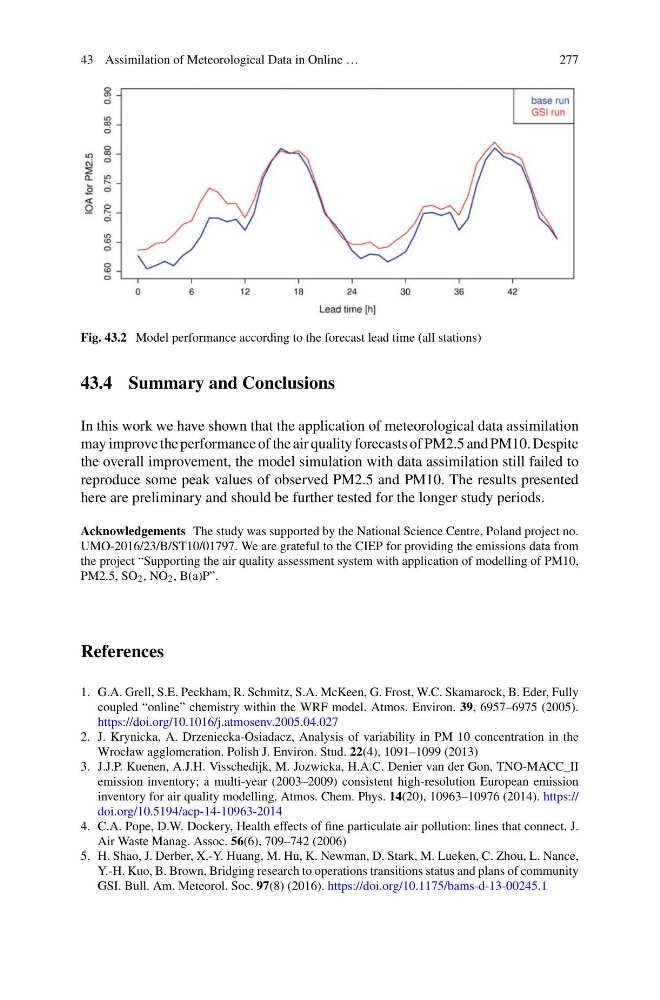
Fig. 43.2 Model performance according to the forecast lead time (all stations)
43.4 Summary and Conclusions
In this work we have shown that the application of meteorological data assimilation
may improve the performance of the air quality forecasts of PM2.5 and PM10. Despite
the overall improvement, the model simulation with data assimilation still failed to
reproduce some peak values of observed PM2.5 and PM10. The results presented
here are preliminary and should be further tested for the longer study periods.
Acknowledgements The study was supported by the National Science Centre, Poland project no.
UMO-2016/23/B/ST10/01797. We are grateful to the CIEP for providing the emissions data from
the project “Supporting the air quality assessment system with application of modelling of PM10,
PM2.5, SO 2 , NO 2 , B(a)P”.
References
1. G.A. Grell, S.E. Peckham, R. Schmitz, S.A. McKeen, G. Frost, W.C. Skamarock, B. Eder, Fully
coupled “online” chemistry within the WRF model. Atmos. Environ. 39, 6957–6975 (2005).
https://doi.org/10.1016/j.atmosenv.2005.04.027
2. J. Krynicka, A. Drzeniecka-Osiadacz, Analysis of variability in PM 10 concentration in the
Wrocław agglomeration. Polish J. Environ. Stud. 22(4), 1091–1099 (2013)
3. J.J.P. Kuenen, A.J.H. Visschedijk, M. Jozwicka, H.A.C. Denier van der Gon, TNO-MACC_II
emission inventory; a multi-year (2003–2009) consistent high-resolution European emission
inventory for air quality modelling. Atmos. Chem. Phys. 14(20), 10963–10976 (2014). https://
doi.org/10.5194/acp-14-10963-2014
4. C.A. Pope, D.W. Dockery, Health effects of fine particulate air pollution: lines that connect. J.
Air Waste Manag. Assoc. 56(6), 709–742 (2006)
5. H. Shao, J. Derber, X.-Y. Huang, M. Hu, K. Newman, D. Stark, M. Lueken, C. Zhou, L. Nance,
Y.-H. Kuo, B. Brown, Bridging research to operations transitions status and plans of community
GSI. Bull. Am. Meteorol. Soc. 97(8) (2016). https://doi.org/10.1175/bams-d-13-00245.1
277
Fig. 43.2 Model performance according to the forecast lead time (all stations)
43.4 Summary and Conclusions
In this work we have shown that the application of meteorological data assimilation
may improve the performance of the air quality forecasts of PM2.5 and PM10. Despite
the overall improvement, the model simulation with data assimilation still failed to
reproduce some peak values of observed PM2.5 and PM10. The results presented
here are preliminary and should be further tested for the longer study periods.
Acknowledgements The study was supported by the National Science Centre, Poland project no.
UMO-2016/23/B/ST10/01797. We are grateful to the CIEP for providing the emissions data from
the project “Supporting the air quality assessment system with application of modelling of PM10,
PM2.5, SO 2 , NO 2 , B(a)P”.
References
1. G.A. Grell, S.E. Peckham, R. Schmitz, S.A. McKeen, G. Frost, W.C. Skamarock, B. Eder, Fully
coupled “online” chemistry within the WRF model. Atmos. Environ. 39, 6957–6975 (2005).
https://doi.org/10.1016/j.atmosenv.2005.04.027
2. J. Krynicka, A. Drzeniecka-Osiadacz, Analysis of variability in PM 10 concentration in the
Wrocław agglomeration. Polish J. Environ. Stud. 22(4), 1091–1099 (2013)
3. J.J.P. Kuenen, A.J.H. Visschedijk, M. Jozwicka, H.A.C. Denier van der Gon, TNO-MACC_II
emission inventory; a multi-year (2003–2009) consistent high-resolution European emission
inventory for air quality modelling. Atmos. Chem. Phys. 14(20), 10963–10976 (2014). https://
doi.org/10.5194/acp-14-10963-2014
4. C.A. Pope, D.W. Dockery, Health effects of fine particulate air pollution: lines that connect. J.
Air Waste Manag. Assoc. 56(6), 709–742 (2006)
5. H. Shao, J. Derber, X.-Y. Huang, M. Hu, K. Newman, D. Stark, M. Lueken, C. Zhou, L. Nance,
Y.-H. Kuo, B. Brown, Bridging research to operations transitions status and plans of community
GSI. Bull. Am. Meteorol. Soc. 97(8) (2016). https://doi.org/10.1175/bams-d-13-00245.1