

39 Performance Differences of the National Air Quality Forecasting …
251
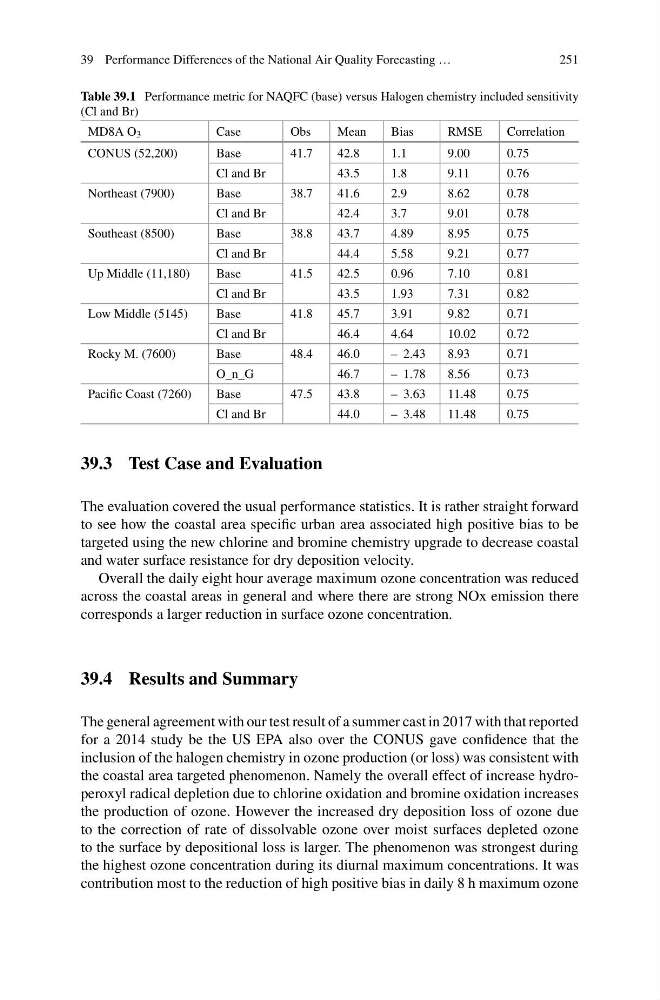
Table 39.1 Performance metric for NAQFC (base) versus Halogen chemistry included sensitivity
(Cl and Br)
MD8A O 3
Case
Obs
Mean
Bias
RMSE
Correlation
CONUS (52,200)
Base
41.7
42.8
1.1
9.00
0.75
Cl and Br
43.5
1.8
9.11
0.76
Northeast (7900)
Base
38.7
41.6
2.9
8.62
0.78
Cl and Br
42.4
3.7
9.01
0.78
Southeast (8500)
Base
38.8
43.7
4.89
8.95
0.75
Cl and Br
44.4
5.58
9.21
0.77
Up Middle (11,180)
Base
41.5
42.5
0.96
7.10
0.81
Cl and Br
43.5
1.93
7.31
0.82
Low Middle (5145)
Base
41.8
45.7
3.91
9.82
0.71
Cl and Br
46.4
4.64
10.02
0.72
Rocky M. (7600)
Base
48.4
46.0
– 2.43
8.93
0.71
O_n_G
46.7
– 1.78
8.56
0.73
Pacific Coast (7260)
Base
47.5
43.8
– 3.63
11.48
0.75
Cl and Br
44.0
– 3.48
11.48
0.75
39.3 Test Case and Evaluation
The evaluation covered the usual performance statistics. It is rather straight forward
to see how the coastal area specific urban area associated high positive bias to be
targeted using the new chlorine and bromine chemistry upgrade to decrease coastal
and water surface resistance for dry deposition velocity.
Overall the daily eight hour average maximum ozone concentration was reduced
across the coastal areas in general and where there are strong NOx emission there
corresponds a larger reduction in surface ozone concentration.
39.4 Results and Summary
The general agreement with our test result of a summer cast in 2017 with that reported
for a 2014 study be the US EPA also over the CONUS gave confidence that the
inclusion of the halogen chemistry in ozone production (or loss) was consistent with
the coastal area targeted phenomenon. Namely the overall effect of increase hydroperoxyl radical depletion due to chlorine oxidation and bromine oxidation increases
the production of ozone. However the increased dry deposition loss of ozone due
to the correction of rate of dissolvable ozone over moist surfaces depleted ozone
to the surface by depositional loss is larger. The phenomenon was strongest during
the highest ozone concentration during its diurnal maximum concentrations. It was
contribution most to the reduction of high positive bias in daily 8 h maximum ozone
251
Table 39.1 Performance metric for NAQFC (base) versus Halogen chemistry included sensitivity
(Cl and Br)
MD8A O 3
Case
Obs
Mean
Bias
RMSE
Correlation
CONUS (52,200)
Base
41.7
42.8
1.1
9.00
0.75
Cl and Br
43.5
1.8
9.11
0.76
Northeast (7900)
Base
38.7
41.6
2.9
8.62
0.78
Cl and Br
42.4
3.7
9.01
0.78
Southeast (8500)
Base
38.8
43.7
4.89
8.95
0.75
Cl and Br
44.4
5.58
9.21
0.77
Up Middle (11,180)
Base
41.5
42.5
0.96
7.10
0.81
Cl and Br
43.5
1.93
7.31
0.82
Low Middle (5145)
Base
41.8
45.7
3.91
9.82
0.71
Cl and Br
46.4
4.64
10.02
0.72
Rocky M. (7600)
Base
48.4
46.0
– 2.43
8.93
0.71
O_n_G
46.7
– 1.78
8.56
0.73
Pacific Coast (7260)
Base
47.5
43.8
– 3.63
11.48
0.75
Cl and Br
44.0
– 3.48
11.48
0.75
39.3 Test Case and Evaluation
The evaluation covered the usual performance statistics. It is rather straight forward
to see how the coastal area specific urban area associated high positive bias to be
targeted using the new chlorine and bromine chemistry upgrade to decrease coastal
and water surface resistance for dry deposition velocity.
Overall the daily eight hour average maximum ozone concentration was reduced
across the coastal areas in general and where there are strong NOx emission there
corresponds a larger reduction in surface ozone concentration.
39.4 Results and Summary
The general agreement with our test result of a summer cast in 2017 with that reported
for a 2014 study be the US EPA also over the CONUS gave confidence that the
inclusion of the halogen chemistry in ozone production (or loss) was consistent with
the coastal area targeted phenomenon. Namely the overall effect of increase hydroperoxyl radical depletion due to chlorine oxidation and bromine oxidation increases
the production of ozone. However the increased dry deposition loss of ozone due
to the correction of rate of dissolvable ozone over moist surfaces depleted ozone
to the surface by depositional loss is larger. The phenomenon was strongest during
the highest ozone concentration during its diurnal maximum concentrations. It was
contribution most to the reduction of high positive bias in daily 8 h maximum ozone