

35 Experimental Forecasting Using the High-Resolution Research …
227
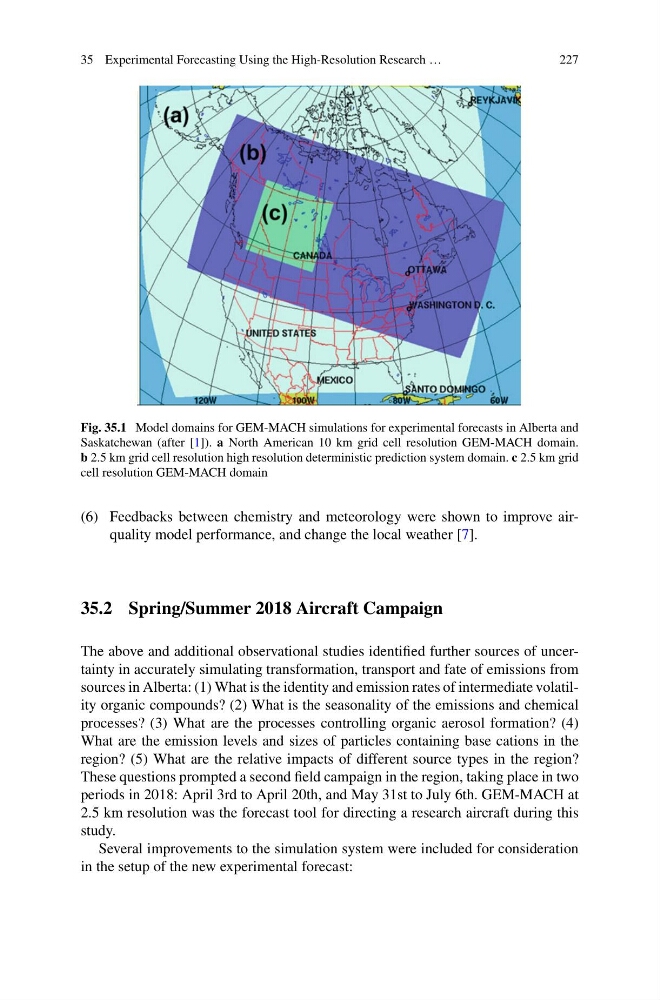
Fig. 35.1 Model domains for GEM-MACH simulations for experimental forecasts in Alberta and
Saskatchewan (after [1]). a North American 10 km grid cell resolution GEM-MACH domain.
b 2.5 km grid cell resolution high resolution deterministic prediction system domain. c 2.5 km grid
cell resolution GEM-MACH domain
(6) Feedbacks between chemistry and meteorology were shown to improve airquality model performance, and change the local weather [7].
35.2 Spring/Summer 2018 Aircraft Campaign
The above and additional observational studies identified further sources of uncertainty in accurately simulating transformation, transport and fate of emissions from
sources in Alberta: (1) What is the identity and emission rates of intermediate volatility organic compounds? (2) What is the seasonality of the emissions and chemical
processes? (3) What are the processes controlling organic aerosol formation? (4)
What are the emission levels and sizes of particles containing base cations in the
region? (5) What are the relative impacts of different source types in the region?
These questions prompted a second field campaign in the region, taking place in two
periods in 2018: April 3rd to April 20th, and May 31st to July 6th. GEM-MACH at
2.5 km resolution was the forecast tool for directing a research aircraft during this
study.
Several improvements to the simulation system were included for consideration
in the setup of the new experimental forecast:
227
Fig. 35.1 Model domains for GEM-MACH simulations for experimental forecasts in Alberta and
Saskatchewan (after [1]). a North American 10 km grid cell resolution GEM-MACH domain.
b 2.5 km grid cell resolution high resolution deterministic prediction system domain. c 2.5 km grid
cell resolution GEM-MACH domain
(6) Feedbacks between chemistry and meteorology were shown to improve airquality model performance, and change the local weather [7].
35.2 Spring/Summer 2018 Aircraft Campaign
The above and additional observational studies identified further sources of uncertainty in accurately simulating transformation, transport and fate of emissions from
sources in Alberta: (1) What is the identity and emission rates of intermediate volatility organic compounds? (2) What is the seasonality of the emissions and chemical
processes? (3) What are the processes controlling organic aerosol formation? (4)
What are the emission levels and sizes of particles containing base cations in the
region? (5) What are the relative impacts of different source types in the region?
These questions prompted a second field campaign in the region, taking place in two
periods in 2018: April 3rd to April 20th, and May 31st to July 6th. GEM-MACH at
2.5 km resolution was the forecast tool for directing a research aircraft during this
study.
Several improvements to the simulation system were included for consideration
in the setup of the new experimental forecast: