

16 Comparing the ISORROPIA and EQSAM Aerosol …
95
12 km horizontal grid resolution and extends vertically up to approximately 50 mbar
(20 km). The Carbon Bond Version 6 Revision 4 (CB6r4) chemistry mechanism [2]
was selected for gas-phase chemistry. Inorganic thermodynamic equilibrium partitioning is modeled by ISORROPIA (version 1.7) and EQSAM4clim (version 10).
Both ISORROPIA and EQSAM4clim assumed a metastable aerosol liquid phase
following Guo et al. [5].
16.3 Results and Discussion
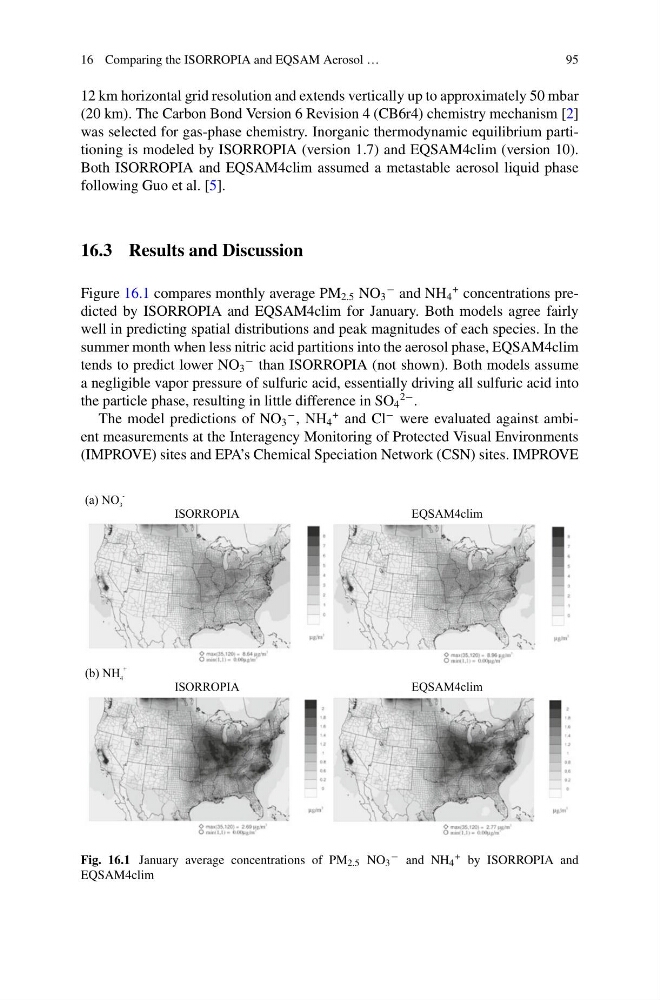
Figure 16.1 compares monthly average PM 2.5 NO 3
− and NH 4
+ concentrations predicted by ISORROPIA and EQSAM4clim for January. Both models agree fairly
well in predicting spatial distributions and peak magnitudes of each species. In the
summer month when less nitric acid partitions into the aerosol phase, EQSAM4clim
tends to predict lower NO 3
− than ISORROPIA (not shown). Both models assume
a negligible vapor pressure of sulfuric acid, essentially driving all sulfuric acid into
the particle phase, resulting in little difference in SO 4
2− .
The model predictions of NO 3
− , NH 4
+ and Cl
− were evaluated against ambient measurements at the Interagency Monitoring of Protected Visual Environments
(IMPROVE) sites and EPA’s Chemical Speciation Network (CSN) sites. IMPROVE
(a) NO 3
-
ISORROPIA
EQSAM4clim
(b) NH 4
+
ISORROPIA
EQSAM4clim
Fig. 16.1 January average concentrations of PM 2.5 NO 3
− and NH 4
+ by ISORROPIA and
EQSAM4clim
95
12 km horizontal grid resolution and extends vertically up to approximately 50 mbar
(20 km). The Carbon Bond Version 6 Revision 4 (CB6r4) chemistry mechanism [2]
was selected for gas-phase chemistry. Inorganic thermodynamic equilibrium partitioning is modeled by ISORROPIA (version 1.7) and EQSAM4clim (version 10).
Both ISORROPIA and EQSAM4clim assumed a metastable aerosol liquid phase
following Guo et al. [5].
16.3 Results and Discussion
Figure 16.1 compares monthly average PM 2.5 NO 3
− and NH 4
+ concentrations predicted by ISORROPIA and EQSAM4clim for January. Both models agree fairly
well in predicting spatial distributions and peak magnitudes of each species. In the
summer month when less nitric acid partitions into the aerosol phase, EQSAM4clim
tends to predict lower NO 3
− than ISORROPIA (not shown). Both models assume
a negligible vapor pressure of sulfuric acid, essentially driving all sulfuric acid into
the particle phase, resulting in little difference in SO 4
2− .
The model predictions of NO 3
− , NH 4
+ and Cl
− were evaluated against ambient measurements at the Interagency Monitoring of Protected Visual Environments
(IMPROVE) sites and EPA’s Chemical Speciation Network (CSN) sites. IMPROVE
(a) NO 3
-
ISORROPIA
EQSAM4clim
(b) NH 4
+
ISORROPIA
EQSAM4clim
Fig. 16.1 January average concentrations of PM 2.5 NO 3
− and NH 4
+ by ISORROPIA and
EQSAM4clim