

30.2 Simple Strain Model of Hardening Dense Soils
395
a
b
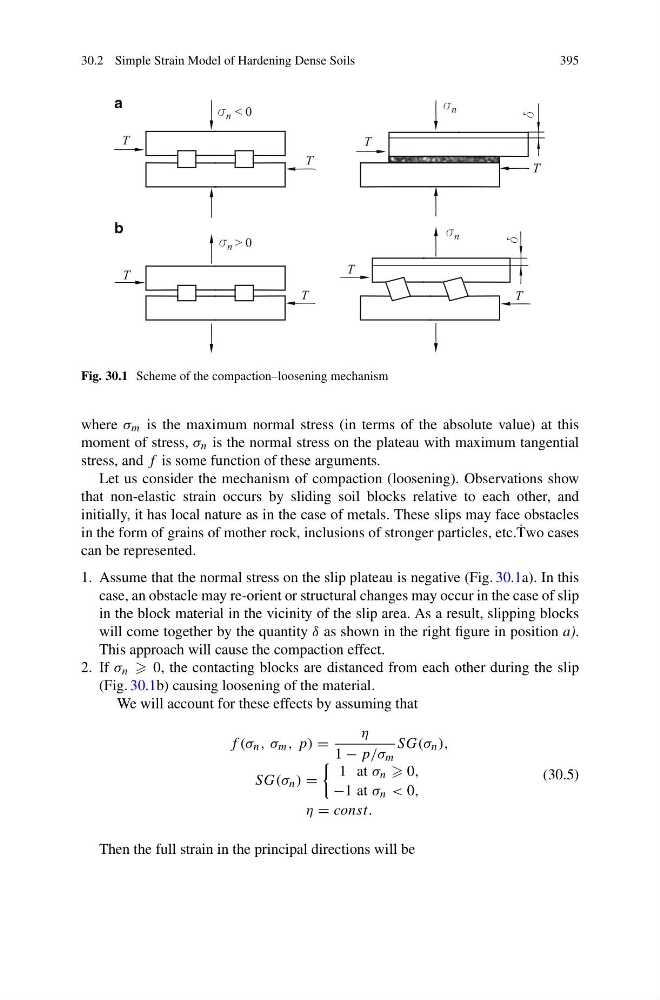
Fig. 30.1 Scheme of the compaction–loosening mechanism
where σ m is the maximum normal stress (in terms of the absolute value) at this
moment of stress, σ n is the normal stress on the plateau with maximum tangential
stress, and f is some function of these arguments.
Let us consider the mechanism of compaction (loosening). Observations show
that non-elastic strain occurs by sliding soil blocks relative to each other, and
initially, it has local nature as in the case of metals. These slips may face obstacles
in the form of grains of mother rock, inclusions of stronger particles, etc. ˙
Two cases
can be represented.
1. Assume that the normal stress on the slip plateau is negative (Fig. 30.1a). In this
case, an obstacle may re-orient or structural changes may occur in the case of slip
in the block material in the vicinity of the slip area. As a result, slipping blocks
will come together by the quantity δ as shown in the right figure in position a).
This approach will cause the compaction effect.
2. If σ n 0, the contacting blocks are distanced from each other during the slip
(Fig. 30.1b) causing loosening of the material.
We will account for these effects by assuming that
f (σ n , σ m , p) =
η
1 − p/σ m
SG(σ n ),
SG(σ n ) =
1 at σ n 0,
−1 at σ n < 0,
η = const.
(30.5)
Then the full strain in the principal directions will be
395
a
b
Fig. 30.1 Scheme of the compaction–loosening mechanism
where σ m is the maximum normal stress (in terms of the absolute value) at this
moment of stress, σ n is the normal stress on the plateau with maximum tangential
stress, and f is some function of these arguments.
Let us consider the mechanism of compaction (loosening). Observations show
that non-elastic strain occurs by sliding soil blocks relative to each other, and
initially, it has local nature as in the case of metals. These slips may face obstacles
in the form of grains of mother rock, inclusions of stronger particles, etc. ˙
Two cases
can be represented.
1. Assume that the normal stress on the slip plateau is negative (Fig. 30.1a). In this
case, an obstacle may re-orient or structural changes may occur in the case of slip
in the block material in the vicinity of the slip area. As a result, slipping blocks
will come together by the quantity δ as shown in the right figure in position a).
This approach will cause the compaction effect.
2. If σ n 0, the contacting blocks are distanced from each other during the slip
(Fig. 30.1b) causing loosening of the material.
We will account for these effects by assuming that
f (σ n , σ m , p) =
η
1 − p/σ m
SG(σ n ),
SG(σ n ) =
1 at σ n 0,
−1 at σ n < 0,
η = const.
(30.5)
Then the full strain in the principal directions will be