

60
F. A. Maksimov
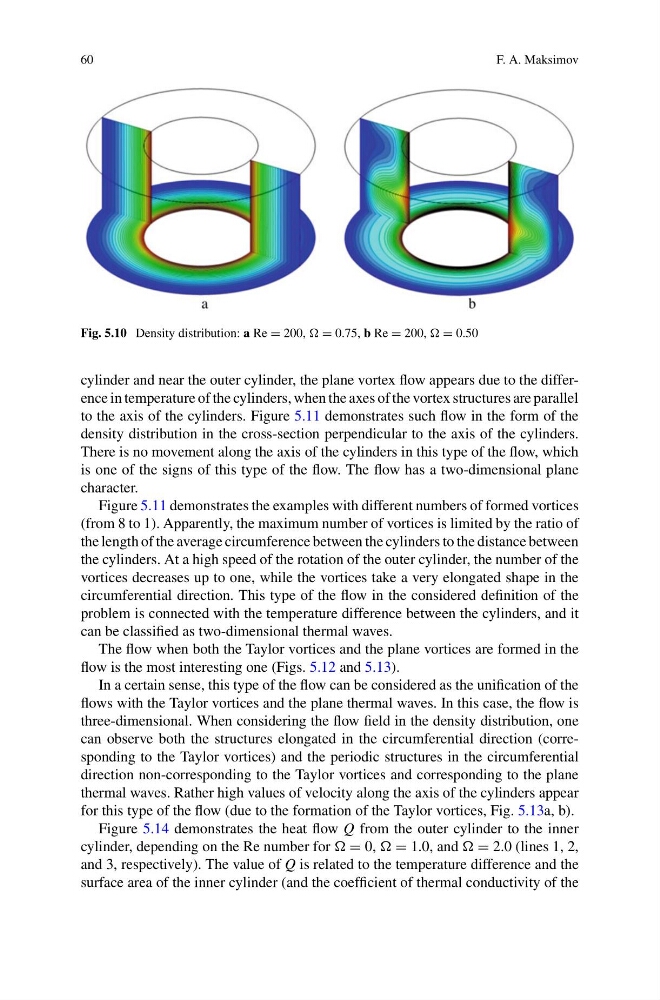
Fig. 5.10 Density distribution: a Re = 200, = 0.75, b Re = 200, = 0.50
cylinder and near the outer cylinder, the plane vortex flow appears due to the difference in temperature of the cylinders, when the axes of the vortex structures are parallel
to the axis of the cylinders. Figure 5.11 demonstrates such flow in the form of the
density distribution in the cross-section perpendicular to the axis of the cylinders.
There is no movement along the axis of the cylinders in this type of the flow, which
is one of the signs of this type of the flow. The flow has a two-dimensional plane
character.
Figure 5.11 demonstrates the examples with different numbers of formed vortices
(from 8 to 1). Apparently, the maximum number of vortices is limited by the ratio of
the length of the average circumference between the cylinders to the distance between
the cylinders. At a high speed of the rotation of the outer cylinder, the number of the
vortices decreases up to one, while the vortices take a very elongated shape in the
circumferential direction. This type of the flow in the considered definition of the
problem is connected with the temperature difference between the cylinders, and it
can be classified as two-dimensional thermal waves.
The flow when both the Taylor vortices and the plane vortices are formed in the
flow is the most interesting one (Figs. 5.12 and 5.13).
In a certain sense, this type of the flow can be considered as the unification of the
flows with the Taylor vortices and the plane thermal waves. In this case, the flow is
three-dimensional. When considering the flow field in the density distribution, one
can observe both the structures elongated in the circumferential direction (corresponding to the Taylor vortices) and the periodic structures in the circumferential
direction non-corresponding to the Taylor vortices and corresponding to the plane
thermal waves. Rather high values of velocity along the axis of the cylinders appear
for this type of the flow (due to the formation of the Taylor vortices, Fig. 5.13a, b).
Figure 5.14 demonstrates the heat flow Q from the outer cylinder to the inner
cylinder, depending on the Re number for = 0, = 1.0, and = 2.0 (lines 1, 2,
and 3, respectively). The value of Q is related to the temperature difference and the
surface area of the inner cylinder (and the coefficient of thermal conductivity of the
F. A. Maksimov
Fig. 5.10 Density distribution: a Re = 200, = 0.75, b Re = 200, = 0.50
cylinder and near the outer cylinder, the plane vortex flow appears due to the difference in temperature of the cylinders, when the axes of the vortex structures are parallel
to the axis of the cylinders. Figure 5.11 demonstrates such flow in the form of the
density distribution in the cross-section perpendicular to the axis of the cylinders.
There is no movement along the axis of the cylinders in this type of the flow, which
is one of the signs of this type of the flow. The flow has a two-dimensional plane
character.
Figure 5.11 demonstrates the examples with different numbers of formed vortices
(from 8 to 1). Apparently, the maximum number of vortices is limited by the ratio of
the length of the average circumference between the cylinders to the distance between
the cylinders. At a high speed of the rotation of the outer cylinder, the number of the
vortices decreases up to one, while the vortices take a very elongated shape in the
circumferential direction. This type of the flow in the considered definition of the
problem is connected with the temperature difference between the cylinders, and it
can be classified as two-dimensional thermal waves.
The flow when both the Taylor vortices and the plane vortices are formed in the
flow is the most interesting one (Figs. 5.12 and 5.13).
In a certain sense, this type of the flow can be considered as the unification of the
flows with the Taylor vortices and the plane thermal waves. In this case, the flow is
three-dimensional. When considering the flow field in the density distribution, one
can observe both the structures elongated in the circumferential direction (corresponding to the Taylor vortices) and the periodic structures in the circumferential
direction non-corresponding to the Taylor vortices and corresponding to the plane
thermal waves. Rather high values of velocity along the axis of the cylinders appear
for this type of the flow (due to the formation of the Taylor vortices, Fig. 5.13a, b).
Figure 5.14 demonstrates the heat flow Q from the outer cylinder to the inner
cylinder, depending on the Re number for = 0, = 1.0, and = 2.0 (lines 1, 2,
and 3, respectively). The value of Q is related to the temperature difference and the
surface area of the inner cylinder (and the coefficient of thermal conductivity of the