

14 Numerical Study on the Teeth Installation Parameters: Shift …
187
a
b
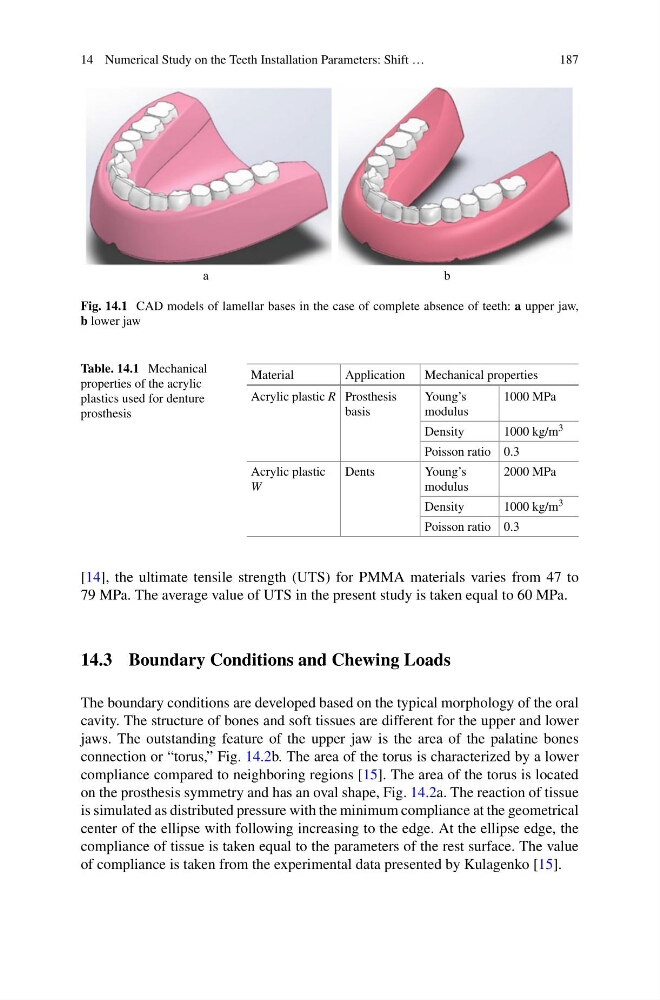
Fig. 14.1 CAD models of lamellar bases in the case of complete absence of teeth: a upper jaw,
b lower jaw
Table. 14.1 Mechanical
properties of the acrylic
plastics used for denture
prosthesis
Material
Application
Mechanical properties
Acrylic plastic R Prosthesis
basis
Young’s
modulus
1000 MPa
Density
1000 kg/m 3
Poisson ratio 0.3
Acrylic plastic
W
Dents
Young’s
modulus
2000 MPa
Density
1000 kg/m 3
Poisson ratio 0.3
[14], the ultimate tensile strength (UTS) for PMMA materials varies from 47 to
79 MPa. The average value of UTS in the present study is taken equal to 60 MPa.
14.3 Boundary Conditions and Chewing Loads
The boundary conditions are developed based on the typical morphology of the oral
cavity. The structure of bones and soft tissues are different for the upper and lower
jaws. The outstanding feature of the upper jaw is the area of the palatine bones
connection or “torus,” Fig. 14.2b. The area of the torus is characterized by a lower
compliance compared to neighboring regions [15]. The area of the torus is located
on the prosthesis symmetry and has an oval shape, Fig. 14.2a. The reaction of tissue
is simulated as distributed pressure with the minimum compliance at the geometrical
center of the ellipse with following increasing to the edge. At the ellipse edge, the
compliance of tissue is taken equal to the parameters of the rest surface. The value
of compliance is taken from the experimental data presented by Kulagenko [15].
187
a
b
Fig. 14.1 CAD models of lamellar bases in the case of complete absence of teeth: a upper jaw,
b lower jaw
Table. 14.1 Mechanical
properties of the acrylic
plastics used for denture
prosthesis
Material
Application
Mechanical properties
Acrylic plastic R Prosthesis
basis
Young’s
modulus
1000 MPa
Density
1000 kg/m 3
Poisson ratio 0.3
Acrylic plastic
W
Dents
Young’s
modulus
2000 MPa
Density
1000 kg/m 3
Poisson ratio 0.3
[14], the ultimate tensile strength (UTS) for PMMA materials varies from 47 to
79 MPa. The average value of UTS in the present study is taken equal to 60 MPa.
14.3 Boundary Conditions and Chewing Loads
The boundary conditions are developed based on the typical morphology of the oral
cavity. The structure of bones and soft tissues are different for the upper and lower
jaws. The outstanding feature of the upper jaw is the area of the palatine bones
connection or “torus,” Fig. 14.2b. The area of the torus is characterized by a lower
compliance compared to neighboring regions [15]. The area of the torus is located
on the prosthesis symmetry and has an oval shape, Fig. 14.2a. The reaction of tissue
is simulated as distributed pressure with the minimum compliance at the geometrical
center of the ellipse with following increasing to the edge. At the ellipse edge, the
compliance of tissue is taken equal to the parameters of the rest surface. The value
of compliance is taken from the experimental data presented by Kulagenko [15].