

148
A. V. Bogatiy et al.
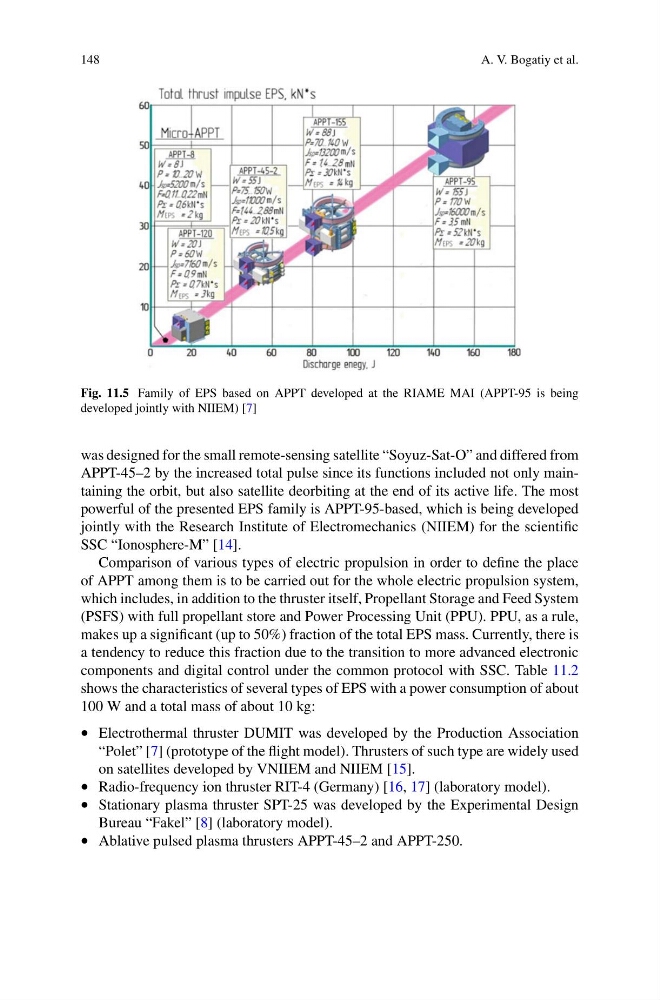
Fig. 11.5 Family of EPS based on APPT developed at the RIAME MAI (APPT-95 is being
developed jointly with NIIEM) [7]
was designed for the small remote-sensing satellite “Soyuz-Sat-O” and differed from
APPT-45–2 by the increased total pulse since its functions included not only maintaining the orbit, but also satellite deorbiting at the end of its active life. The most
powerful of the presented EPS family is APPT-95-based, which is being developed
jointly with the Research Institute of Electromechanics (NIIEM) for the scientific
SSC “Ionosphere-M” [14].
Comparison of various types of electric propulsion in order to define the place
of APPT among them is to be carried out for the whole electric propulsion system,
which includes, in addition to the thruster itself, Propellant Storage and Feed System
(PSFS) with full propellant store and Power Processing Unit (PPU). PPU, as a rule,
makes up a significant (up to 50%) fraction of the total EPS mass. Currently, there is
a tendency to reduce this fraction due to the transition to more advanced electronic
components and digital control under the common protocol with SSC. Table 11.2
shows the characteristics of several types of EPS with a power consumption of about
100 W and a total mass of about 10 kg:
• Electrothermal thruster DUMIT was developed by the Production Association
“Polet” [7] (prototype of the flight model). Thrusters of such type are widely used
on satellites developed by VNIIEM and NIIEM [15].
• Radio-frequency ion thruster RIT-4 (Germany) [16, 17] (laboratory model).
• Stationary plasma thruster SPT-25 was developed by the Experimental Design
Bureau “Fakel” [8] (laboratory model).
• Ablative pulsed plasma thrusters APPT-45–2 and APPT-250.
A. V. Bogatiy et al.
Fig. 11.5 Family of EPS based on APPT developed at the RIAME MAI (APPT-95 is being
developed jointly with NIIEM) [7]
was designed for the small remote-sensing satellite “Soyuz-Sat-O” and differed from
APPT-45–2 by the increased total pulse since its functions included not only maintaining the orbit, but also satellite deorbiting at the end of its active life. The most
powerful of the presented EPS family is APPT-95-based, which is being developed
jointly with the Research Institute of Electromechanics (NIIEM) for the scientific
SSC “Ionosphere-M” [14].
Comparison of various types of electric propulsion in order to define the place
of APPT among them is to be carried out for the whole electric propulsion system,
which includes, in addition to the thruster itself, Propellant Storage and Feed System
(PSFS) with full propellant store and Power Processing Unit (PPU). PPU, as a rule,
makes up a significant (up to 50%) fraction of the total EPS mass. Currently, there is
a tendency to reduce this fraction due to the transition to more advanced electronic
components and digital control under the common protocol with SSC. Table 11.2
shows the characteristics of several types of EPS with a power consumption of about
100 W and a total mass of about 10 kg:
• Electrothermal thruster DUMIT was developed by the Production Association
“Polet” [7] (prototype of the flight model). Thrusters of such type are widely used
on satellites developed by VNIIEM and NIIEM [15].
• Radio-frequency ion thruster RIT-4 (Germany) [16, 17] (laboratory model).
• Stationary plasma thruster SPT-25 was developed by the Experimental Design
Bureau “Fakel” [8] (laboratory model).
• Ablative pulsed plasma thrusters APPT-45–2 and APPT-250.