

588
S. A. Zahran
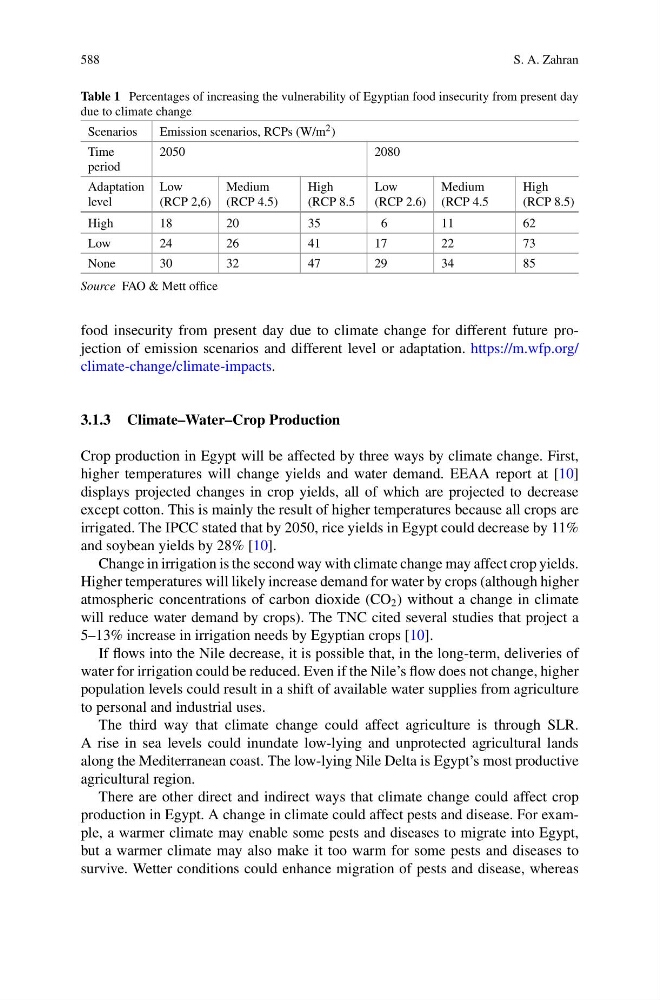
Table 1 Percentages of increasing the vulnerability of Egyptian food insecurity from present day
due to climate change
Scenarios
Emission scenarios, RCPs (W/m 2 )
Time
period
2050
2080
Adaptation
level
Low
(RCP 2,6)
Medium
(RCP 4.5)
High
(RCP 8.5
Low
(RCP 2.6)
Medium
(RCP 4.5
High
(RCP 8.5)
High
18
20
35
6
11
62
Low
24
26
41
17
22
73
None
30
32
47
29
34
85
Source FAO & Mett office
food insecurity from present day due to climate change for different future projection of emission scenarios and different level or adaptation. https://m.wfp.org/
climate-change/climate-impacts.
3.1.3 Climate–Water–Crop Production
Crop production in Egypt will be affected by three ways by climate change. First,
higher temperatures will change yields and water demand. EEAA report at [10]
displays projected changes in crop yields, all of which are projected to decrease
except cotton. This is mainly the result of higher temperatures because all crops are
irrigated. The IPCC stated that by 2050, rice yields in Egypt could decrease by 11%
and soybean yields by 28% [10].
Change in irrigation is the second way with climate change may affect crop yields.
Higher temperatures will likely increase demand for water by crops (although higher
atmospheric concentrations of carbon dioxide (CO 2 ) without a change in climate
will reduce water demand by crops). The TNC cited several studies that project a
5–13% increase in irrigation needs by Egyptian crops [10].
If flows into the Nile decrease, it is possible that, in the long-term, deliveries of
water for irrigation could be reduced. Even if the Nile’s flow does not change, higher
population levels could result in a shift of available water supplies from agriculture
to personal and industrial uses.
The third way that climate change could affect agriculture is through SLR.
A rise in sea levels could inundate low-lying and unprotected agricultural lands
along the Mediterranean coast. The low-lying Nile Delta is Egypt’s most productive
agricultural region.
There are other direct and indirect ways that climate change could affect crop
production in Egypt. A change in climate could affect pests and disease. For example, a warmer climate may enable some pests and diseases to migrate into Egypt,
but a warmer climate may also make it too warm for some pests and diseases to
survive. Wetter conditions could enhance migration of pests and disease, whereas
S. A. Zahran
Table 1 Percentages of increasing the vulnerability of Egyptian food insecurity from present day
due to climate change
Scenarios
Emission scenarios, RCPs (W/m 2 )
Time
period
2050
2080
Adaptation
level
Low
(RCP 2,6)
Medium
(RCP 4.5)
High
(RCP 8.5
Low
(RCP 2.6)
Medium
(RCP 4.5
High
(RCP 8.5)
High
18
20
35
6
11
62
Low
24
26
41
17
22
73
None
30
32
47
29
34
85
Source FAO & Mett office
food insecurity from present day due to climate change for different future projection of emission scenarios and different level or adaptation. https://m.wfp.org/
climate-change/climate-impacts.
3.1.3 Climate–Water–Crop Production
Crop production in Egypt will be affected by three ways by climate change. First,
higher temperatures will change yields and water demand. EEAA report at [10]
displays projected changes in crop yields, all of which are projected to decrease
except cotton. This is mainly the result of higher temperatures because all crops are
irrigated. The IPCC stated that by 2050, rice yields in Egypt could decrease by 11%
and soybean yields by 28% [10].
Change in irrigation is the second way with climate change may affect crop yields.
Higher temperatures will likely increase demand for water by crops (although higher
atmospheric concentrations of carbon dioxide (CO 2 ) without a change in climate
will reduce water demand by crops). The TNC cited several studies that project a
5–13% increase in irrigation needs by Egyptian crops [10].
If flows into the Nile decrease, it is possible that, in the long-term, deliveries of
water for irrigation could be reduced. Even if the Nile’s flow does not change, higher
population levels could result in a shift of available water supplies from agriculture
to personal and industrial uses.
The third way that climate change could affect agriculture is through SLR.
A rise in sea levels could inundate low-lying and unprotected agricultural lands
along the Mediterranean coast. The low-lying Nile Delta is Egypt’s most productive
agricultural region.
There are other direct and indirect ways that climate change could affect crop
production in Egypt. A change in climate could affect pests and disease. For example, a warmer climate may enable some pests and diseases to migrate into Egypt,
but a warmer climate may also make it too warm for some pests and diseases to
survive. Wetter conditions could enhance migration of pests and disease, whereas