

288
S. Ouda
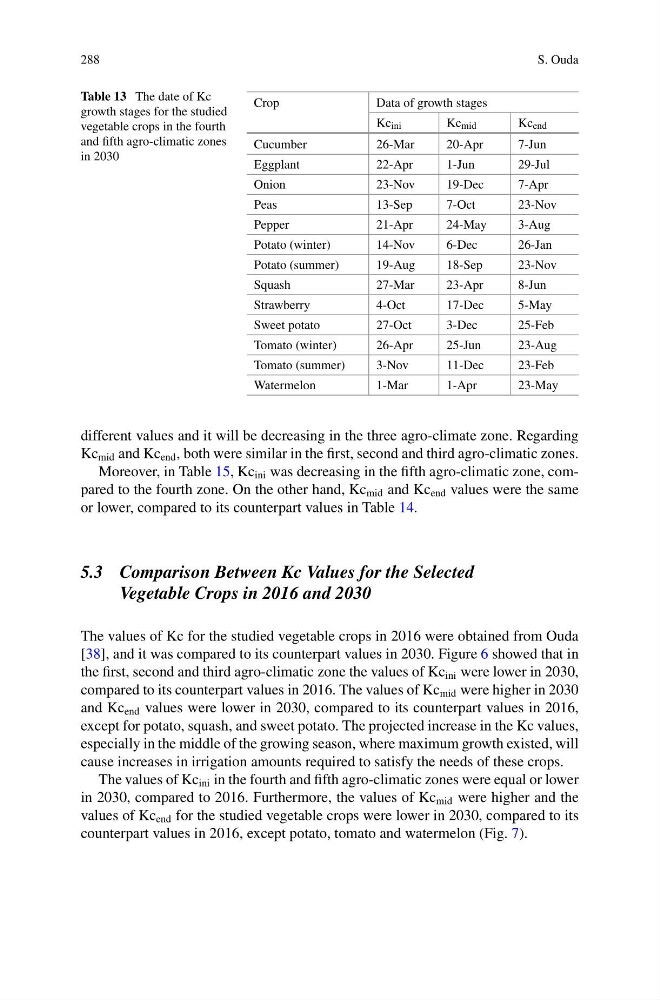
Table 13 The date of Kc
growth stages for the studied
vegetable crops in the fourth
and fifth agro-climatic zones
in 2030
Crop
Data of growth stages
Kc ini
Kc mid
Kc end
Cucumber
26-Mar
20-Apr
7-Jun
Eggplant
22-Apr
1-Jun
29-Jul
Onion
23-Nov
19-Dec
7-Apr
Peas
13-Sep
7-Oct
23-Nov
Pepper
21-Apr
24-May
3-Aug
Potato (winter)
14-Nov
6-Dec
26-Jan
Potato (summer)
19-Aug
18-Sep
23-Nov
Squash
27-Mar
23-Apr
8-Jun
Strawberry
4-Oct
17-Dec
5-May
Sweet potato
27-Oct
3-Dec
25-Feb
Tomato (winter)
26-Apr
25-Jun
23-Aug
Tomato (summer)
3-Nov
11-Dec
23-Feb
Watermelon
1-Mar
1-Apr
23-May
different values and it will be decreasing in the three agro-climate zone. Regarding
Kc mid and Kc end , both were similar in the first, second and third agro-climatic zones.
Moreover, in Table 15, Kc ini was decreasing in the fifth agro-climatic zone, compared to the fourth zone. On the other hand, Kc mid and Kc end values were the same
or lower, compared to its counterpart values in Table 14.
5.3 Comparison Between Kc Values for the Selected
Vegetable Crops in 2016 and 2030
The values of Kc for the studied vegetable crops in 2016 were obtained from Ouda
[38], and it was compared to its counterpart values in 2030. Figure 6 showed that in
the first, second and third agro-climatic zone the values of Kc ini were lower in 2030,
compared to its counterpart values in 2016. The values of Kc mid were higher in 2030
and Kc end values were lower in 2030, compared to its counterpart values in 2016,
except for potato, squash, and sweet potato. The projected increase in the Kc values,
especially in the middle of the growing season, where maximum growth existed, will
cause increases in irrigation amounts required to satisfy the needs of these crops.
The values of Kc ini in the fourth and fifth agro-climatic zones were equal or lower
in 2030, compared to 2016. Furthermore, the values of Kc mid were higher and the
values of Kc end for the studied vegetable crops were lower in 2030, compared to its
counterpart values in 2016, except potato, tomato and watermelon (Fig. 7).
S. Ouda
Table 13 The date of Kc
growth stages for the studied
vegetable crops in the fourth
and fifth agro-climatic zones
in 2030
Crop
Data of growth stages
Kc ini
Kc mid
Kc end
Cucumber
26-Mar
20-Apr
7-Jun
Eggplant
22-Apr
1-Jun
29-Jul
Onion
23-Nov
19-Dec
7-Apr
Peas
13-Sep
7-Oct
23-Nov
Pepper
21-Apr
24-May
3-Aug
Potato (winter)
14-Nov
6-Dec
26-Jan
Potato (summer)
19-Aug
18-Sep
23-Nov
Squash
27-Mar
23-Apr
8-Jun
Strawberry
4-Oct
17-Dec
5-May
Sweet potato
27-Oct
3-Dec
25-Feb
Tomato (winter)
26-Apr
25-Jun
23-Aug
Tomato (summer)
3-Nov
11-Dec
23-Feb
Watermelon
1-Mar
1-Apr
23-May
different values and it will be decreasing in the three agro-climate zone. Regarding
Kc mid and Kc end , both were similar in the first, second and third agro-climatic zones.
Moreover, in Table 15, Kc ini was decreasing in the fifth agro-climatic zone, compared to the fourth zone. On the other hand, Kc mid and Kc end values were the same
or lower, compared to its counterpart values in Table 14.
5.3 Comparison Between Kc Values for the Selected
Vegetable Crops in 2016 and 2030
The values of Kc for the studied vegetable crops in 2016 were obtained from Ouda
[38], and it was compared to its counterpart values in 2030. Figure 6 showed that in
the first, second and third agro-climatic zone the values of Kc ini were lower in 2030,
compared to its counterpart values in 2016. The values of Kc mid were higher in 2030
and Kc end values were lower in 2030, compared to its counterpart values in 2016,
except for potato, squash, and sweet potato. The projected increase in the Kc values,
especially in the middle of the growing season, where maximum growth existed, will
cause increases in irrigation amounts required to satisfy the needs of these crops.
The values of Kc ini in the fourth and fifth agro-climatic zones were equal or lower
in 2030, compared to 2016. Furthermore, the values of Kc mid were higher and the
values of Kc end for the studied vegetable crops were lower in 2030, compared to its
counterpart values in 2016, except potato, tomato and watermelon (Fig. 7).