

282
S. Ouda
Table 6 The projected values of Kc of the studied field crops in the fourth and fifth agro-climatic
zones in 2030
Crop
Kc in the fourth agro-climatic zone
Kc in the fifth agro-climatic zone
Kc ini
Kc mid
Kc end
Kc ini
Kc mid
Kc end
Barley
0.26
1.11
0.17
0.24
1.11
0.16
Bean (faba)
0.23
1.00
0.18
0.22
1.00
0.17
Clover
0.20
1.15
0.36
0.19
1.15
0.35
Cotton
0.23
0.95
0.49
Not cultivated
Flax
0.26
1.12
0.25
0.24
1.12
0.25
Lentil
0.19
1.00
0.18
0.18
1.00
0.17
Maize
0.19
1.06
0.60
0.17
1.06
0.60
Sorghum
0.16
1.06
0.50
0.15
1.06
0.50
Soybean
0.19
1.11
0.40
0.17
1.11
0.40
Sugar beet
0.21
1.16
0.96
Not cultivated
Sugarcane
0.40
1.25
0.75
0.40
1.25
0.75
Sunflower
0.19
1.08
0.38
0.17
1.08
0.36
Wheat
0.26
1.08
0.16
0.24
1.08
0.16
0.00
0.20
0.40
0.60
0.80
1.00
1.20
1.40
2016 Kcini 2030 Kcini 2016 Kcmed 2030 Kcmed 2016 Kcend 2030 Kcend
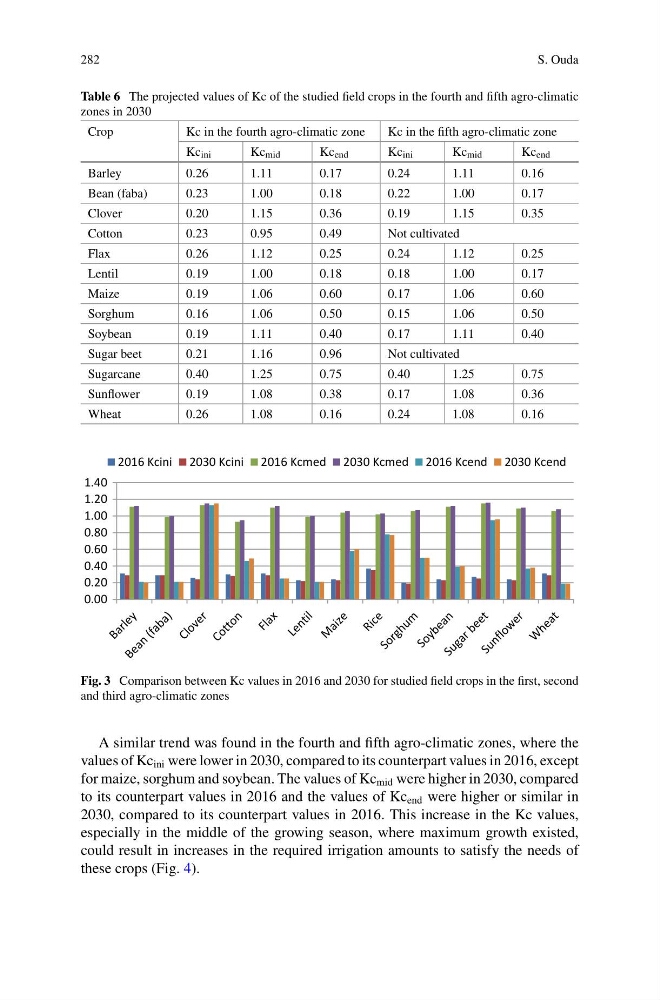
Fig. 3 Comparison between Kc values in 2016 and 2030 for studied field crops in the first, second
and third agro-climatic zones
A similar trend was found in the fourth and fifth agro-climatic zones, where the
values of Kc ini were lower in 2030, compared to its counterpart values in 2016, except
for maize, sorghum and soybean. The values of Kc mid were higher in 2030, compared
to its counterpart values in 2016 and the values of Kc end were higher or similar in
2030, compared to its counterpart values in 2016. This increase in the Kc values,
especially in the middle of the growing season, where maximum growth existed,
could result in increases in the required irrigation amounts to satisfy the needs of
these crops (Fig. 4).
S. Ouda
Table 6 The projected values of Kc of the studied field crops in the fourth and fifth agro-climatic
zones in 2030
Crop
Kc in the fourth agro-climatic zone
Kc in the fifth agro-climatic zone
Kc ini
Kc mid
Kc end
Kc ini
Kc mid
Kc end
Barley
0.26
1.11
0.17
0.24
1.11
0.16
Bean (faba)
0.23
1.00
0.18
0.22
1.00
0.17
Clover
0.20
1.15
0.36
0.19
1.15
0.35
Cotton
0.23
0.95
0.49
Not cultivated
Flax
0.26
1.12
0.25
0.24
1.12
0.25
Lentil
0.19
1.00
0.18
0.18
1.00
0.17
Maize
0.19
1.06
0.60
0.17
1.06
0.60
Sorghum
0.16
1.06
0.50
0.15
1.06
0.50
Soybean
0.19
1.11
0.40
0.17
1.11
0.40
Sugar beet
0.21
1.16
0.96
Not cultivated
Sugarcane
0.40
1.25
0.75
0.40
1.25
0.75
Sunflower
0.19
1.08
0.38
0.17
1.08
0.36
Wheat
0.26
1.08
0.16
0.24
1.08
0.16
0.00
0.20
0.40
0.60
0.80
1.00
1.20
1.40
2016 Kcini 2030 Kcini 2016 Kcmed 2030 Kcmed 2016 Kcend 2030 Kcend
Fig. 3 Comparison between Kc values in 2016 and 2030 for studied field crops in the first, second
and third agro-climatic zones
A similar trend was found in the fourth and fifth agro-climatic zones, where the
values of Kc ini were lower in 2030, compared to its counterpart values in 2016, except
for maize, sorghum and soybean. The values of Kc mid were higher in 2030, compared
to its counterpart values in 2016 and the values of Kc end were higher or similar in
2030, compared to its counterpart values in 2016. This increase in the Kc values,
especially in the middle of the growing season, where maximum growth existed,
could result in increases in the required irrigation amounts to satisfy the needs of
these crops (Fig. 4).